Stuttgart 21 audit pushes opening plan to 2033
29.06.2026
Stuttgart 21 audit findings have left Deutsche Bahn facing another reset, with the project no longer able to meet its previous 2026 opening target and now due to enter service in stages from 2027 to 2033.
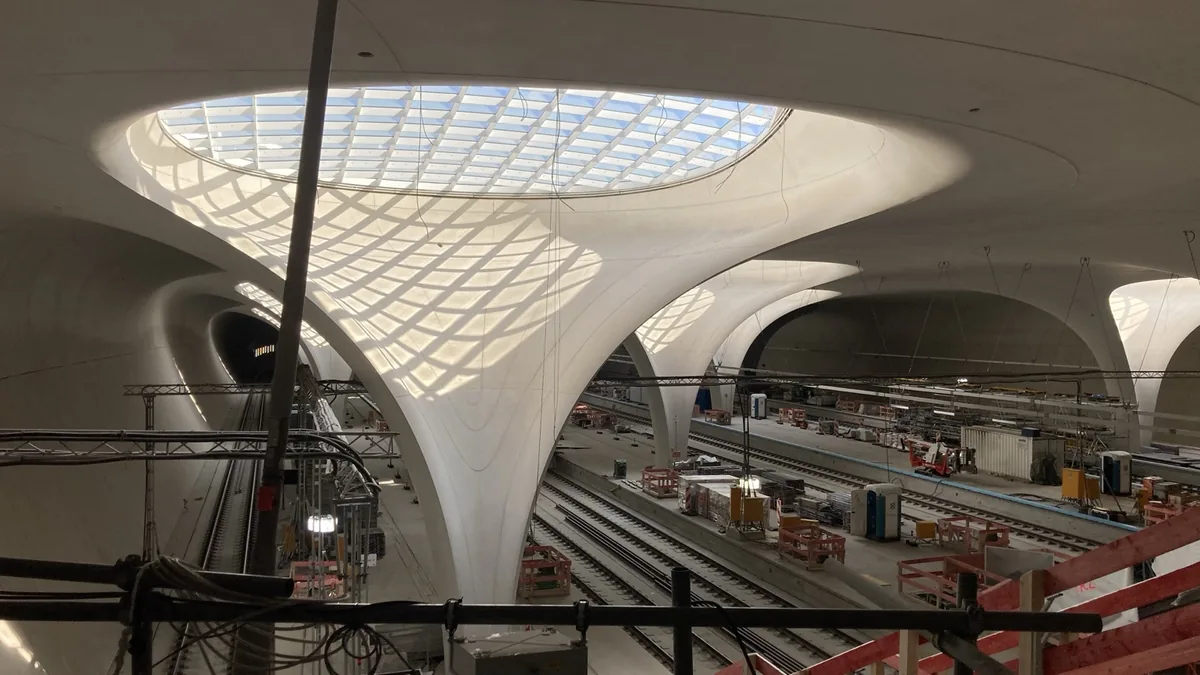
The revised timetable follows an internal review ordered by Evelyn Palla, chairwoman of the board of directors of the German railway group and CEO of Deutsche Bahn AG. The audit examined Stuttgart 21, the scheme to convert Stuttgart’s main station into an underground rail hub, and found “serious deficiencies” in planning, coordination and risk management.
DB said the assumptions behind the former end-2026 commissioning date no longer stood up to the risks now identified. The company has therefore set out a phased opening programme running from December 2027 to December 2033. The projected cost of the project has also increased to 14.5 billion EUR.
Evelyn Palla said the findings had deeply affected both the company and the public.
“To put it plainly: I am shaken by the results of the internal review. The results have shaken not only me, but also the public—especially the people of Stuttgart and all the railway workers who give their best every day for our customers,”
Stuttgart 21 audit exposes planning weaknesses
The internal review identified significant weaknesses in work procedures and control systems. It also pointed to poor coordination at important interfaces and shortcomings in proactive project management.
Deutsche Bahn acknowledged that the earlier process management approach was not adequate for controlling a project of this scale and complexity. The company said the findings would lead to “severe consequences” in the organization, in staffing matters and in the way the project is managed.
During recent months, the new leadership of DB Projekt Stuttgart-Ulm GmbH, the company responsible for Stuttgart 21, has worked on a fresh commissioning plan. The timetable factors in the links between Stuttgart 21, Digitaler Knoten Stuttgart, the modernization of the Gäubahn and the renovation of the historic Bonatzbau building.
DB said the project structure will now be reorganized around commissioning. Risk management is also to be revised, with clearer escalation routes and tougher control mechanisms.
Five-stage Stuttgart 21 rollout runs to 2033
The new programme divides the commissioning of Stuttgart 21 into five main stages. The sequence begins with passenger access changes before moving to station, S-Bahn and tunnel commissioning.
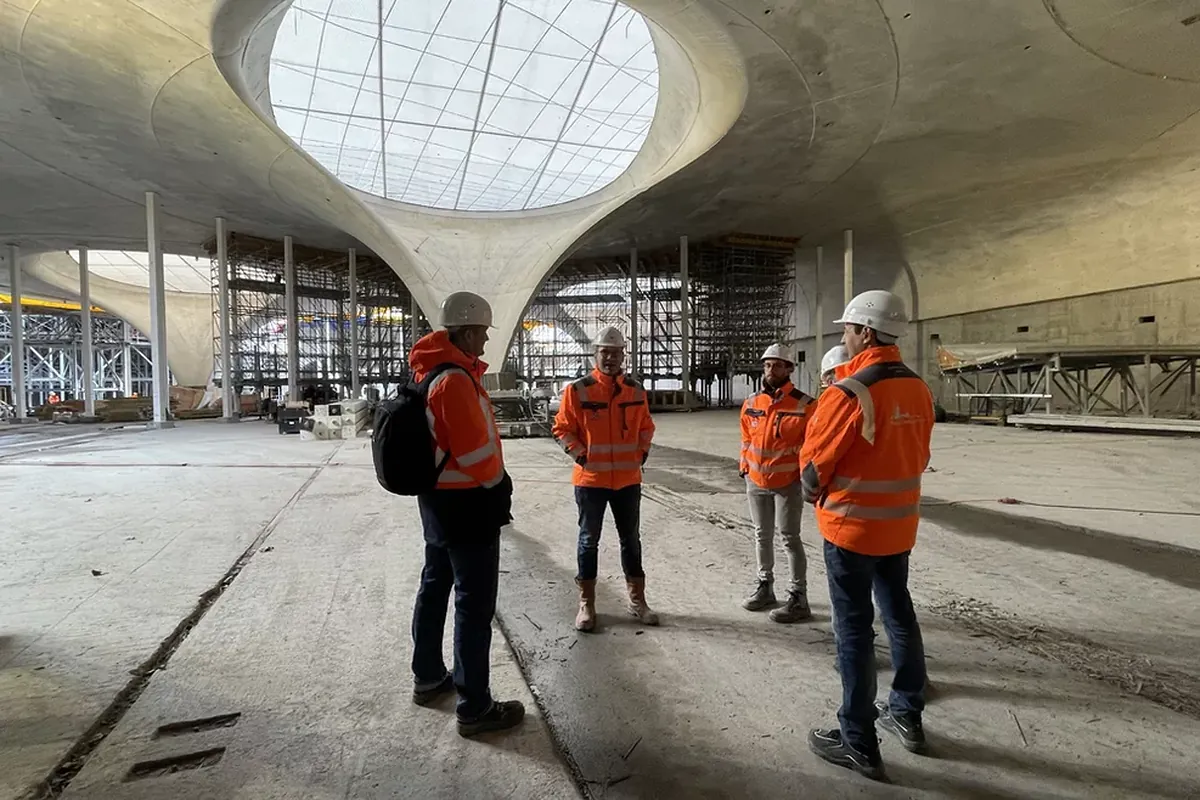
The first step is planned for December 2027. At that point, passengers are expected to gain shorter walking routes through the Bonatzbau and over the roof of the future underground station. In 2028, retail and service areas inside the Bonatzbau are due to open, while the station surroundings are to be modernized gradually.
The airport rail station is scheduled to start operating in December 2030. At first, it will be used by regional trains running to and from Reutlingen, Tübingen and Ulm. A direct link to the main station is planned only for 2031, when the new central station is due to open.
In December 2031, Deutsche Bahn plans to put the new Stuttgart central station into operation. Long-distance services and most regional trains will then use the underground hub. Services to and from Bad Cannstatt will initially remain outside the new station and are expected to be able to enter it only from 2032. Until mid-2032, these trains will continue to use the existing terminus.
Another stage is planned for July 2032, when the digitized and expanded central section of the Stuttgart S-Bahn is due to enter service. This includes Mittnachtstraße/Rosenstein station. DB said this part of the programme should improve the reliability of commuter rail operations.
The last major step is scheduled for December 2033. By then, the Pfaffensteig tunnel is expected to open. The tunnel will connect the Gäubahn to the Stuttgart 21 infrastructure via the airport and is expected to shorten journeys between Stuttgart and Zurich by about 15 minutes.
Additional Stuttgart 21 costs estimated at 3 billion EUR
The revised timetable also has a substantial financial impact. Deutsche Bahn now expects additional costs of around 3 billion EUR, taking the total forecast cost of Stuttgart 21 to 14.5 billion EUR.
According to the company, most of the increase is linked to the work still needed before the system can be brought into service.
DB named several reasons for the new schedule. These include the higher-than-expected complexity of digitizing the rail hub, planning processes that were not mature enough, a technical building designed in 2013 that no longer meets current requirements, and a delayed reaction to changes in power supply rules that now require a complete redesign.
Deutsche Bahn says the new plan is based on realism
Palla said the decision to reset the timetable had been “extremely difficult” for Deutsche Bahn. She also acknowledged that the group had not met expectations on earlier deadlines.
“The new management at S21 has now drawn up a plan that abandons unrealistic assumptions. The risks have been comprehensively analyzed and reassessed. Honesty and realism have been incorporated into the project. Only in this way can we regain the trust we have lost,”
DB said the core purpose of Stuttgart 21 remains unchanged. The project is intended to improve the efficiency of the Stuttgart rail hub, create better passenger connections and strengthen rail transport in Baden-Württemberg.
Stuttgart 21 was approved in 2001. At that time, opening was originally planned for 2019, and the estimated budget was around EUR 4.5 billion. Since then, the cost has increased repeatedly, while the project has become one of Germany’s most prominent examples of delays and cost overruns in a large public works scheme.
Alongside the conversion of Stuttgart’s central station into an underground through station, the project includes digitization of the rail hub, changes to regional traffic patterns and the release of large areas of land for urban development in the city.
Stuttgart 21 is part of the wider Stuttgart–Ulm rail project, which also includes the new Wendlingen–Ulm line. The City of Stuttgart describes S21 as the largest expansion concept for public rail transport in Baden-Württemberg since the 19th century and one of Europe’s most comprehensive rail projects. Its scope includes the reorganization of the Stuttgart rail hub, almost 60 km of new railway line, three new passenger stations and a new stabling station in Untertürkheim. The project is also intended to turn Stuttgart’s terminus into a through station, with the main station tracks running about 11 m below ground while the existing station building, hall and tower remain. (stuttgart.de)
With the latest timetable, Deutsche Bahn is trying to move Stuttgart 21 from years of missed targets to a staged commissioning plan. The extra cost and the extension of completion to 2033, however, underline the depth of the problems now facing the project.