Stadler Trains in Hungary Achieve 300 Million Kilometres Milestone
24.07.2025
Stadler trains in Hungary have surpassed 300 million kilometres in service, saving $275 million in energy costs and cutting emissions by nearly two million tonnes since 2007. This is reported by the railway transport news portal Railway Supply.
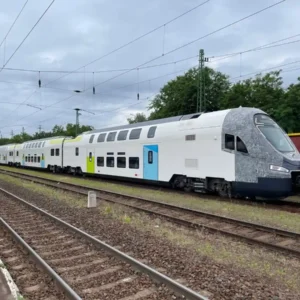
The fleet of 123 FLIRT units operates under MÁV, covering at least 200,000 kilometres per year each. Together, they account for one-third of Hungary’s total rolling stock mileage, driving significant sustainability improvements.

Thanks to advanced electric traction systems, these trains consume far less energy than older models. Maintenance efficiencies also reduce downtime and operational costs, strengthening the economic value for MÁV.
Don’t miss…TfL Faces Criticism Over Graffiti Vigilante Allegations
Stadler Fleet Delivers Major Savings
Energy efficiency alone is expected to offset the original purchase cost by the end of the trains’ lifecycle. With these savings, MÁV benefits financially while promoting greener rail transport for passengers across the country.
Stadler’s presence in Hungary continues to expand. Besides FLIRT units, it supplies double-deck KISS trains and tram-trains, meaning nearly half of MÁV’s passengers now travel on Stadler-built vehicles.
Stadler Strengthens Hungary’s Rail Modernisation
Róbert Homolya, Chairman of Stadler Trains Hungary, highlighted the achievement. “We are proud that FLIRT trains maintain a 96% availability rate through precise maintenance in Hungary,” he said. “And we remain committed to providing sustainable and comfortable travel.”
The first FLIRT trains arrived nearly 20 years ago, marking the start of a major upgrade for Hungary’s railway. Continuous investment in modern rolling stock has improved reliability and environmental performance, reinforcing Hungary’s rail strategy for the future.
Source, photo: railwaypro.com
News on railway transport, industry, and railway technologies from Railway Supply that you might have missed:
Find the latest news of the railway industry in Eastern Europe, the former Soviet Union and the rest of the world on our page on Facebook, Twitter, LinkedIn, read Railway Supply magazine online.Place your ads on webportal and in Railway Supply magazine. Detailed information is in Railway Supply media kit