Stadler rack-and-pinion trains for Mount Rigi network
10.12.2025
Stadler rack-and-pinion trains lie at the heart of a new agreement between Stadler and Mount Rigi Railways, under which four additional mountain vehicles will be supplied. Designed for the steep slopes of Mount Rigi, these trains are expected to further enhance comfort, reliability and environmentally friendly mobility on both lines of the network.
This is reported by the railway transport news portal Railway Supply.
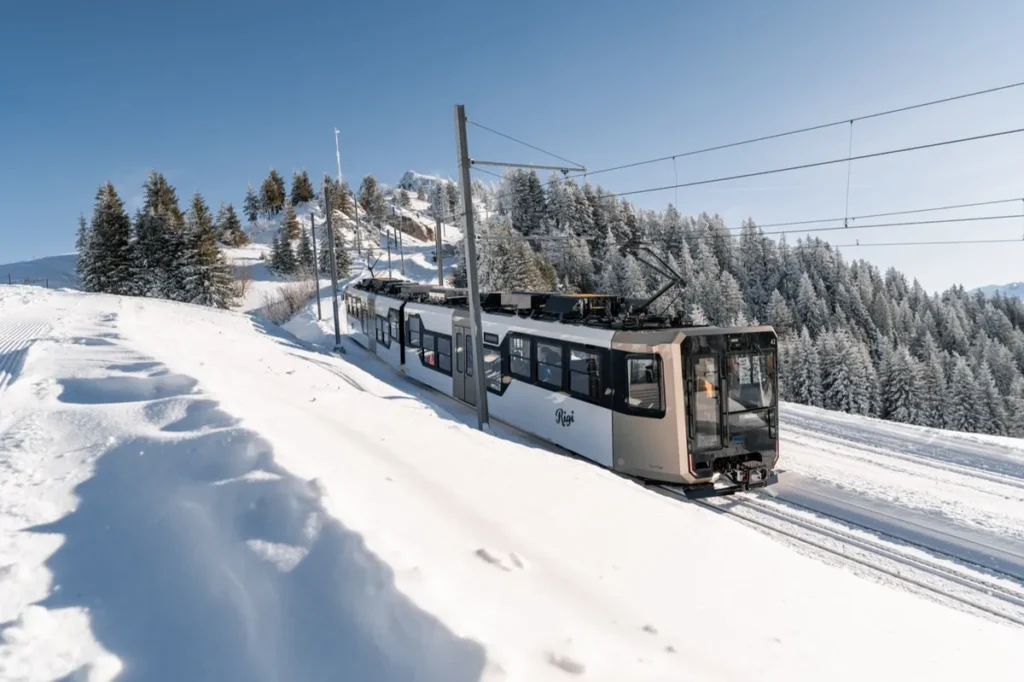
Stadler rack-and-pinion trains on the Mount Rigi Railways network
Since 2022, six Stadler rack-and-pinion trains have been operating in the Swiss mountain landscape around Rigi on the route between Vitznau and Rigi Kulm, a development also reflected in industry coverage such as Railway Gazette International.
The four newly ordered vehicles of the same type are intended for Mount Rigi Railways’ second line, the Goldau–Rigi Kulm line. This will allow the operator to run new vehicles on both routes, supporting comfortable, efficient and sustainable railway operations across the entire Mount Rigi Railways network.
Don’t miss…Narrabri to North Star Phase 2 wins NSW rail approval
The contract for the four additional trains was signed in Vitznau, Switzerland, and further underlines Stadler’s role as a leading manufacturer in its Tailor Made sector.
Commenting on the order, Christoph Leiterer, Head of Engineering Tailor Made at Stadler, points to the continuation of successful cooperation with Mount Rigi Railways.
He notes that the new rack-and-pinion trains have been engineered to match the specific requirements of both the customer and the demanding mountain route, and he thanks Mount Rigi Railways for the trust placed in Stadler as the supplier of further vehicles for operation on Rigi.
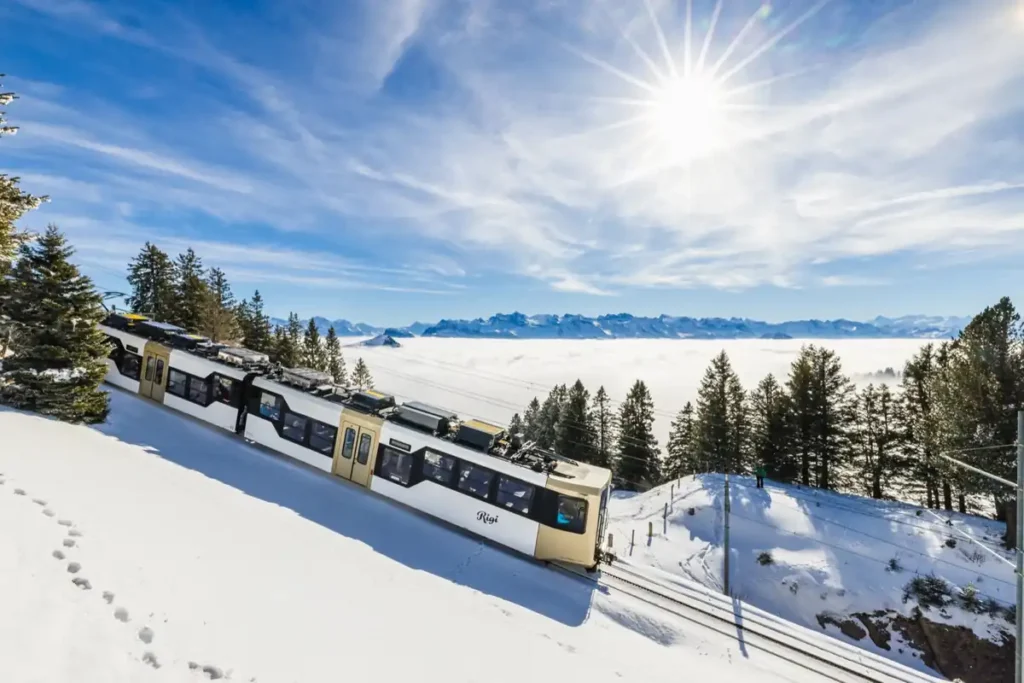
The additional trainsets for the Goldau–Rigi Kulm line will be produced at Stadler’s headquarters in Bussnang, Switzerland. According to Jörg Lustenberger, COO of Mount Rigi Railways, the procurement of these vehicles is an important step for the company in terms of service quality, operational efficiency and long-term sustainability.
Each two-car train is 34.8 metres long, provides 150 seats and can accommodate up to 253 passengers in total, offering sufficient capacity for both everyday travel and tourist demand on Mount Rigi.
Passenger comfort and barrier-free access on Mount Rigi
The vehicles are equipped with a range of features designed specifically for mountain railway operations. The seats are slightly reclined to compensate for the gradient during the journey, which improves comfort on steep sections. Generous drop-down windows and upward-facing front windows allow passengers on Stadler rack-and-pinion trains to enjoy wide, unobstructed views of the surrounding mountain landscape, making trips on both the Vitznau–Rigi Kulm and Goldau–Rigi Kulm lines visually impressive.
Barrier-free access is a key element of the interior layout. The trains are arranged so that people with reduced mobility, families with pushchairs and travellers carrying winter sport equipment can board and alight with ease. To support this, the vehicles are fitted with dedicated ski racks and sled racks with integrated water drainage systems, which simplify winter operations and help Mount Rigi Railways maintain reliable services during the snowy season.
Regenerative braking and resource-efficient operation
Particular attention was paid to the design of the drive system in order to guarantee reliable operation on the steep slopes of Mount Rigi. Each train is equipped with four powered cogwheel axles, which provide smooth running on significant gradients and ensure strong traction and pulling power in all weather conditions. This technical configuration is essential for safe and dependable mountain services on both lines of Mount Rigi Railways.
Another important focus of the project is regenerative braking and the resource-efficient use of energy. Previously, the braking energy generated by trains travelling downhill between Goldau and Rigi Kulm was converted into heat and lost.
On the new trains, the braking system feeds this energy back into the railway’s own power network as electricity. As a result, trains travelling uphill can reuse the energy gained from downhill operations, improving the overall energy balance of the system and supporting sustainable mobility with Stadler rack-and-pinion trains on Mount Rigi.
News on railway transport, industry, and railway technologies from Railway Supply that you might have missed:
Find the latest news of the railway industry in Eastern Europe, the former Soviet Union and the rest of the world on our page on Facebook, Twitter, LinkedIn, read Railway Supply magazine online.Place your ads on webportal and in Railway Supply magazine. Detailed information is in Railway Supply media kit