Renfe high-speed train contract narrows to two bidders
28.06.2026
The Renfe high-speed train contract has narrowed to a contest between Siemens Mobility and Hitachi Rail after Talgo’s bid was excluded for missing the submission deadline.
The Spanish operator is seeking 30 high-speed trainsets, with an option for 10 more. Siemens, Hitachi and Talgo all submitted offers, but Talgo’s proposal arrived after the cut-off and was not taken forward for assessment.
The procurement now leaves Siemens Mobility and Hitachi Rail as the only remaining contenders for an order covering up to 40 high-speed units. The deadline for bids passed last Tuesday. According to Víctor de Elena in ElEconomista.es, three offers were received, but Talgo was ruled out immediately because its submission was late. Alstom decided not to enter the tender.
The base order is worth €1.362bn and covers 30 trainsets. If Renfe uses the option for 10 additional units, the value would rise to €1.777bn. The delivery conditions are demanding because Renfe wants the first trains delivered already homologated within no more than 40 months.
Renfe presents the tender as its largest purchase of high-speed rolling stock of this type, linking it to fleet renewal, expected demand growth and expansion of the rail network. The delivery timetable also explains why the choice of supplier is sensitive: the first five units must be available before month 40, the full fleet before month 78, with one new train supplied every month and a half.
The specification goes beyond top speed. Renfe says the trains must operate on 1,435 mm UIC gauge, support ERTMS/ETCS levels 0, 1 and 2 plus ASFA, and offer at least 450 seats, accessibility spaces, bicycle areas and onboard catering.
Renfe high-speed train contract leaves two contenders
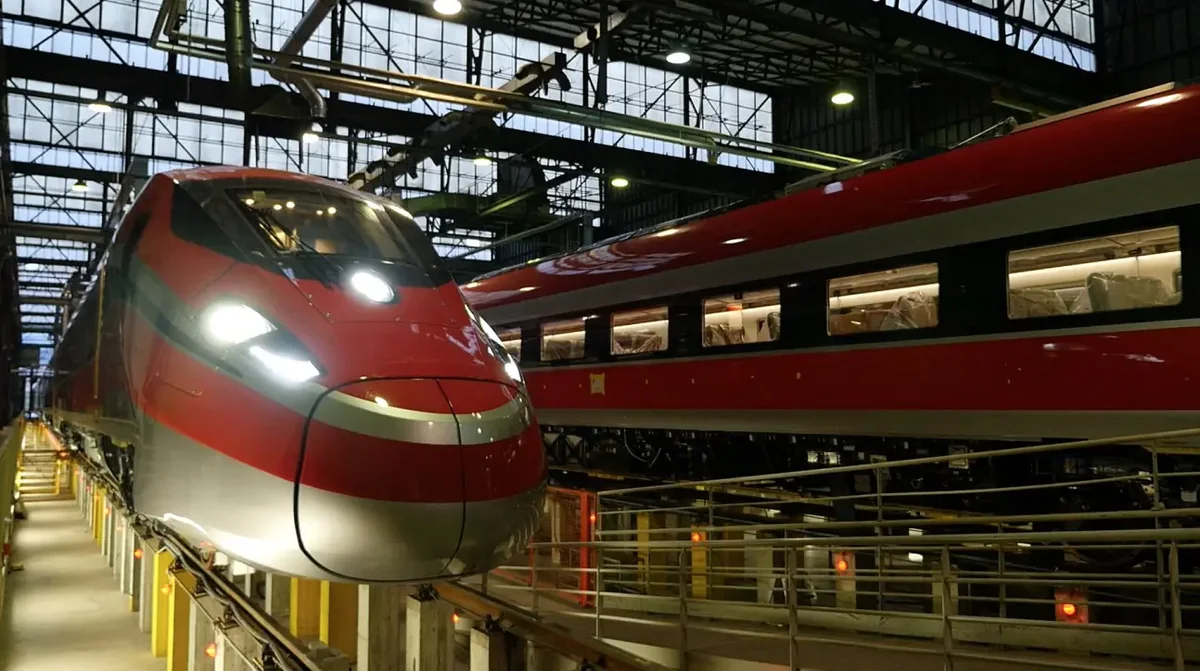
Hitachi’s ETR 1000 is widely viewed as the frontrunner. The platform is already used by Trenitalia and Iryo across Italy, France and Spain under the Frecciarossa 1000 name. It remains unclear, however, whether Hitachi has proposed the first-generation model, similar to Iryo’s Class 109, or the newer second-generation train now operating in Italy.
The second-generation version uses in-house systems in place of technology that was not transferred by Alstom. It also includes changes aimed at better energy performance and improved passenger comfort.
Siemens Mobility options for the Renfe tender
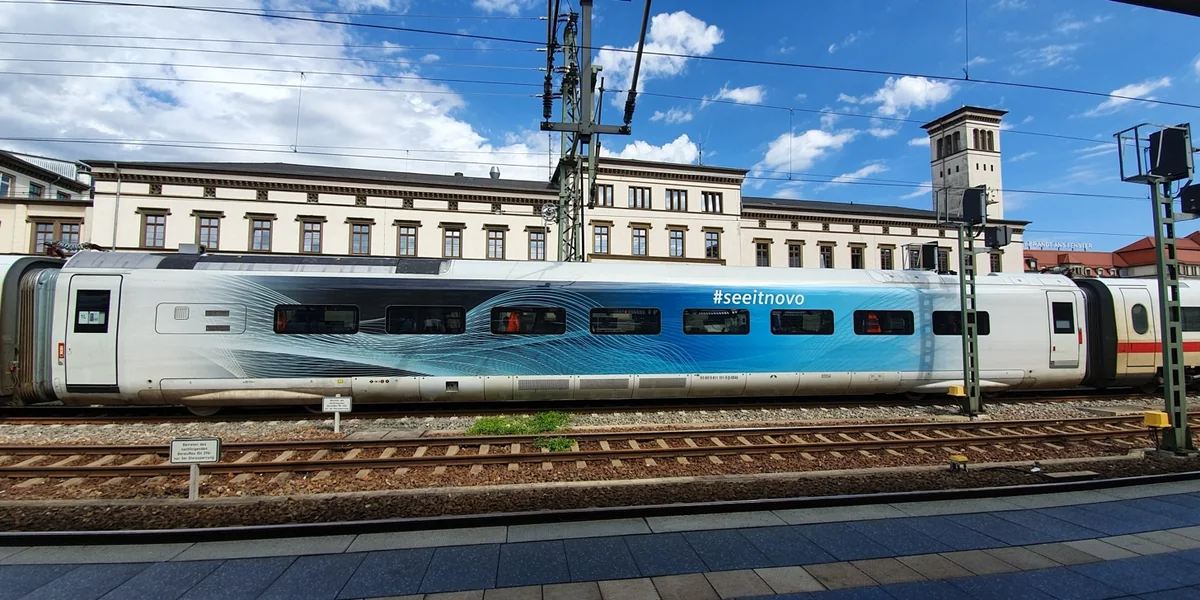
Siemens has openly examined the possibility of proposing the Velaro Novo, a platform intended for commercial operation at up to 360 km/h. The train, however, remains largely at the development stage. So far, only one trailer car has been produced for certification and testing. During those tests it reached 405 km/h, which supports a possible operating speed of 350 km/h.
The Velaro Novo currently has no confirmed European orders, no active production line and no complete trainset ready for full homologation. Given Renfe’s delivery requirement, the more viable option would be the Velaro MS, also known as the ICE 3neo or Class 408.
That platform is an evolution of the Velaro D and incorporates some elements from the Novo. It is already in service in Germany, Belgium and the Netherlands. Another possible approach would be a hybrid specification, combining the Velaro MS with additional innovations from the Novo.
Dynamic testing at 385 km/h
Certification for 350 km/h operation would require dynamic testing at 385 km/h. That threshold has been exceeded before during trials of the Class 103, which remains the only European train authorised to operate at 350 km/h.
Spain’s rail speed record was set on 16–17 July 2006, when unit 103-002 reached 403.7 km/h on the Madrid–Barcelona high-speed line.