Rail Baltica receives €295.5 million to boost construction
04.07.2025
Rail Baltica has secured €295.5 million in EU funding to continue building essential railway infrastructure in Estonia, Latvia, and Lithuania, marking a crucial milestone in the transnational project. This is reported by the railway transport news portal Railway Supply.

The grant comes from the 2023 Connecting Europe Facility (CEF) Transport call and supports construction, electrification, and cross-border coordination. Estonia receives €47.1 million, Latvia €153.5 million, and Lithuania €94.9 million.
Don’t miss…USDOT Streamlines NEPA Process for Faster Project Delivery
Rail Baltica funding drives infrastructure and system progress
RB Rail AS, the joint venture behind the project, emphasized that this funding allows work to proceed without disruption. The allocation focuses on activities with the highest readiness levels.
The grant covers critical systems such as power supply, signalling, and coordination between the three countries. Final agreement discussions will take place in July to define the exact scope.
By mid-2025, around 160 km of the mainline will be under active construction. Electrification procurement is complete, and signalling system tenders are ongoing. About 43% of the mainline should be in progress by late 2025.
Rail Baltica construction accelerates across the Baltics
In Estonia, construction spans over 70 km and will extend beyond 100 km by 2025. All required permits are secured, and additional works in southern Pärnu County will cover another 40 km.
Latvia continues work at Riga Central Station and the airport, with a logistics hub near Iecava under development. This site supports construction between Misa and the Lithuanian border.
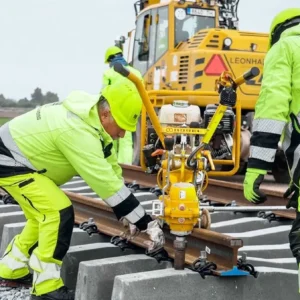
Lithuania is advancing works near Jonava, where 46 km of infrastructure is underway. A 10-km track superstructure and a bridge over the Neris River are in progress, with new tenders expected in 2025.
So far, Rail Baltica has received over €4 billion in total funding from EU and national sources. In response to rising costs, alternative financing models such as PPPs and EU military mobility grants are under evaluation.
When complete, this 870-km high-speed line will link Tallinn to the Polish border and fully integrate the Baltic region into the broader European transport network.
Source: railwaypro.com
News on railway transport, industry, and railway technologies from Railway Supply that you might have missed:
Find the latest news of the railway industry in Eastern Europe, the former Soviet Union and the rest of the world on our page on Facebook, Twitter, LinkedIn, read Railway Supply magazine online.Place your ads on webportal and in Railway Supply magazine. Detailed information is in Railway Supply media kit