Portuguese Parliament Backs 96 km Corgo Line Reopening
02.08.2026
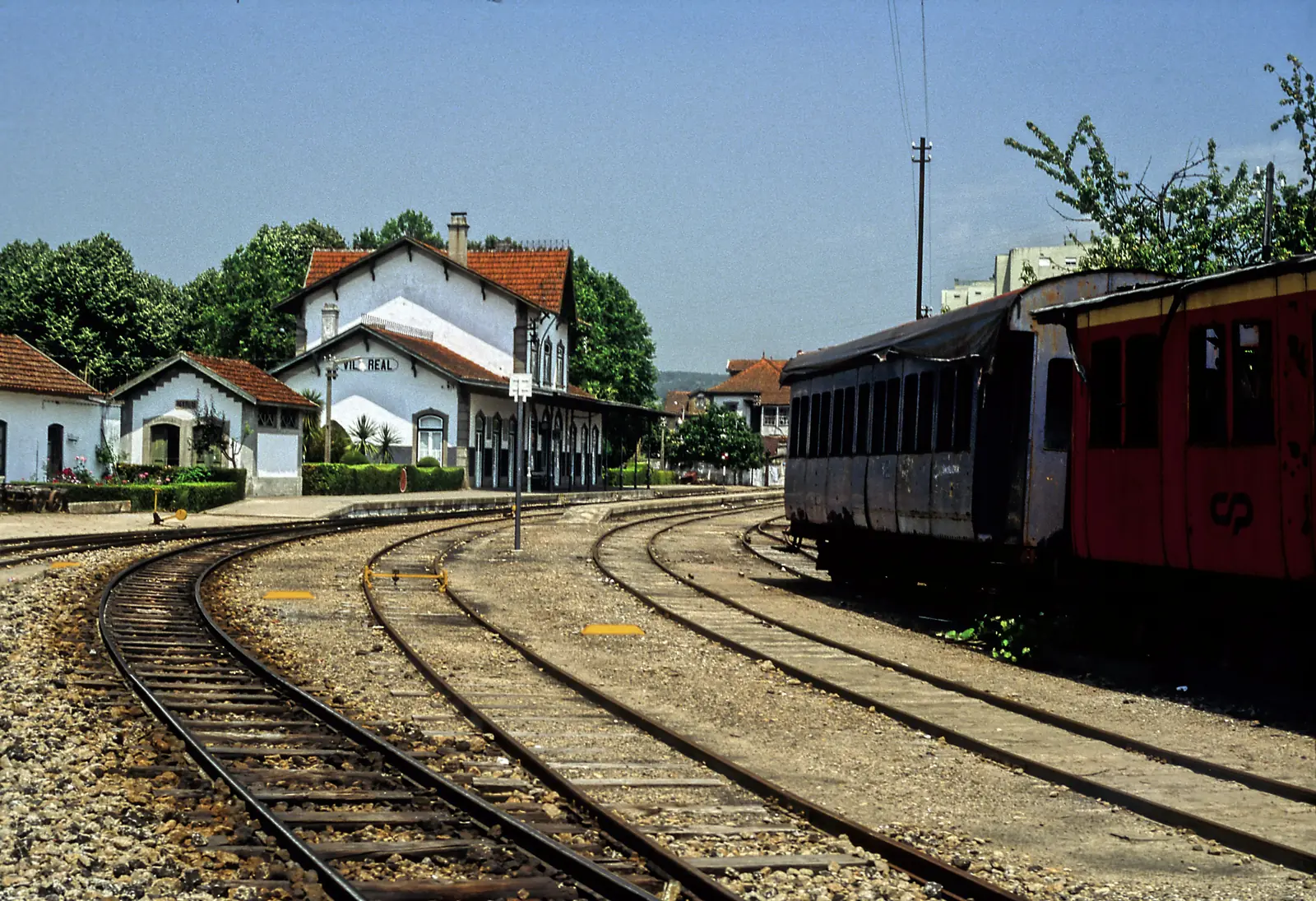
PORTUGAL: Portugal’s parliament has backed a non-binding proposal to reopen the 96 km Corgo Line from Peso da Régua through Vila Real to Chaves after more than a decade without trains.
Corgo Line reopening proposal moves to committee
The July 17 vote gives the project political and institutional support, but it does not authorize construction. The official parliamentary record says the initiative was approved in general terms and then referred to the Infrastructure, Mobility and Housing Committee.
The proposal recommends that the government confirm the full reopening between Peso da Régua and Chaves, identify funding for studies, design, construction, equipment and restored train services, and publish a workable schedule. No budget, start date or reopening date has yet been approved.
The initiative grew from a public petition launched in 2024 and submitted to parliament in February 2025. The parliamentary record lists 1,070 signatures, giving the campaign a formal route into the national debate.
Don’t miss…SEPTA Shuttle Buses Replace Trains on Three Rail Lines
A 96 km railway with two closure phases
Opened in stages between 1906 and 1921, the single-track, non-electrified metre-gauge railway linked Chaves and Régua via Vila Real. At Régua, it connected with the broad-gauge Douro Line.
The 70 km Vila Real–Chaves section closed in January 1990. Services on the remaining 26 km between Vila Real and Régua were suspended in 2009 because the infrastructure had deteriorated. Rehabilitation was estimated at €23.4m and was expected to finish in 2011, but Portugal’s financial crisis led to budget cuts and work stopped in 2010.
Portugal’s 2025 National Railway Plan did not consider full restoration competitive for travel to Porto, yet it did not rule out a partial Vila Real–Régua reopening for local transport and as a connection to the Douro Line. The plan also identified tourism potential.
The parliamentary vote therefore changes the project’s political status, not its delivery status. Any return of trains still depends on government action, feasibility work, funding and a defined implementation programme.
News on railway transport, industry, and railway technologies from Railway Supply that you might have missed: