Pakistan Secures Chinese Funding for Railway Modernization
11.09.2025
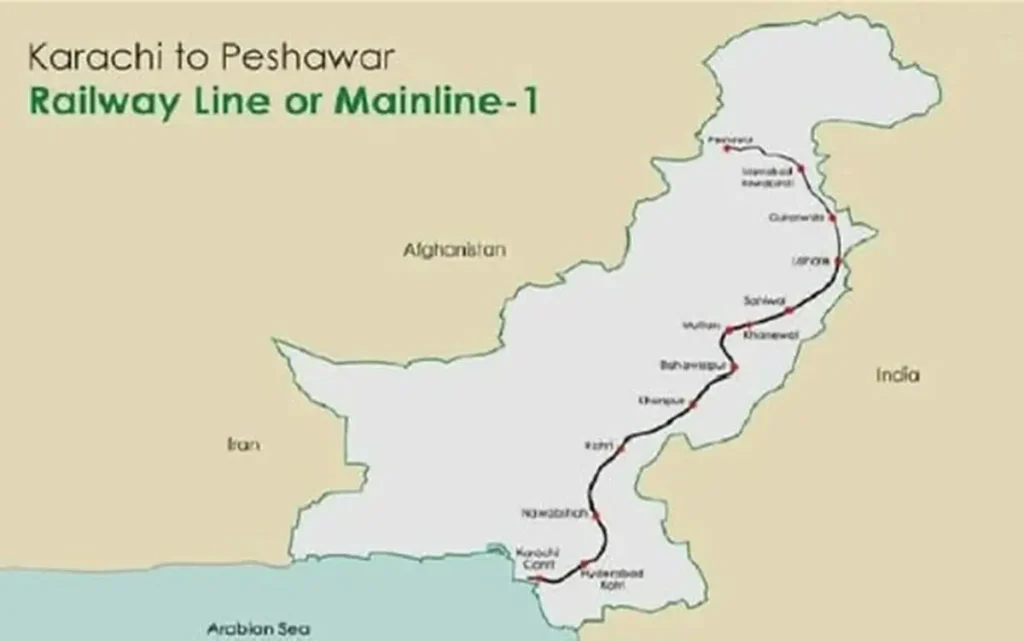
Pakistan and China will undertake the $7B ML-1 railway project through a consortium, and therefore the upgrade of the 1,700 km-long Karachi–Peshawar line will be the country’s largest transport project.
This is reported by the railway transport news portal Railway Supply.
Consortium and financing
The project will have China as the largest investor but the consortium will also include the Asian Development Bank and the Asian Infrastructure Investment Bank too. Percentage shares are not disclosed and full financing will be done by Beijing.
Don’t miss…Amtrak schedule changes disrupt Michigan routes in September
History and reconstruction plans
Initial portions of the Karachi–Peshawar highway were constructed during the 19th century. Upgrades were, however, hampered by financial and political challenges. Since 2015, the modernization agenda was consistently delayed, thus the project initiation is a significant indicator.
Modernization and train speeds
Passenger train speeds will be raised up to 160 km/h under the ML-1 project, from the currently prevailing speeds of 60-105 km/h. At the same time, upgraded facilities will boost freight capacity and make the network more competitive.
High-speed developments in Pakistan
In 2024, the Punjab government initiated a scheme to construct the 290 km Lahore–Rawalpindi line. The government, however, is determined to proceed further, and by the year 2030 Pakistan hopes to launch full-fledged high-speed rail operations.
What is China’s involvement in Pakistan railway projects?
China is the lead investor, investing $7B into the ML-1 project and solely responsible for funding the uprating of the Karachi–Peshawar line into a modern rail standard.
When will the building of the upgraded line start?
Reconstruction work had been under consideration since 2015, but only in the year 2024–2025 the consortium approved preparedness for startup of the project.
What will Pakistan’s railways become like after upgradation?
Passenger trains will reach speeds of up to 160 km/h once the ML-1 project is done, and volumes of freight and overall network reliability will also be improved significantly.
News on railway transport, industry, and railway technologies from Railway Supply that you might have missed:
Find the latest news of the railway industry in Eastern Europe, the former Soviet Union and the rest of the world on our page on Facebook, Twitter, LinkedIn, read Railway Supply magazine online.Place your ads on webportal and in Railway Supply magazine. Detailed information is in Railway Supply media kit