
Metro-North temporary Penn Access service and LIRR cuts
Metro-North temporary Penn Access service has become a flashpoint between the MTA and Amtrak. The two sides are arguing over how much Long Island Rail Road service can continue to run into New York Penn Station while tunnel repairs are under way.
This is reported by the railway transport news portal Railway Supply.
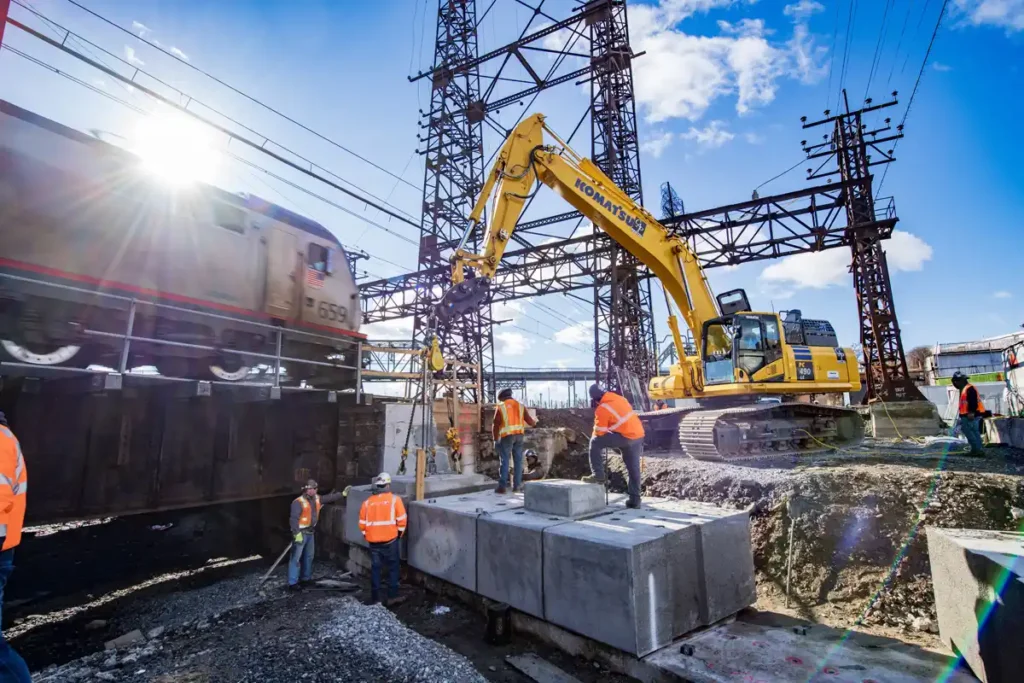
Metro-North temporary Penn Access service and LIRR cuts
According to a paywalled report in Long Island’s Newsday and coverage on Trains.com, Amtrak Executive Vice President for Capital Delivery Laura Mason wrote in a Nov. 12 letter that “any new Metro-North service must also be accompanied by a reduction in Long Island Rail Road service levels.”
Don’t miss…Milei’s freight rail privatisation in Argentina: key bidders
In practice, this would mean Long Island Rail Road service cuts to Penn Station to create slots for the temporary Penn Access trains. Mason ties this requirement to the Amtrak East River tunnel repair project, where work to address Hurricane Sandy damage has already forced Amtrak to trim its own operations for the duration of the program. Schedule changes linked to the tunnel work have been revised, most recently with the restoration of an additional New York City–Albany round trip. Once the tunnel work is finished — in 2027 at the earliest — Penn Station should be able to accommodate both Metro-North and Long Island Rail Road services.
East River tunnel repairs and Penn Station capacity
MTA CEO Janno Lieber has firmly opposed tying Metro-North’s temporary Penn Access service to Long Island Rail Road cuts for Penn Access. Speaking to reporters after an MTA board meeting, he called the condition “a non-starter” and argued that the existing infrastructure at Penn Station should be able to handle three additional Metro-North trains per hour without reducing current LIRR service levels. This turns the question of how to manage limited capacity during the East River tunnel work into a direct MTA–Amtrak dispute over Penn Access.
Penn Access project delays and Bronx stations plan
The push for a limited, interim timetable stems from significant Penn Access project delays. The full program is intended to add new tracks and four Metro-North stations on Amtrak’s double-track Hell Gate Line between New Rochelle, N.Y., and Harold Interlocking in Queens, on the Penn Access route through the Bronx. The MTA says Amtrak has not fully lived up to its obligations to accommodate MTA construction, and that this has pushed the anticipated completion from 2027 to at least 2030. As previously reported by Railway Supply, the revised schedule still envisions limited service in 2027, while full build-out is deferred toward the end of the decade. As a result, Penn Access project delays to at least 2030 have prompted Metro-North to propose a smaller, temporary operation instead of waiting for the full build-out.
To bridge the gap, Metro-North has outlined a scaled-down timetable of 31 daily trains on the existing Amtrak double-track route, compared with the 105 daily trains envisioned once the project is complete. This interim plan would serve three Bronx stations — Parkchester, Morris Park, and Co-op City — which together form the core of the Metro-North Bronx stations plan under Penn Access. The fourth station, Hunts Point, is excluded from the temporary service because, according to the MTA, the site cannot accommodate a temporary platform while construction continues.
MTA–Amtrak dispute over project obligations
The disagreement is not limited to train slots at Penn Station. The construction industry outlet TAM America has detailed how MTA officials formally accused Amtrak of failing to provide enough access windows and staff, arguing that a pattern of missed outages and absent crews has stalled progress on the 19-mile commuter-rail expansion. In turn, Amtrak points to the resources it has committed and the steps it is taking to mitigate delays.
At the same time, Engineering News-Record and other trade media have highlighted Mason’s Nov. 12 letter rejecting the MTA’s account of the Penn Access project. In that letter, she writes that the national passenger operator has “more than met” its obligations since some early difficulties and calls on Lieber to retract statements “that we are in breach of contract.” Mason also points to contractor and design issues and safety incidents, among other problems, which she says the MTA has not publicly addressed.
Taken together, the arguments over tunnel capacity, potential Long Island Rail Road service cuts to Penn Station, and responsibility for Penn Access project delays to 2030 have turned Metro-North temporary Penn Access service into a focal point of a broader MTA–Amtrak dispute over project obligations and the future of rail access to the Bronx and Penn Station.
News on railway transport, industry, and railway technologies from Railway Supply that you might have missed:


