Lobito Corridor railway financing reshapes Angola rail link
19.12.2025
Lobito Corridor railway financing has moved from negotiation to signature, with the U.S. International Development Finance Corporation closing a $553 million deal with the Lobito Atlantic Railway (LAR) consortium.
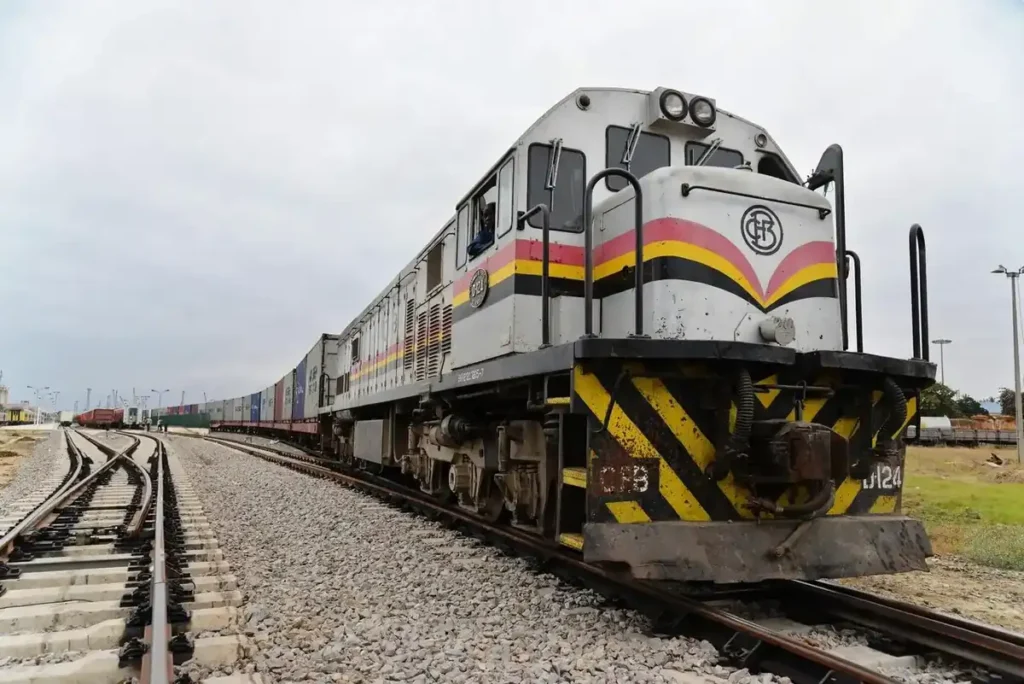
The agreement was signed at a Washington ceremony on Wednesday after talks first disclosed in 2024, as previously covered by Railway Supply. In the article’s framing, the package is part of Washington’s effort to secure access to critical minerals while pushing back against China’s deepening economic presence in Africa, and it positions the Lobito Corridor as arguably the most significant U.S. infrastructure investment on the continent in recent decades.
The DFC $553 million loan Angola railway package is paired with $200 million from the Development Bank of Southern Africa. Together, the funding supports rehabilitation of about 1,300 kilometers of track linking the Democratic Republic of Congo border to Angola’s Atlantic port of Lobito, as outlined by the U.S. International Development Finance Corporation. The plan targets a tenfold jump in throughput to 4.6 million metric tons per year and aims to reduce the cost of transporting critical minerals by up to 30%, an effort described as addressing infrastructure deficits that have held back regional trade and mineral exports for decades.
What Lobito Corridor railway financing covers?
The project sits at the center of U.S. policy priorities in Africa in the 2020s: development messaging alongside a supply-chain strategy. During President Biden’s December visit to Angola, DFC CEO Scott Nathan said DFC investments along the corridor are intended to foster sustainable economic development while advancing U.S. strategic interests.
This is reported by the railway transport news portal Railway Supply.
Those interests are closely tied to the African Copperbelt. The DRC is described as producing about 70% of the world’s cobalt, an input used in electric vehicle batteries, consumer electronics, and defense applications. The country also ranks as the second-largest producer of copper globally, and it has substantial reserves of tantalum and other strategic minerals used in advanced manufacturing, renewable energy systems, and military hardware.
Zambia is the other major origin point for minerals expected to move through the corridor, with large copper deposits that have long supported its role as a leading African exporter. Taken together, the region’s concentration of copper and cobalt makes reliable rail-and-port logistics a strategic issue that goes beyond local economic considerations.
The article links that urgency to a broader global race for critical minerals as electrification, renewable energy, and digitalization accelerate. Demand growth is tied to electric vehicles, battery storage, solar and wind build-outs, 5G networks, and advanced computing. Concerns around cobalt supply keeping pace are cited as one reason dependable transport infrastructure matters for existing production.
Supply-chain competition and China’s position
The DFC framed the railway in geopolitical terms, stating that its investments help secure reliable supply chains and “prevent monopolization by China and other strategic competitors.” The article argues that China has strengthened its role in African critical minerals over more than two decades through mining investments, infrastructure financing, and partnerships with resource-rich governments.
Specific figures in the text include that in 2020 China imported nearly 90% of its cobalt from the DRC, and that Chinese firms own or hold stakes in fifteen of the DRC’s nineteen cobalt mines. It also states that 80% of copper mines in the DRC are Chinese-owned, a level of control the article presents as giving Beijing leverage over key supplies.
Processing is described as an even stronger advantage for China. Citing the International Energy Agency, the text says China is the leading refiner in 19 out of 20 important strategic minerals, with an average market share of 70%. The article also ties the supply-chain question to end uses it names directly—F-35 fighter jets, electric vehicle batteries, and wind turbines—arguing that many inputs are found in Africa but flow largely through Chinese-controlled processing and distribution networks.
Don’t miss…China railway passenger traffic hit a new high in 2025
The broader backdrop is China’s Belt and Road Initiative, launched in 2013, and its investments in transport, infrastructure, and energy across Africa. For the mineral-rich Central African region, the article points to projects that support mineral exports while also expanding Chinese economic and political influence. It cites 2023 figures of copper-related projects worth just over $2 billion in the DRC and nearly $2 billion in Botswana, plus more than $1 billion in other large metallurgical projects across the continent.
Lobito Atlantic Railway consortium and the Benguela line
The Lobito Atlantic Railway operates under a 30-year concession granted by the Angolan government in 2022. The consortium includes Portugal’s Mota-Engil, commodities trader Trafigura, and rail operator Vecturis SA—combining construction capacity, mineral logistics, and railway management expertise.
Alongside development finance, the consortium is described as committing $455 million in Angola and $100 million in the DRC. The infrastructure at the center of the plan is the historic Benguela line, first built beginning in 1899 and once a key route for mineral exports to the Atlantic.
The article notes that Angola’s civil war from 1975 to 2002 left the line heavily damaged and that poor maintenance and inadequate investment later worsened reliability. It also describes a prior Chinese-financed reconstruction as suffering from “poor construction and upkeep,” including “rundown stations, malfunctioning safety systems, offline servers and frequent derailments.” The new rehabilitation under LAR management is positioned as an attempt to upgrade to international standards and provide open access to all paying customers, while the DFC presented the agreement as supporting regional trade, mutual economic growth, and long-term U.S.-Africa cooperation.
Corridor expansion into Zambia and the DRC
While the current financing targets rehabilitation of the existing Angolan railway and Lobito port facilities, the wider Lobito Corridor vision extends beyond Angola. The text describes plans for 515 kilometers of new rail in Zambia and 315 kilometers of new rail in the DRC, connecting into the Benguela line to form a three-country corridor.
Africa Finance Corporation, based in Lagos and identified as the lead developer, has sought contractor proposals for the Zambian leg after completing a feasibility study. Senior AFC officials are quoted as expecting additional financing deals to be finalized by the end of 2026, underlining that major pieces remain at an early stage despite the headline loan announcement.
The expected logistics shift is described in concrete terms: today, Copperbelt minerals often move by heavy-duty trucks for weeks or even months over poor roads to reach ports in South Africa or Tanzania. A completed rail corridor to Lobito would cut transport time and lower costs, potentially making copper and cobalt exports more competitive and enabling deposits currently viewed as uneconomic due to transportation constraints. Beyond minerals, the article says the corridor is expected to diversify cargo to include sulfur imports for mining operations and other general freight.
China’s countermove: TAZARA rehabilitation
As U.S. support for the Lobito Corridor advanced, the article says China Civil Engineering Construction Corporation announced earlier in 2025 that it would invest $1.4 billion to rehabilitate the Tanzania-Zambia railway (TAZARA), a competing route that serves the same Copperbelt region and ships minerals via Tanzanian ports on the Indian Ocean.
TAZARA, completed in 1976 with substantial Chinese backing, is described as having fallen into severe disrepair. Under a new 30-year concession agreement signed in September 2025, the article states CCECC will invest in track rehabilitation and allocate $400 million for procurement of 32 new locomotives and 762 new wagons to increase freight and passenger capacity.
The 1,860-kilometer line connects Zambia’s Copperbelt to the port of Dar es Salaam. By refurbishing TAZARA, China is portrayed as seeking to preserve access to Central African minerals even if the US-backed corridor captures more Atlantic-bound traffic. The text also suggests that multiple upgraded routes could leave Zambian and Congolese producers with more than one improved option—potentially strengthening their leverage in negotiating terms—while still highlighting how the region has become a focal point in wider great-power competition.
Development gains and the value-capture challenge
For Angola, the DRC, and Zambia, the corridor is presented as both an opportunity and a strategic balancing act, with these countries placed at the center of renewed competition for influence and access. The article links that dynamic to broader implications for foreign policy choices and bargaining power, alongside practical development targets tied to the corridor.
On the numbers, the text says local procurement in Angola is expected to exceed $350 million in the first five years, and it projects more than 1,000 new full-time jobs for Angolans, expanding the railway workforce from 434 to more than 1,500 employees. DBSA’s Mpho Mokwele is cited emphasizing that the strategic value is not only the rail line itself, but the creation of an efficient intermodal system designed to maximize throughput. In the same vein, the corridor is described as potentially supporting processing facilities, special economic zones, manufacturing operations using regional mineral resources, and service industries tied to mining and transport.
The article also says the corridor may have impacts across multiple sectors—creating jobs and attracting investment in agriculture, services, and digital connectivity—with planned digital infrastructure that includes advanced telecommunications along the route. At the same time, it warns about the risk of staying locked into raw-material export roles, noting that 77% of Africa’s resources are exported in raw form while refining and processing take place elsewhere—primarily in China, but also in Europe and other industrialized regions. In that context, the Lobito Corridor is presented as a test case for whether mineral wealth translates into broad-based development or reinforces a new phase of critical-minerals geopolitics.
A shift in U.S. engagement—plus open questions
The article portrays the Lobito Corridor as a major change in the U.S. approach after long periods of under-investment in African commercial infrastructure. During his early December visit to Angola, President Biden pledged an additional $600 million, bringing the United States’ total commitment to $4 billion, while overall investment by all participants is described as approximately $6 billion.
The financing model is presented as one designed to minimize risk for participating African nations, contrasting it with debt-heavy approaches associated with some Belt and Road projects. By channeling DFC lending to a private-sector consortium rather than government-to-government loans, the U.S. is described as trying to showcase an alternative development finance model.
Implementation remains a key uncertainty. The text quotes an expert warning that Washington has “yet to lay one inch of railway” and that a “serious learning curve” should be expected as U.S. development institutions navigate complex delivery challenges.
The transition from the Biden to Trump administration is also presented as a variable that could affect continuity. The article notes differences in emphasis—Biden highlighting partnerships and multilateral initiatives such as the G7’s Partnership for Global Infrastructure and Investment, and Trump’s prior record suggesting a more transactional approach—while also arguing that the strategic drivers behind the corridor extend beyond partisan politics.
Why the rail race matters?
In the article’s framing, the $553 million loan is about more than track upgrades: it is a marker of shifting global power dynamics tied to minerals essential for electrification, advanced manufacturing, and defense systems. The text also references broader backing, stating that approximately $10 billion in total investment pledges have come from the United States, the European Union, the African Development Bank, and private-sector consortia.
Whether Lobito Corridor railway financing leads to durable development outcomes—or becomes another chapter in resource-extraction dynamics—will become clearer as the project moves from financing announcements to delivery and operations. The article closes by treating rail construction and rehabilitation across Central Africa as physical manifestations of the competition shaping the 21st-century economic and strategic landscape.
News on railway transport, industry, and railway technologies from Railway Supply that you might have missed:
Find the latest news of the railway industry in Eastern Europe, the former Soviet Union and the rest of the world on our page on Facebook, Twitter, LinkedIn, read Railway Supply magazine online.Place your ads on webportal and in Railway Supply magazine. Detailed information is in Railway Supply media kit