Lobito Corridor: A Game-Changer for Africa’s Mineral Supply Chains
08.02.2025
Lobito Corridor is a key infrastructure project designed to connect Africa’s mineral-rich regions to global markets. Supported by the U.S. and EU, it aims to boost trade and reduce China’s dominance. This was reported by the railway transport news portal Railway Supply.

Reviving the Benguela Railway Through the Lobito Corridor
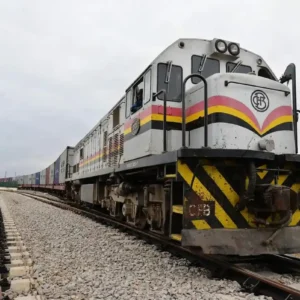
The Lobito Corridor revitalizes the historic Benguela Railway, originally completed in 1928, to enhance mineral exports. By improving transport efficiency, this project helps integrate African economies into global supply chains.
For decades, the Benguela Railway served as a vital route for mineral exports from Zambia and the Democratic Republic of the Congo (DRC). However, civil conflicts disrupted operations, leading to infrastructure deterioration. In 2006, China funded restoration efforts under an oil-for-infrastructure agreement, completing repairs by 2014.
Don’t miss…Aurora Winter Train: Discover the Scenic Alaska Journey
In 2022, during the U.S.-Africa Leaders’ Summit, the U.S. signed an agreement with Zambia and DRC. This initiative focuses on developing electric vehicle battery supply chains, strengthening African resource development. One year later, at the G20 Summit, the U.S. and EU announced further investments in the Lobito Corridor.
Lobito Corridor and Global Trade Connectivity
The Lobito Corridor plays a crucial role in the Partnership for Global Infrastructure (PGI). The project seeks to create efficient trade routes, reducing reliance on Chinese-controlled supply chains.
Once completed, this 1,289-kilometer railway will connect DRC and Zambia’s copper belt to Angola’s Lobito port. By enhancing infrastructure, it will improve trade logistics, attract investments, and create employment opportunities.
Beyond the Lobito Corridor, the U.S.-EU PGI initiative supports alternative infrastructure projects worldwide. Another major investment, the India-Middle East-Europe Economic Corridor, aims to diversify supply chains. These projects counter China’s Belt and Road Initiative by offering alternative trade routes.
Africa’s Role in the Global Mineral Market
Africa holds nearly 30% of the world’s critical mineral reserves, making it a key supplier for global industries. As demand for lithium and cobalt rises, securing reliable supply routes is essential.
Kolwezi, a city in the DRC, contains some of the world’s largest copper and cobalt reserves. China dominates production due to long-term investments, low costs, and resource availability. Currently, 60% of the EU’s critical minerals and 98% of rare earth elements come from China.
To counter this reliance, the U.S. launched the Energy Resource Governance Initiative in 2019. This program promotes responsible mineral extraction while fostering regional cooperation in resource management. The 2022 Inflation Reduction Act further supports nearshoring and domestic mining expansion.
Increasing U.S. and EU Investment in Africa
Over the past 18 months, the U.S. has invested over $3 billion in African infrastructure and trade. President Biden’s visit to Angola marked a significant step in strengthening diplomatic and economic ties.
The Minerals Security Partnership, supported by the U.S. and EU, is another initiative focused on mineral security. By financing projects like the Kabanga Nickel Project in Tanzania, it seeks to diversify supply chains.
While China has led African investments for decades, recent economic shifts offer new opportunities for Western nations. However, instability in mineral-rich areas remains a challenge, posing risks for future investments.
Lobito Corridor: A New Investment Model for Africa
Unlike China’s direct state-led investments, the Lobito Corridor follows a diversified financing strategy. This approach emphasizes long-term economic benefits, fostering growth across multiple industries.
The project involves partnerships between governments, private companies, and financial institutions like the African Development Bank. This collaborative model aims to integrate African markets while promoting economic cooperation.
Tanzania recently joined the initiative, expanding the railway network to connect the Atlantic and Indian Oceans. A memorandum signed at the 2024 China-Africa Cooperation Forum formalized this partnership.
Geopolitical Implications and Future Scenarios
Global competition over mineral resources does not always lead to direct conflict. Instead, it can create strategic opportunities for African nations, enhancing their economic leverage.
Recent instability in Mozambique highlights the importance of alternative trade routes. By improving logistics, the Lobito Corridor could provide economic resilience in politically unstable regions.
Most Likely Scenario: Moderate Reduction in China’s Dominance by 2029
The Lobito Corridor is expected to improve regional integration and enhance African supply chain efficiency. However, China’s stronghold on mining operations may limit the project’s broader impact.
China currently controls 80% of copper mines in the DRC and has committed $5 billion to Zambia’s mining industry. While the Lobito Corridor improves transportation, mineral extraction remains largely under Chinese influence.
If successful, this project could shift export routes westward, aligning with U.S. and EU nearshoring strategies. However, without additional investments in Atlantic transport networks, reliance on China may persist.
Less Likely Scenario: Project Delays Due to Regional Instability
The Lobito Corridor could face delays due to governance issues, financial mismanagement, or political unrest. However, multiple factors suggest the project will continue progressing.
The U.S. remains committed to African infrastructure investment, with continued engagement under the second Trump administration. Private sector involvement, particularly from firms like Mota-Engil, adds to project stability.
While corruption risks exist, Angola’s legal reforms have improved transparency, reducing the likelihood of major financial mismanagement. Nonetheless, social unrest and governance challenges could lead to temporary setbacks.
A more severe risk includes potential armed conflicts in Angola or the DRC. Rising tensions in Eastern Congo, particularly the M23 conflict, could destabilize the region. A broader regional crisis would significantly impact infrastructure development and trade routes.
The Future of the Lobito Corridor
The Lobito Corridor presents a transformative infrastructure initiative with the potential to reshape Africa’s trade networks. Despite geopolitical and economic challenges, its success could strengthen global supply chains.
Africa’s rich resource base ensures continued geopolitical competition for critical minerals. Strategic investments in infrastructure, security, and governance will determine whether the Lobito Corridor fulfills its economic promise.
Source: www.gisreportsonline.com
News on railway transport, industry, and railway technologies from Railway Supply that you might have missed:
Don’t miss…Discover the Magic of Amtrak’s Winter Park Express This Winter
Find the latest news of the railway industry in Eastern Europe, the former Soviet Union and the rest of the world on our page on Facebook, Twitter, LinkedIn, read Railway Supply magazine online.Place your ads on webportal and in Railway Supply magazine. Detailed information is in Railway Supply media kit