Lausanne M3 metro line targets rising passenger demand
08.07.2026
Construction of the Lausanne M3 metro line has been approved after the Swiss Federal Council granted the infrastructure concession required to build and operate the project.
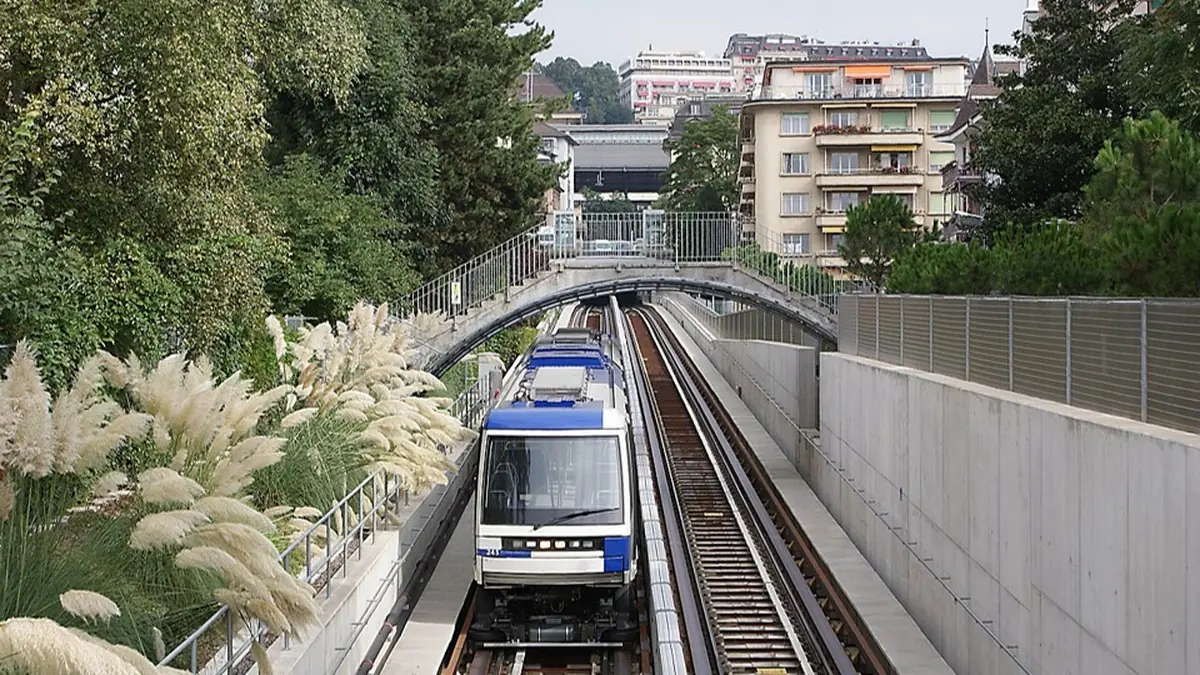
The line is designed to strengthen Lausanne’s public transport network as passenger numbers continue to grow. It will connect Lausanne Central Station with the Blécherette district and improve mobility in the northwestern part of the city, where urban development is expanding.
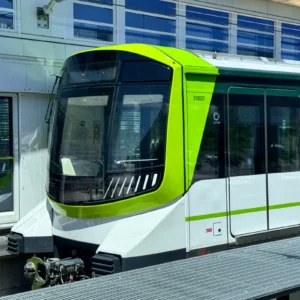
The future m3 will run entirely underground and operate without drivers. Over a length of 3.5 km, it will serve 6 stations between the central station and Blécherette. The project is included in the Lausanne–Morges Agglomeration Program, known as PALM, through which the Canton of Vaud is developing major urban public transport corridors to support population growth and rising mobility demand.
Lausanne M3 metro line route and stations
The m3 is being developed as part of a broader modernization program for Lausanne’s metro network. At the same time, the existing m2 line is being upgraded. Opened in 2008, the line has already surpassed its original design capacity: it was built for 25 million passengers per year, but in 2024 it carried more than 36 million passengers.
To remove existing bottlenecks, a second tunnel will be built between Lausanne Station and Flon. The automation system on the m2 line will also be replaced with a modern system, allowing trains to run more often and increasing transport capacity.
The m3 line will stop at Lausanne-Gare, Chauderon, Beaulieu, Casernes, Plaines-du-Loup, and Blécherette. It will also serve the new eco-friendly Plaines-du-Loup district, where around 8,000 homes and 3,000 jobs are planned. The route will additionally provide access to Tuilière Stadium and nearby sports facilities.
Don’t miss…Indian Railways new trains expand passenger links
Lausanne metro network modernization
Chauderon station is set to become a major interchange. It will link the m3 with the Lausanne–Échallens–Bercher railway, the future tram line, and the high-capacity bus network.
When the m2 and m3 operate at the same time, capacity between the central station and the city center will increase substantially. The m2 will continue to run through Flon, while the m3 will carry passenger flows via Chauderon. This is intended to distribute passengers more efficiently and reduce congestion on the current network.
What will change for passengers?
The passenger context is tied to the expected growth around Lausanne station. Official project information states that the expanded and modernized station is expected to handle 200,000 daily users by 2030, compared with 130,000 daily users currently. The m3 is designed to absorb part of this demand by creating a second metro axis from the station: the m2 will continue to serve Flon, while the m3 will serve Chauderon and continue toward Blécherette. By 2035–2040, the m3 is planned to carry 40 million passengers per year. (vd.ch)
The Swiss federal government will contribute CHF 144 million, or EUR 156.5 million, through the Urban Transport Program. The rest of the investment, estimated at about CHF 1.3 billion, or EUR 1.41 billion, will mainly be covered by the Canton of Vaud.
News on railway transport, industry, and railway technologies from Railway Supply that you might have missed: