Testing Solid Oxide Fuel Cells on Biogas for Locomotive Power Supply
20.10.2023
The UK’s Department of Transport has allocated £378,500 to support an innovative project, this is reported by the railway transport news portal, Railway Supply.

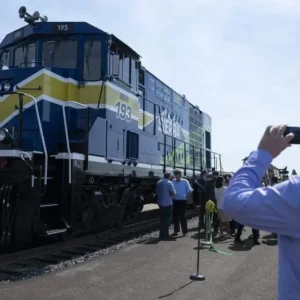
Colas Rail, in collaboration with G-Volution, several other British companies, and the University of Birmingham, successfully demonstrated the use of solid oxide fuel cells powered by biogas for the auxiliary equipment of a Series 37 locomotive.
The volume of railway transportation in Tajikistan increased by 9.5% in 2023
Simulation results revealed that employing these fuel cells can reduce carbon dioxide emissions by 50 tons annually, decrease fuel consumption by 8%, and lower the noise level of the diesel engine.
This marks a significant step in reducing the environmental impact of Series 37 locomotives, which have been in operation on British railways for over half a century.
Solid oxide fuel cells exhibit versatility, operating on both biogas and hydrogen, generating electricity without emitting harmful particles or nitrogen oxides.
Such innovations not only alleviate the environmental burden of transportation but also contribute to operational cost reduction through fuel efficiency.
This successful project exemplifies how the collaborative efforts of companies and academic institutions can make transportation more environmentally friendly and efficient.
Photo: Hope Drew & Adelan Ltd/Colas Rail.
Rail business, industry, and railway technology news from Railway Supply that you might have missed:
The EU has taken Spain to court over railway regulation breaches
Find the latest news of the railway industry in Eastern Europe, the former Soviet Union and the rest of the world on our page on Facebook, Twitter, LinkedIn, read Railway Supply magazine online.Place your ads on webportal and in Railway Supply magazine. Detailed information is in Railway Supply media kit