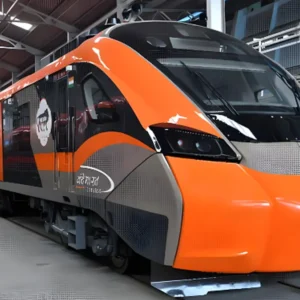
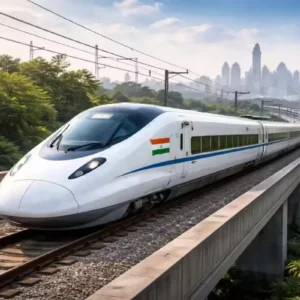
India Accelerates Construction of Bullet Train Corridor
11.10.2025
India’s Bullet Train project sailed ahead as Railway Minister Ashwini Vaishnaw reviewed progress at Sabarmati, emphasizing swifter building, enhanced connectivity, and eco-friendly urban mobility.
This is reported by the railway transport news portal Railway Supply.
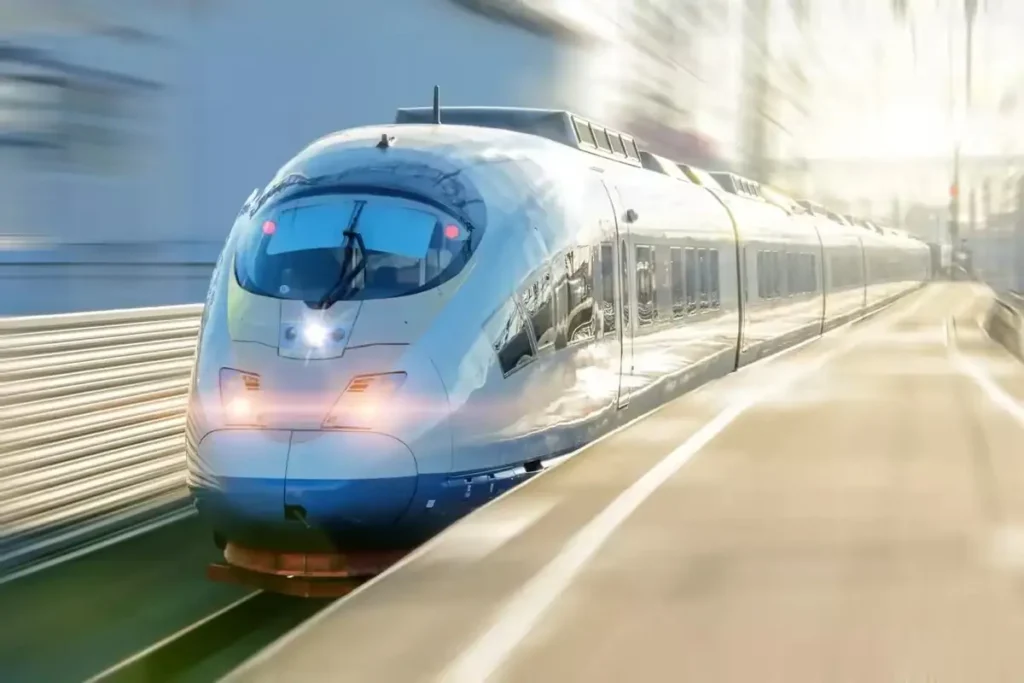
Bullet Train Building Bolsters Country Connectivity
Bullet train project provides the linchpin to India’s transport modernization and regional mobility boost. Mahatma Gandhi’s charkha has inspired the Sabarmati High-Speed Rail Station which combines cultural heritage and advanced engineering.
Don’t miss…J-TREC Electric Train Begins Operation on Tokyo’s Rinkai Line
Significant structural construction has been finished, and inner installments are progressing rapidly. Designers are equipping information systems that are digital, sustainable, and energy-efficient facilities to provide a contemporary travel experience.
Passengers will have access to world-class facilities, including lounges, crèches, and malls. And since the station ties in to Ahmedabad’s metro, BRTS, and traditional rail networks, it will become a hub for multimodal transportation.
Mumbai and Ahmedabad travel time will narrow from more than six hours to a little more than two. This upgrade will facilitate tourism, business travel, and local trade, and lower emissions as well as highway and airport congestion.
Bullet Train Project Enhances Growth and Innovation
India’s National High-Speed Rail Corporation Limited (NHSRCL) manages the 508-kilometer corridor intended for trains traveling at speeds of up to 320 km/h. Advanced safety protocols, innovative signaling, and energy-sipping rolling stock are used to provide reliability and comfort.
Minister Vaishnaw reited strongly to quality and schedules. He stated that the project embodies India’s long-term vision—coming together of infrastructure, innovation, and sustainability to enable national competitiveness.
And since the corridor is dependent on electric currents, it will significantly lower carbon footprints compared to transport via air or roads.
When finished, the Mumbai–Ahmedabad route will be a template for other high-speed corridors being planned throughout the nation, fusing technology, efficiency, and green sensibility.
Source, photo: timesofindia.indiatimes.com
News on railway transport, industry, and railway technologies from Railway Supply that you might have missed:
Why does India have a bullet train project?
Bullet train will join Mumbai and Ahmedabad together with high-speed, efficient, and environment-friendly travel, cutting travel time to a minimal of two hours.
In what ways does the bullet train finance India’s economy?
It accelerates business activity, tourism, and jobs, and enhances logistics efficiency and local connectivity.
Who controls bullet train construction?
The National High-Speed Rail Corporation Limited (NHSRCL) deals with planning and execution, keeping the project aligned with international standards.
Place your ads on webportal and in Railway Supply magazine. Detailed information is in Railway Supply media kit