High Speed Rail Authority board gains rolling stock expertise
A new High Speed Rail Authority board member brings rolling stock and systems integration experience. That arrival comes 22 days after the authority shortlisted the groups competing to supply its first high-speed trains.
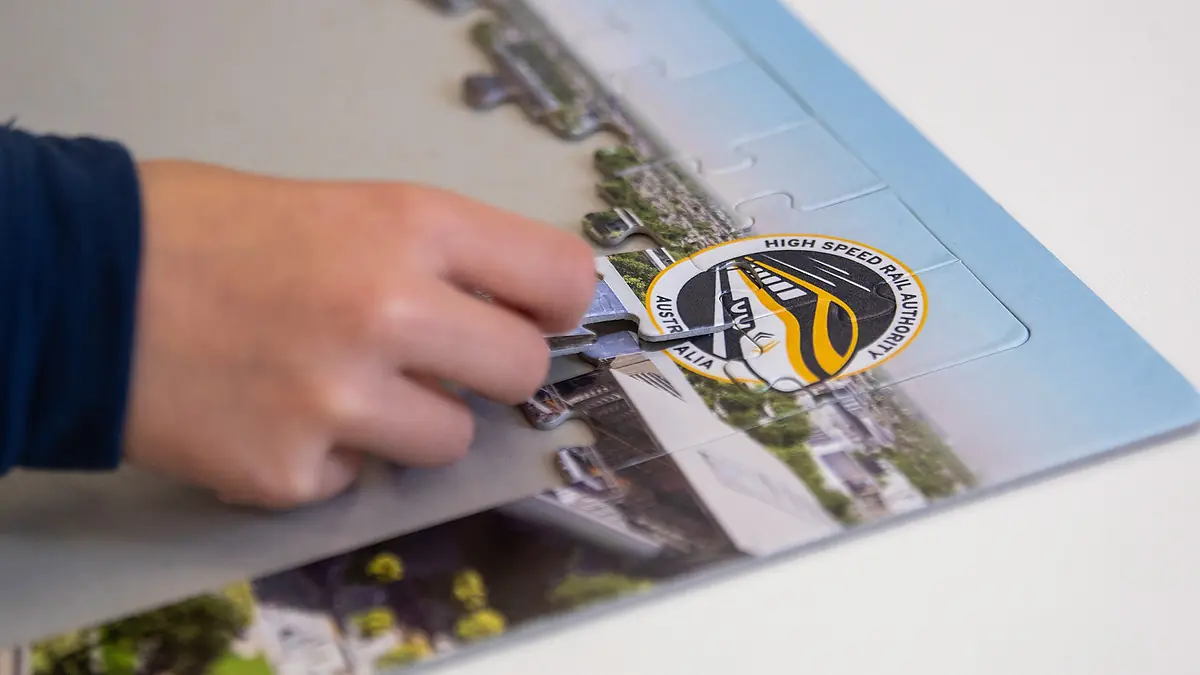
Australia’s infrastructure minister named Professor Eva Hanly and Christopher Rayner to the board on 10 September. Hanly received a three-year term, while Rayner received a two-year term. The government filled both seats through an open competitive process for vacant member roles.
Rayner’s HS2 record sits close to the trains package
Rayner is a British rail executive whose experience covers rolling stock, operations systems and systems integration. It includes work on the UK’s High Speed 2 project and the development of operating and maintenance regimes for the commissioning of High Speed 1.
Minutes of an HS2 Ltd board meeting on 3 August 2017 identify him as Railway Operations Managing Director and record his attendance for the rolling stock item. The board approved the principles of a four-stage evaluation framework for the rolling stock invitation to tender. Management also confirmed that further work was required on funding the maintenance element before the planned contract award in December 2019.
What the trains and systems package covers
The Australian trains and systems package covers the supply of the trains, the design and delivery of rail systems, construction of the depot and operations control centre, and integration, testing and commissioning across the corridor.
Three proponents are taking part in the Development Phase: the Alstom/UGL Joint Venture, the ARC Joint Venture and Hitachi Rail STS Australia. They will compete to design and develop Australia’s first high-speed trains and systems. No major construction contract will be awarded until the government completes its decision-making process following the end of the Development Phase. One of the three proponents would then be selected by the High Speed Rail Authority to deliver the trains, depot and associated systems.
| Element | What it involves |
|---|---|
| Trains | Supply of the trains for the Newcastle to Sydney corridor |
| Systems and facilities | Design of all systems, plus construction of the rail depot and the operations control centre |
| Integration | Integration, testing and commissioning of every relevant system on the corridor |
| Interface with civils | System designs and components pass to the Area Package contractors, who prepare installation drawings and install the systems |
| Shortlisted proponents | Alstom/UGL Joint Venture; ARC Joint Venture; Hitachi Rail STS Australia |
| Decision point | No major construction contract will be awarded until the government completes its decision-making process after the Development Phase; one of the three proponents would then be selected |
The board returns to its full statutory size
Under the High Speed Rail Authority Act 2022, the board consists of a chair and four other members. The minister appoints all of them. In June the government reappointed Jill Rossouw, Ian Hunt and Dyan Perry. Rossouw stayed as chair for three years. Hunt and Perry returned as members for two years and six months respectively. The two September appointments therefore bring the board back to five.
| Member | Role | Term and date |
|---|---|---|
| Jill Rossouw | Chair | Three years, reappointed June 2026 |
| Ian Hunt | Member | Two years, reappointed June 2026 |
| Dyan Perry | Member | Six months, reappointed June 2026 |
| Eva Hanly | Member | Three years, appointed September 2026 |
| Christopher Rayner | Member | Two years, appointed September 2026 |
All five seats provided for in the High Speed Rail Authority Act 2022 are filled again. Sources: High Speed Rail Authority; Minister for Infrastructure, Transport, Regional Development and Local Government, June 2026; Minister for Infrastructure, Transport, Regional Development and Local Government, September 2026.
Hanly is a strategic adviser and non-executive director. Her career spans nearly three decades of procurement, delivery and operation of complex infrastructure across transport, mining and energy. She served as chief executive officer of Squadron Energy and has held senior roles at Worley, Transurban and Origin. Currently she is Professor of Engineering Practice at the University of New South Wales. She also sits as a director on the TAFE NSW Advisory Board.
Rayner’s term therefore runs for two years and Hanly’s for three. Meanwhile the Development Phase continues.