Global Trade Surging on Rails: A $522.4 Billion Market by 2032
19.01.2025
Rails are revolutionizing global logistics, paving the way for the freight market to surpass $522.4 billion by 2032. This was reported by the railway transport news portal Railway Supply, citing the rail supplier LLC “OLIMP XXI.”

Sustainability initiatives, investments in infrastructure, and cutting-edge technological advancements fuel this remarkable growth in the industry. With an ever-increasing demand for efficient, eco-friendly, and cost-effective transport solutions, rails are set to lead the charge in transforming supply chains globally.
The Expanding Role of Rails in Global Trade
Rails have long been a cornerstone of industrial economies, providing reliable transport for bulk goods such as coal, minerals, and agricultural products. Today, their role has expanded significantly, making them integral to intermodal transport systems. These systems enable goods to move seamlessly between rail, trucks, and ships, ensuring faster and more efficient supply chains.
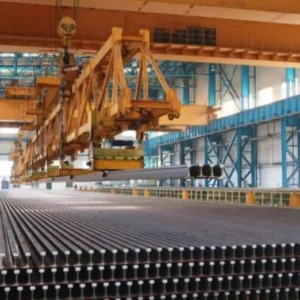
Don’t miss…We offer 60E1 railway rails (steel grade R350HT)
The global freight industry heavily relies on rails to balance cost and efficiency, especially for long-haul shipments. Unlike road transport, which faces congestion and higher environmental costs, or air freight, which is expensive, rails offer a balanced solution combining cost-effectiveness and reduced carbon emissions.
Governments worldwide are increasingly recognizing the value of rail systems. Substantial public and private investments are being channeled into developing new rail networks and modernizing existing ones. For example, Asia and Africa are constructing extensive rail corridors to enhance trade connectivity, while Europe and North America focus on upgrading systems to meet higher demand.
Sustainability as a Key Driver of Growth
Rails offer an environmentally sustainable solution, emitting significantly fewer greenhouse gases than road or air transport. With global pressure to reduce carbon emissions, businesses are prioritizing rail freight to meet their environmental, social, and governance (ESG) goals. Trains are not only more energy-efficient but also capable of transporting large volumes of goods with minimal ecological impact.
Companies seeking green logistics solutions increasingly view rails as the ideal option. Rail operators are capitalizing on this trend by offering carbon-neutral shipping options, helping businesses align their operations with sustainability goals while optimizing costs.
Technological Advancements Transforming Rails
The rail freight industry is undergoing a digital transformation, leveraging advanced technologies to improve efficiency, reliability, and customer satisfaction. Innovations such as artificial intelligence (AI), the Internet of Things (IoT), and blockchain are revolutionizing operations.
Don’t miss…OLIMP XXI LLC: Innovative Solutions for Rail Welding
Real-time tracking enables businesses to monitor shipments with precision, ensuring timely deliveries and greater transparency. Predictive maintenance powered by AI minimizes downtime, while automated systems improve safety and reduce labor costs. These technological breakthroughs enhance the overall efficiency of rail networks, positioning them as a competitive choice for modern logistics.
E-Commerce Driving Demand for Rails
The exponential growth of e-commerce has significantly impacted global logistics, increasing the demand for efficient, long-distance freight solutions. Rails are emerging as a critical link in e-commerce supply chains, particularly in regions where integrated rail networks offer seamless connectivity with trucks and ships.
Regions like Asia and Europe are leading the charge, leveraging well-established rail infrastructures to meet growing e-commerce demands. The ability to transport large volumes of goods quickly and cost-effectively makes rails an essential component of the modern e-commerce ecosystem.
Regional Insights: Rails’ Global Impact
North America:
The North American rail freight market benefits from an extensive network and high levels of efficiency. Investments in intermodal systems, driven by e-commerce and cross-border trade with Canada and Mexico, are reshaping the region’s logistics landscape.
Europe:
Europe’s rail freight sector thrives on initiatives like the Trans-European Transport Network (TEN-T), which aims to create an interconnected rail system. Sustainability goals and government incentives further boost the market, ensuring continued growth.
Asia-Pacific:
The Asia-Pacific region is the fastest-growing market for rail freight, fueled by urbanization, industrialization, and projects like China’s Belt and Road Initiative (BRI). These developments are enhancing trade connectivity across the region and with global markets.
Africa and Latin America:
Emerging economies in Africa and Latin America are investing heavily in rail infrastructure to boost economic development. While these regions face unique challenges, such as funding and political instability, they hold significant growth potential as trade corridors expand.
Challenges Facing the Rail Freight Industry
Despite its advantages, the rail freight industry faces several challenges. High initial investments in infrastructure development and modernization remain a significant hurdle. Public-private partnerships often provide viable solutions, but aligning the interests of multiple stakeholders can be complex.
Competition from road and air transport also poses a challenge. While trucks offer greater flexibility for last-mile delivery, and air freight excels in speed, rail operators must continuously innovate to remain competitive. Additionally, regulatory and political issues, such as differing international policies and trade disputes, can disrupt operations.
Technological integration, although transformative, comes with its own set of challenges. Issues such as data standardization, cybersecurity, and workforce training must be addressed to fully leverage the benefits of advanced technologies.
Future Opportunities for Rails in Logistics
Green Logistics:
Rails are uniquely positioned to lead the charge in sustainable logistics. Offering carbon-neutral solutions and promoting eco-friendly shipping options will attract environmentally conscious businesses, further driving market growth.
Intermodal Integration:
The integration of rail freight with other transport modes, such as trucks and ships, presents vast opportunities. Developing seamless intermodal solutions will enhance efficiency and expand the reach of rail networks, ensuring their relevance in global supply chains.
Infrastructure Expansion:
Investing in underserved regions and new trade corridors can unlock lucrative markets. Strategic planning and international collaboration will be critical to tapping into these opportunities and driving economic growth.
Digital Transformation:
Advanced digital tools, such as blockchain for supply chain transparency and predictive analytics for maintenance, will revolutionize rail operations. These innovations will improve service quality and customer satisfaction, ensuring that rails remain a competitive force in logistics.
Rails are set to become the backbone of global logistics, driving trade, economic growth, and sustainability worldwide. The market, projected to reach $522.4 billion by 2032, reflects the growing demand for efficient, eco-friendly, and cost-effective freight solutions.
By embracing technology, expanding infrastructure, and integrating intermodal systems, rail freight operators can secure their position as a critical component of the global logistics landscape. As the world moves toward a greener future, rails will continue to play a vital role in connecting economies and fostering prosperity.
This transformation positions rails not only as a practical solution for modern logistics but also as a leader in sustainability and innovation, ensuring their prominence in global trade for decades to come.
Source: www.globaltrademag.com
News on railway transport, industry, and railway technologies from Railway Supply that you might have missed:
Don’t miss…Sale of R65 Railroad Rails (Steel Grade R350HT) from Stock
Find the latest news of the railway industry in Eastern Europe, the former Soviet Union and the rest of the world on our page on Facebook, Twitter, LinkedIn, read Railway Supply magazine online.Place your ads on webportal and in Railway Supply magazine. Detailed information is in Railway Supply media kit