South Australia Unveils Electric Buses in Green Transport Push
31.03.2025
South Australia Boosts Green Transport with 60 New Electric Buses. This is reported by the railway transport news portal Railway Supply.
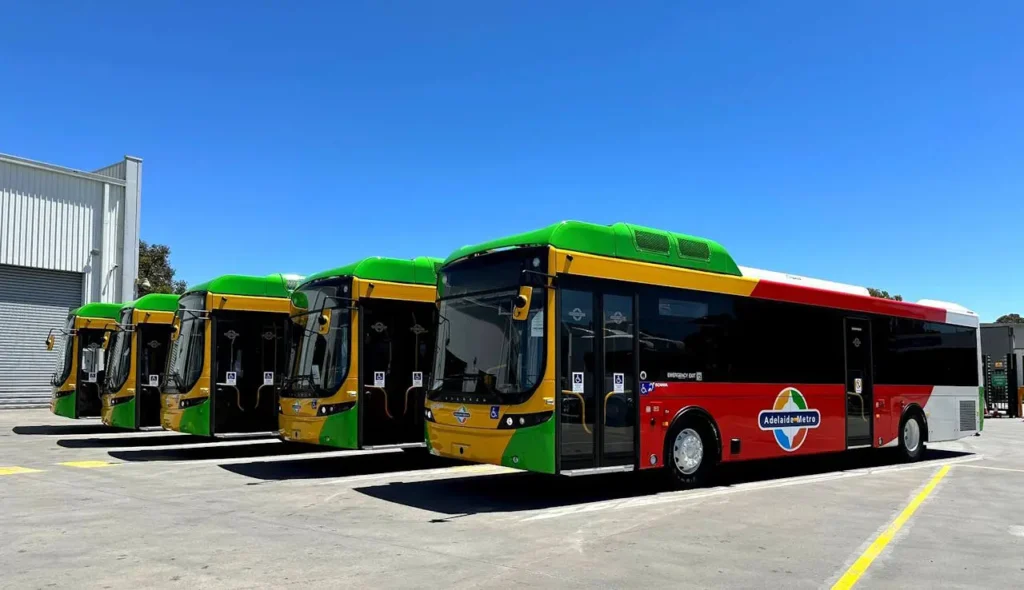
South Australia’s government ordered 60 electric buses to enhance its eco-friendly transport system. Swedish giant Scania supplies them, and Volgren handles production.
Don’t miss…Pierre Poilievre Unveils Bold Plans for Oil and Tax Relief
Delivery of these full battery electric vehicles begins in mid-2025 and extends into early 2026. This move marks the state’s first large-scale rollout of zero-emission buses for public use.
South Australia leads globally with over 70 percent wind and solar energy in its grid. Yet, surprisingly, only one electric bus currently operates despite this renewable energy dominance.
Transport remains the state’s top emitter because low-emission electricity reduces reliance on coal and gas. Consequently, wind, solar, and battery storage now power most of the grid effectively.
Authorities actively install charging infrastructure at the Morphettville depot to support the new fleet. This step ensures the buses operate smoothly and efficiently across Adelaide’s metro network.
This initiative launches a broader replacement program for Adelaide Metro’s 1,000-vehicle bus fleet. Currently, diesel, hybrid, and natural gas powertrains dominate, but change is accelerating fast.
South Australia halted purchases of new diesel-only buses back in September 2022. Meanwhile, Volgren recently delivered five hybrid buses, and ten more are in production.
Electric Buses Drive Decarbonization Efforts
Energy Minister Tom Koutsantonis unveiled the plan, emphasizing decarbonization efforts for buses and rail. He stated that these electric buses build on extensive groundwork for a greener system.
Additionally, Koutsantonis highlighted plans to upgrade the metropolitan bus and rail networks. The government aims for zero emissions with cleaner, quieter, and more efficient technologies.
Low-emission transport options not only benefit the environment but also enhance commuter comfort. Smoother and quieter rides could attract more people to public transport, boosting its use.
The Morphettville depot’s charging stations will soon power the incoming zero-emission bus fleet. This infrastructure upgrade supports the state’s commitment to sustainable public transport solutions.
Koutsantonis also celebrated the arrival of the 50th hybrid battery-diesel railcar in January. This milestone ended diesel-only trains on Adelaide Metro’s rail network for good.
The Gawler and Seaford lines, plus the Flinders spur, now run on electricity. However, hybrid-diesel railcars still serve the Belair and Outer Harbor lines currently.
South Australia enlisted Mott MacDonald and WSP, two global engineering firms, for support. These companies will develop detailed business cases for zero-emission rail and bus networks.
Electric Buses Lead South Australia’s Green Future
The state targets a 60 percent emissions cut from 2005 levels by 2030. Furthermore, it strives for net zero by 2050, aligning with ambitious climate goals.
Transportation generates the most emissions in South Australia, with public vehicles contributing heavily. Thus, shifting Adelaide’s transport network to zero emissions is a critical step forward.
Mott MacDonald and WSP will refine existing planning and feasibility studies for the state. Their work will produce a clear roadmap to achieve zero-emission public transport soon.
This order of 60 battery-powered buses signals South Australia’s bold push toward sustainable urban mobility. It also reinforces the state’s leadership in renewable energy and green innovation globally.
Source: thedriven.io
News on railway transport, industry, and railway technologies from Railway Supply that you might have missed:
Find the latest news of the railway industry in Eastern Europe, the former Soviet Union and the rest of the world on our page on Facebook, Twitter, LinkedIn, read Railway Supply magazine online.Place your ads on webportal and in Railway Supply magazine. Detailed information is in Railway Supply media kit