Development of Railway Infrastructure in China: Investments, Projects, and Future Prospects
18.12.2024
China’s railway infrastructure development accelerates with investments of $711.7 billion, boosting connectivity and speeding up projects. This was reported by the railway transport news portal Railway Supply.

Between January and November 2024, China invested $711.7 billion into its railway network. These investments increased spending on railway infrastructure development by 11.1% compared to the previous year. This financial growth enabled faster implementation of major infrastructure projects across the country.
Don’t miss…OLIMP XXI LLC: Innovative Solutions for Rail Welding
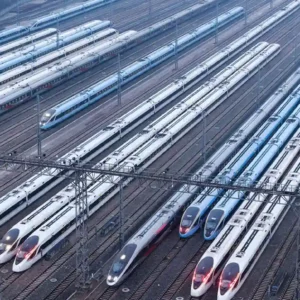
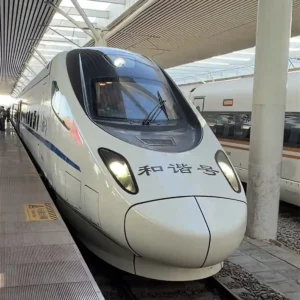
In November, test operations began on two new high-speed rail lines, enhancing transportation efficiency. The first line, spanning 163 kilometers, links Shanghai, Suzhou, and Huzhou. With a maximum speed of 350 km/h, this line is set to open by the end of the year. It will become a vital part of the transportation network in eastern China.
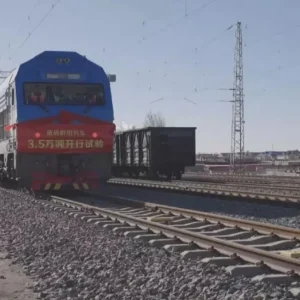
The second line, 268.3 kilometers long, connects northern regions, including Jining, Datong, and Yuanping. Designed for speeds up to 250 km/h, its test runs started on November 21. This line will significantly link Inner Mongolia to the national railway network.
How Railway Infrastructure Development Impacts China’s Regions?
The Jining-Datong-Yuanping railway connects with three other major lines: Hohhot-Zhangjiakou, Datong-Xi’an, and Zhengzhou-Taiyuan. This connectivity reduces travel time between key cities from five hours to just 2.5 hours. Such developments improve logistics and strengthen regional economic ties.
Investments in railway infrastructure also improve accessibility to remote areas, boosting economic growth in less developed regions. These new lines integrate seamlessly into the national high-speed rail network, increasing transportation efficiency.
Investments in Railway Infrastructure Development: Priorities and Environmental Goals
China emphasizes reducing its carbon footprint and transitioning to environmentally friendly transportation systems. High-speed railways play a critical role in cutting CO2 emissions, minimizing environmental impacts. Investments totaling $711.7 billion represent a significant step toward achieving these environmental objectives.
This funding accelerates the completion of large-scale projects while continuously expanding the transportation network. China solidifies its position as a global leader in infrastructure development and innovation.
News on railway transport, industry, and railway technologies from Railway Supply that you might have missed:
Don’t miss…Mitsubishi’s rubber-tired trains enhance urban mobility in the New Shuttle system
Find the latest news of the railway industry in Eastern Europe, the former Soviet Union and the rest of the world on our page on Facebook, Twitter, LinkedIn, read Railway Supply magazine online.Place your ads on webportal and in Railway Supply magazine. Detailed information is in Railway Supply media kit