Daugavpils Locomotive Repair Plant (DLRR) Opens New Branches Abroad
09.03.2025
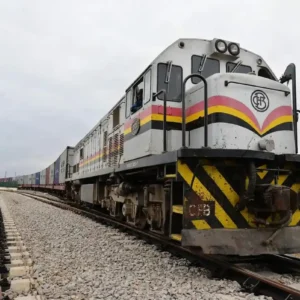
The Daugavpils Locomotive Repair Plant (DLRR) registered yet another subsidiary last year—this time in Hungary. Now, the company is rapidly expanding its customer base in the Baltic countries, Ukraine, Poland, Hungary, Germany, Romania, Bulgaria, Azerbaijan, Georgia, and even Africa. This is reported by the railway transport news portal Railway Supply.

The company’s management is confident that to grow and move forward, it is essential to take its business to the global market. This opens opportunities to attract an increasingly broader client base, secure capital for development, and integrate modern technologies into production more quickly.
A DLRR office will be opened in Poland
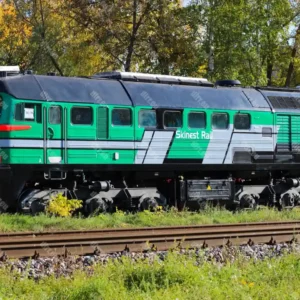
DLRR owns a fleet of locomotives in Poland, Hungary, and Ukraine. These locomotives are not serviced by Polish, Hungarian, or Ukrainian companies but by DLRR specialists.
“We have established DLRR subsidiaries there, hired employees who work on-site permanently and maintain the rolling stock. We have gained experience operating across a very wide geographical area—in all the Baltic countries, Ukraine, Poland, Hungary, Germany, Romania, Bulgaria, Azerbaijan, Georgia, and even Africa. Our subsidiary in Poland has already become a transport operator. In Poland, we plan to increasingly deploy our locomotives in the transportation market, expand and improve locomotive maintenance teams, and work on developing their logistics,” said Olga Piļščikova, DLRR’s Commercial Director and Master of Railway Transport Sciences.
Ukraine Remains an Important Market
Locomotives repaired and maintained by DLRR continue to operate in war-torn Ukraine. They are not only serviced but also significantly modernized.
For example, two locomotives have already had their engines replaced—old ones swapped for new, powerful, and fuel-efficient diesel engines made in Belgium. Engine replacement is an entirely new project that has already proven its profitability. The client has expressed gratitude. “Despite the ongoing conflict, we send our locomotives to Ukraine. We offer them for lease to Ukrainian companies. Like everyone, we sincerely hope the war will end soon. People want peace. We are ready to help Ukraine restore its rolling stock fleets,” shared the Commercial Director of DLRR about their achievements and plans.

With a Clear Vision and Plans for the Future
DLRR has found and occupied a highly specific niche. The company repairs locomotive series that few others can or know how to handle.
“Of course, there are locomotive depots in Poland and Germany too, but they bring large units of certain series to us for repair, such as specific diesel engines. We are the only ones in the region with test benches for diesel engines at our plant. While other repair plants install an engine into a locomotive and then adjust it, we test and tune the repaired engine on a test bench before sending it to the client. We have a modern quality control laboratory and a quality control department. The plant holds several certificates, which can be viewed on the company’s website, dlrr.eu,” explained Olga Piļščikova.
The Latvian Market is Also Important
The DLRR head acknowledged that attracting new clients is no easy task for the company. DLRR actively participates in public procurement tenders.
“So far, there hasn’t been a case where a state institution has obstructed us. Obviously, no one else in Latvia will build a train or a tram, yet they are sorely needed in our country. Importantly, we don’t even ask the state for money for new or modernized trams or locomotives. The state can pay us for an order over 10-15 years. Initially, we invest our own funds into the order. If the state decided to update its train and tram fleet on its own, it would have to take out a loan. That would undoubtedly be painful for the country’s economy. In our case, the state doesn’t need to borrow from banks. We come with our product and our money. This is important to us because it ensures work for our employees, both in servicing the ordered trams and trains. Right now, we are working on improving the plant’s energy efficiency to align with the green agenda set by the European Union,” outlined Olga Piļščikova regarding future plans.
Don’t miss…Overhaul of TEM2, TEM7, TEM18 Locomotives
It’s important to understand that until “Rail Baltica” is built, high-speed trains in Latvia will remain a dream. By design, the speed of our diesel locomotives is 100-120 km/h. The structure of our railway tracks does not allow speeds above 120 km/h. In passenger transportation, railway lines to Liepāja, Daugavpils, and Valmiera are crucial. The key is ensuring people can travel to Liepāja and Daugavpils.
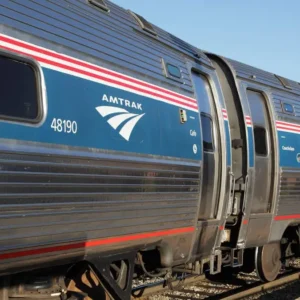
“We must not forget that ‘Rail Baltica’ won’t take passengers to Liepāja, Daugavpils, or Valmiera. For Latvia to have a good network of electric trains, the railway lines to Ventspils, Liepāja, Daugavpils, and Valmiera need electrification. Currently, the railway is electrified only up to Aizkraukle, Tukums, Zvejniekciems, and Jelgava. There isn’t even an electrified line to Sigulda. That’s why the transport operator needs diesel passenger trains,” reminded Olga Piļščikova.
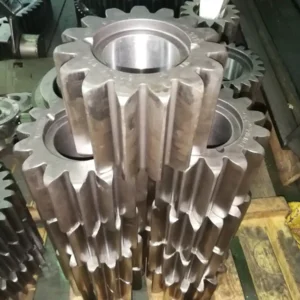
“We are a locomotive repair plant: we repair locomotives, produce parts ourselves, and handle metalworking, though it’s not our primary activity. Nevertheless, we manufacture complex, large-scale parts for specific major orders—things an ordinary workshop can’t do. We have experience building new trams. We produced trams for Daugavpils. We won’t stop and will continue working in all the directions mentioned. We offer ourselves to clients as a company capable of high-quality modernization of passenger trains and old trams,” explained Olga Piļščikova.

Important for Riga
According to the Commercial Director, if Riga decides to update its tram fleet, DLRR could offer not only new trams but also the overhaul and modernization of old ones: “This means that only the chassis and frame remain from the old tram, while everything else—cladding, electrification, safety systems, and braking systems compliant with European standards—is installed anew. We source components from our suppliers, mostly in Europe. Our procurement department handles this, as we don’t yet produce safety systems or electronics ourselves,” said Olga Piļščikova.
Source: nra.lv
News on railway transport, industry, and railway technologies from Railway Supply that you might have missed:
Don’t miss…For Sale: M62 and 2M62 Diesel Locomotives
Place your ads on webportal and in Railway Supply magazine. Detailed information is in Railway Supply media kit