Contactless fare payment upgrades expand across North America
11.12.2025
Contactless fare payment upgrades are rolling out across North America, with transit agencies adding tap to pay options for bank cards and digital wallets.
This is reported by the railway transport news portal Railway Supply.
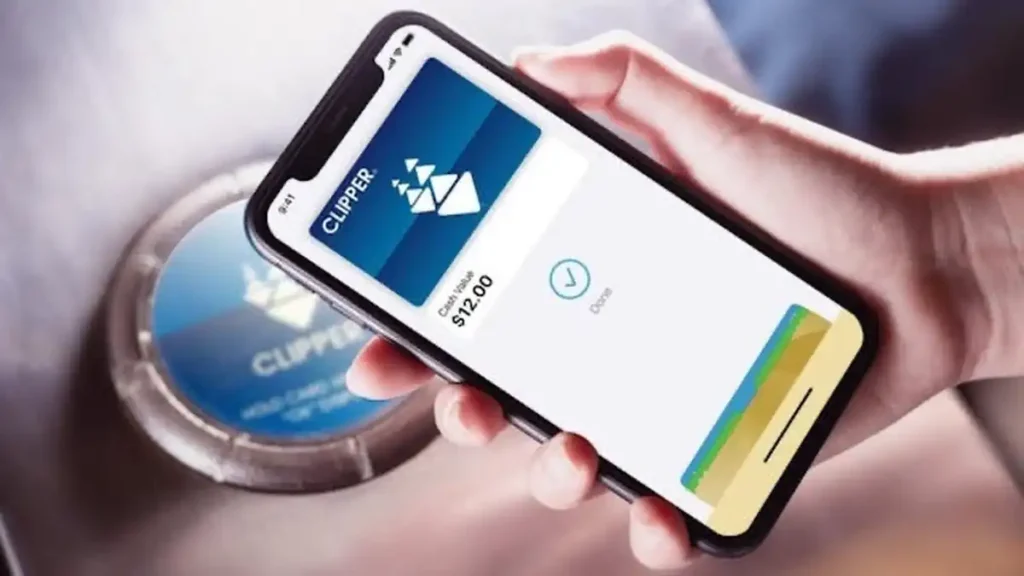
In the San Francisco Bay Area, the Metropolitan Transportation Commission (MTC) is shifting the region to Next Generation Clipper, while the Edmonton region in Alberta is extending Arc tap to pay across several transit operators.
Contactless fare payment upgrades in the Bay Area
In the Bay Area, MTC and its regional partners will begin the Next Generation Clipper rollout in December, launching an eight- to 12-week transition for existing Clipper card users to move to the updated system, as detailed by the Metropolitan Transportation Commission. Over this period, nearly two dozen Bay Area transit agencies that already accept Clipper will convert to tap and ride systems. Once the transition is complete, riders will be able to pay fares with their familiar Clipper cards as well as with contactless credit and debit cards and mobile wallets.
Next Generation Clipper brings in several features aimed at speeding up and simplifying fare payment. A key change is the “instant value” function: as Clipper moves to a cloud-based platform, value and passes loaded onto plastic or mobile cards become available immediately, no matter how they were added. On top of that, the improved auto-reload tool lets customers set both the amount and the timing of automatic top-ups instead of sticking to a single preset configuration.
Don’t miss…Amtrak mechanical issues Chicago trains expose head-end power failures
Free and discounted transfers between agencies are another important part of the new tap and ride setup. When a rider uses more than one Bay Area transit agency on a single trip—for instance, BART followed by Muni—they will pay full fare only on the first operator.
Any additional segment on another agency within a two-hour window receives a transfer discount of up to $2.85. This benefit is active right away for contactless bank cards. Clipper card holders gain access once their cards are upgraded to the new system, a process they can start themselves.
Moving to a cloud-based system also changes how accounts are managed. Families will be able to control several registered Clipper cards through the Clipper app, making it easier to handle payments for multiple riders. Youth and senior passengers will have the option to apply for their discount programs online, while in-person and mail applications remain available, which broadens the ways these concessions can be obtained.
Because the switch to Next Generation Clipper is expected to take eight to 12 weeks, not every new function will be available to all riders from day one. Those who want to move faster can initiate their upgrade by logging into the Clipper website, using the Clipper app or calling the Clipper customer service center and speaking with an agent. During this transition, BART contactless payments provide an early indication of how tap and ride is being used: since BART became the Bay Area’s first tap and ride system on Aug. 20, 2025, use of the technology has been steadily climbing, a trend also described by Railway Supply.
By September, tap and ride trips represented about 8 percent of weekday BART journeys and roughly 12 percent of weekend journeys. San Francisco International Airport (SFO) Station was particularly notable, accounting for nearly 30 percent of all tap and ride trips on BART, which points to strong uptake of the new payment option at a major regional gateway.
Arc tap to pay and Edmonton transit contactless fares
Farther north, the Edmonton metropolitan region is developing its own modern fare collection platform. Arc tap to pay now enables passengers across the region to pay transit fares by tapping a physical or digital credit or debit card directly on Arc validators, in line with information on the official Arc website. Accepted payment methods include Mastercard (credit and debit), Visa (credit and debit), Interac Debit, American Express, Google Wallet, Apple Pay and Samsung Wallet.
These contactless options are available everywhere the Arc payment validation system is in use, adding flexibility to existing fare media. Arc cards and tickets, along with cash fares on buses, remain valid ways to pay, so riders can choose between traditional methods and Edmonton transit contactless fares depending on what suits them best. This setup allows passengers to adopt tap to pay while still keeping familiar options in place.
Riders do not need to create an Arc account before using these contactless options. They can tap on and off with an eligible card or digital wallet, avoiding both the need to preload an Arc card and the need to carry exact change. Edmonton Transit Service Branch Manager Carrie Hotton-MacDonald notes that the expansion of Arc tap to pay reflects close cooperation among regional partners and is meant to make it easier for people to choose transit for trips to friends and family, work or other activities across the region.
Transit services in Edmonton, Beaumont, Fort Saskatchewan, Spruce Grove, St. Albert and Strathcona County all use Arc and will accept contactless fare payments. Riders who consistently use the same payment method for every journey receive daily and monthly standard adult fare caps, helping to limit how much they pay over those periods. Physical and digital versions of the same card are treated as separate cards in the system, so each version accumulates its own caps independently.
Discounted and concession fares are also built into this arrangement. Seniors, youth and riders with low incomes can use tap to pay with their physical or digital cards once the relevant concession has been applied to that payment method via the Arc website. Period pass holders, including U-Pass users and school board pass users, continue to rely on Arc cards for the duration of their school term, keeping those products aligned with the existing setup.
Regional benefits of modern fare systems
Strathcona County Transit Director Wade Coombs underscores that when municipalities in the Edmonton region work together, residents gain faster and more convenient movement across the area. Improved regional mobility can contribute to reduced traffic congestion, lower emissions and broader opportunities for people who live and work in these communities.
Hotton-MacDonald adds that, since Arc was launched in 2022, the region has taken an incremental, iterative approach to implementation to ease the transition for riders and expresses thanks to passengers for supporting the move to a modern fare payment system.
Arc-branded cards remain available at Arc fare vending machines located at transit centers, light-rail transit stations and participating retailers. Together with ongoing contactless fare payment upgrades in the Bay Area and other regions, these developments show how North American transit agencies are reshaping fare collection to offer faster, more flexible ways for riders to pay.
News on railway transport, industry, and railway technologies from Railway Supply that you might have missed:
Find the latest news of the railway industry in Eastern Europe, the former Soviet Union and the rest of the world on our page on Facebook, Twitter, LinkedIn, read Railway Supply magazine online.Place your ads on webportal and in Railway Supply magazine. Detailed information is in Railway Supply media kit