Commercial maglev operation permit in Germany
16.12.2025
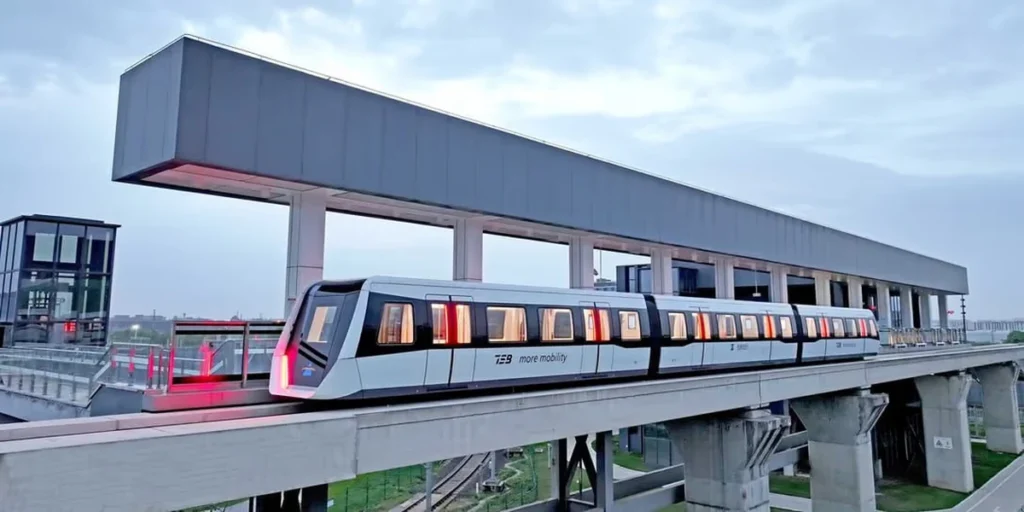
Commercial maglev operation in Europe has moved a step forward: Germany’s TSB Betriebs (part of construction group Max Bögl) has received a license from the German Federal Railway Authority to operate maglev lines for public use, according to a note published on the Transport System Bögl website. The company is responsible for testing and piloting the Transport System Bögl maglev system developed by Max Bögl.
Commercial maglev operation permit: what the license means
The license covers the operation of maglev lines intended for public use. At the same time, according to the company’s materials, a separate construction permit is still required for the technology’s commercial rollout. The regulator’s decision was also reported by industry outlet RailTech.
Max Bögl’s modular infrastructure and rapid build timelines
TSB Betriebs says infrastructure based on Max Bögl’s technology can be built in “very short” timeframes thanks to a modular design. The factory-made modules are prefabricated concrete beams with integrated guideways and power supply. On site, the maglev track is assembled from these elements like a construction kit.
This is reported by the railway transport news portal Railway Supply.
Meanwhile, authorities in several German cities and districts are assessing the potential deployment of Max Bögl’s maglev system. The list includes Nuremberg and Hamburg, as well as the Böblingen and Calw districts in the Baden-Württemberg region.
Don’t miss…Union Pacific–Norfolk Southern merger gains lawmakers’ backing
Transport System Bögl testing and demonstrations in Europe and China
Max Bögl has been developing an autonomous maglev system for urban and suburban services, as well as short- and medium-distance freight transport, since 2010. Since 2012, the project has been tested on a track in Sengenthal, Germany, which has been open for demonstration rides since 2018.
In 2021, in Hamburg, Max Bögl presented a 120-metre line to demonstrate automated transport and transshipment of a standard 40-foot container onto a road container carrier and back. In addition, in 2020, China’s Chengdu Xinzhu Road & Bridge Machinery Co. Ltd., together with Max Bögl, commissioned a demonstration line in Chengdu, where in April 2024 the system reached its maximum speed of 181 km/h, as reported by Railway Supply.
News on railway transport, industry, and railway technologies from Railway Supply that you might have missed:
Find the latest news of the railway industry in Eastern Europe, the former Soviet Union and the rest of the world on our page on Facebook, Twitter, LinkedIn, read Railway Supply magazine online.Place your ads on webportal and in Railway Supply magazine. Detailed information is in Railway Supply media kit