China’s High-Speed Rail Disrupts Air Travel on Key Route
25.05.2025
High-speed rail is rapidly transforming how travelers commute between Beijing and Shanghai, as millions now choose trains over flights for speed, comfort, and better connectivity. This is reported by the railway transport news portal Railway Supply.

More than 52 million passengers took the train between the two cities last year, while only 8.6 million flew. The rail sector now dominates this busy corridor, forcing airlines to cut fares and add perks.
Business Travelers Embrace High-Speed Rail for Efficiency
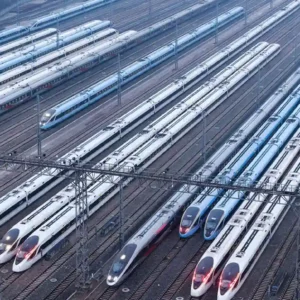
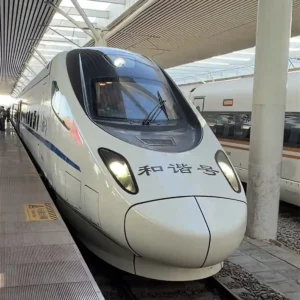
With over 100 daily trains running up to 217 mph, high-speed rail offers unmatched convenience. Business travelers especially favor its reliable schedules, large seats, onboard Wi-Fi, and steady power access.
Don’t miss…Telangana to Receive Rs 80,000 Crore for Rail Development
In 2024, the Beijing–Shanghai line generated $5.88 billion, while net profits surged over 10% to reach $1.79 billion. These figures underscore the growing profitability of modern rail services.
China’s airlines, on the other hand, struggle with delays caused by weather and crowded airspace. As a result, many passengers now avoid flights altogether.
The China Air Transport Association warns that airlines risk losing more ground as high-speed rail continues to improve. Business cabins on trains now offer reclining seats, adjustable desks, and multiple charging outlets.
Airlines Respond to High-Speed Rail With Perks and Discounts
Tong Lijun, a senior official at Shanghai Hongqiao Station, said business travelers value good punctuality, downtown connections, and the ability to stay connected. These factors increasingly sway travelers away from the skies.
In response, airlines like China Eastern and Air China have launched limousine pickups and flexible frequent-flyer programs. Some flight fares are now cheaper than train tickets, as companies try to stay competitive.
However, the battle remains tough. Experts urge China Railway to increase service frequency further, similar to Japan’s Tokaido Shinkansen, which operates almost 150 daily trains each way.
As China’s economy grows, demand for efficient intercity travel will only rise. The future of transport between megacities may rest on how fast and flexible high-speed rail can become.
Source, photo: amp.scmp.com
News on railway transport, industry, and railway technologies from Railway Supply that you might have missed:
Find the latest news of the railway industry in Eastern Europe, the former Soviet Union and the rest of the world on our page on Facebook, Twitter, LinkedIn, read Railway Supply magazine online.Place your ads on webportal and in Railway Supply magazine. Detailed information is in Railway Supply media kit