China-Europe Freight Trains Surge Past 90,000 via Xinjiang Ports
24.03.2025
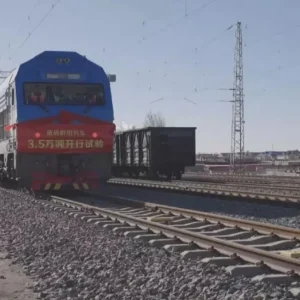
China-Europe freight trains left Horgos Port in Xinjiang on Sunday, surpassing 90,000 trips. This milestone strengthens trade links across Eurasia rapidly. This is reported by the railway transport news portal Railway Supply.

China-Europe Freight Trains Drive Trade Growth
Horgos and Alashankou ports in Xinjiang hit 90,000 train trips this weekend. China Railway Urumqi Group Co says this fuels Belt and Road progress.
Don’t miss…TANZAM Railway Modernization Gets $1.4 Billion Boost from CCECC
Xinjiang railway officials now enhance schedules and coordination on routes like Lanzhou-Xinjiang. They prioritize fast dispatching, smooth cargo flows, and quick cross-border handling daily.
Authorities also boost return services and speed up train turnover for better results. China Railway Urumqi Group Co shared these details with Global Times recently.
Chinese and Kazakh railway teams improve ties to ease cross-border movements effectively. Their work hit a record of 15 daily broad-gauge train pairs in March.
Daily container swaps at Horgos station rose from 10 to 15 batches recently. This upgrade ensures quick swapping and departure, supporting over 23 trains daily.
Li Ankang, deputy director at Horgos station’s safety center, spoke to Global Times. He said 2025 upgrades to platforms and staff lift container-swapping capacity significantly.
Horgos station now offers a special service window for transcontinental freight trains exclusively. This allows customs and border checks to finish together, saving 30 minutes per train.
China-Europe Freight Trains Enhance Connectivity
Urumqi Customs now offers 24/7 appointments, tax breaks, and joint inspections for efficiency. These steps speed up freight train operations across borders daily.
Xinjiang border teams add staff and tech tools to manage crossings around the clock. Their efforts ensure safe, efficient train flows, per China Railway’s statement.
Alashankou Port runs 123 freight train routes to 21 countries, including Germany. Meanwhile, Horgos Port connects 87 routes across 46 cities in 18 nations.
Official data show Xinjiang’s rail ports handled 16,400 freight trains in 2024 alone. This reflects a 14 percent rise from last year, continuing a five-year trend.
For five years, Xinjiang ports manage over 10,000 trains annually with steady growth. These routes now link China’s trade with Eurasia effectively.
The transcontinental routes offer a cost-effective and reliable way to move goods quickly. Thus, they revive trade links and boost connectivity across the Eurasian region.
Freight trains through Xinjiang cut costs and stabilize cargo transport for global trade. Consequently, they expand China’s trade network across continents rapidly.
Railway upgrades and teamwork with Kazakhstan push train volumes higher every year. As a result, Xinjiang’s ports strengthen their role in international trade routes.
Experts view these rail links as a foundation for future economic ties across continents. They expect growth because demand for efficient freight transport keeps increasing.
Xinjiang’s rail ports now serve as a key hub for trade flows to Europe. Their success shows the value of cooperation and innovation in logistics.
Source: www.globaltimes.cn
News on railway transport, industry, and railway technologies from Railway Supply that you might have missed:
Find the latest news of the railway industry in Eastern Europe, the former Soviet Union and the rest of the world on our page on Facebook, Twitter, LinkedIn, read Railway Supply magazine online.Place your ads on webportal and in Railway Supply magazine. Detailed information is in Railway Supply media kit