Caltrain electrification is reshaping Bay Area regional rail
11.01.2026
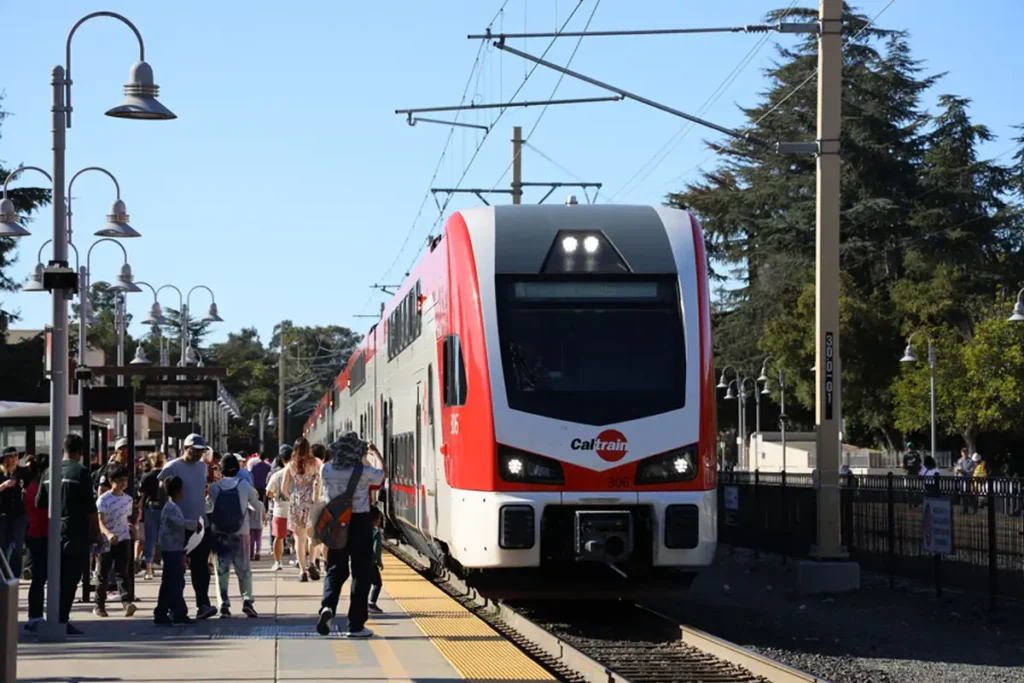
Caltrain electrification is increasingly being cited as a turning point for commuter rail in the San Francisco Bay Area.
This is reported by the railway transport news portal Railway Supply.
Faster trips, more trains, and improved reliability have coincided with ridership growth on Caltrain since the agency electrified its entire fleet of rolling stock in September 2024—a shift also noted in Railway Supply coverage of Caltrain’s electrified service. Caltrain said that “for the first time in the railroad’s 160-year history, diesel service was replaced with electric service” along the 50-mile main line between San Francisco and San Jose.
Don’t miss…Amtrak Mardi Gras Service adds a coach car for Carnival season
That rebound is visible in the agency’s reported totals. Caltrain recorded 9.1 million passengers in Fiscal Year 2025 (ending June 30, 2025), a 47% increase from 6.2 million the year before, as outlined in Caltrain’s first-anniversary electrified-service update. In June 2025, the system surpassed 1 million riders in a month for the first time since the pandemic. It reached that mark again in July and August, and those months were roughly 60% higher than in 2024—just before the electrified fleet began operating.
Supporters point to the outcome as a case for electrification and for the regional rail model: fast, frequent trains throughout the day, including weekends, rather than service that mainly revolves around weekday rush hours and older commuting patterns. In December, the American Public Transportation Association recognized Caltrain as the fastest growing transit agency in the U.S., a point echoed in Metro Magazine’s report on APTA’s 2025 Transit Wrapped. Caltrain’s executive director said the system “has been reinvented,” citing growing ridership, cleaner air, quieter trains, and less-congested roads.
What changed with the new Caltrain schedule improvements?
Electric trains have made it possible for Caltrain to run a more intensive timetable. The agency points to stronger acceleration and deceleration, along with improved reliability, as reasons it can offer about 20% more weekday service, shorter travel times, and predictable “clock-face” departures with 30-minute off-peak frequencies. Capacity has increased, too: the new trainsets operate as seven-car sets, replacing five-car diesel consists.
The shift is especially clear in travel times. Electrified express service now runs from San Francisco to San Jose in about an hour, while local trips take roughly 75 minutes—versus nearly two hours on the old diesel trains. Frequency has been boosted across the route as well: at least one train in each direction stops at every station at least every half-hour. Trains stop at 16 stations every 20 minutes and at 11 stations every 15 minutes.
Customer satisfaction has risen alongside the schedule changes. In a 2025 survey, riders gave Caltrain a 4.41 out of 5 rating, up from 4.02 in 2024. Caltrain said it was the highest score in 27 years of survey taking.
How electric trains improve service and energy use?
Electrification also comes with an efficiency component that Caltrain highlights. Through regenerative braking technology, the trains return nearly a quarter of their energy to the grid, a process Caltrain described as “driving an electric motor in reverse to recapture energy rather than losing it as heat during braking.”
Regional rail model gains momentum on weekends and in funding plans
The regional-rail service model has also shown up in weekend operations. After electrification, Caltrain more than doubled daily weekend service to 33 departures in each direction. Weekend ridership has more than doubled as well, and it now exceeds pre-pandemic levels—even though overall ridership in 2025 remained at about 60% of pre-pandemic levels.
The longer-term picture may also depend on funding. Last October, Gov. Gavin Newsom signed a bill authorizing a Bay Area transit funding ballot referendum, and a signature-gathering campaign is underway to place it on the ballot in November. If voters approve it, a new regional transportation sales tax of 1% in San Francisco and 0.5% in surrounding counties would be levied. The tax would generate nearly $1 billion annually, providing a stable, dedicated funding source for local transit systems.
Illinois is also moving toward the regional-rail model, with the passage of a transit law that invests $1.5 billion annually in trains and transit. The Alliance argues the measure “isn’t a maintenance bill,” saying it positions the state to build a modern, frequent, interconnected railway network that treats mobility as essential infrastructure rather than a social service.
The challenge now is to sustain progress in states already on board—most notably California, Illinois, and New York—while making the case for regional rail as “essential infrastructure” for stronger economies, healthier communities, and a cleaner environment across the U.S.
News on railway transport, industry, and railway technologies from Railway Supply that you might have missed:
Find the latest news of the railway industry in Eastern Europe, the former Soviet Union and the rest of the world on our page on Facebook, Twitter, LinkedIn, read Railway Supply magazine online.Place your ads on webportal and in Railway Supply magazine. Detailed information is in Railway Supply media kit