BNSF outlines UP-NS merger conditions with NS trackage rights to Bethlehem
BNSF Railway has outlined the UP-NS merger conditions it intends to pursue if the Surface Transportation Board approves the proposed combination of Union Pacific and Norfolk Southern. They include a planned request for overhead trackage rights over about 824 route miles of NS lines between Chicago and Bethlehem, Pennsylvania, although BNSF continues to urge the board to reject the deal.
BNSF’s filing, entered into the record of STB Finance Docket No. 36873 on September 9, 2026, describes a responsive application that BNSF expects to file rather than the application itself. Under the board’s procedural schedule, September 9 was the deadline for such descriptions, while responsive applications, comments and requests for conditions are due by November 18, 2026. BNSF said it will set out its full opposition on that date.
Intermodal access between Chicago and eastern Pennsylvania
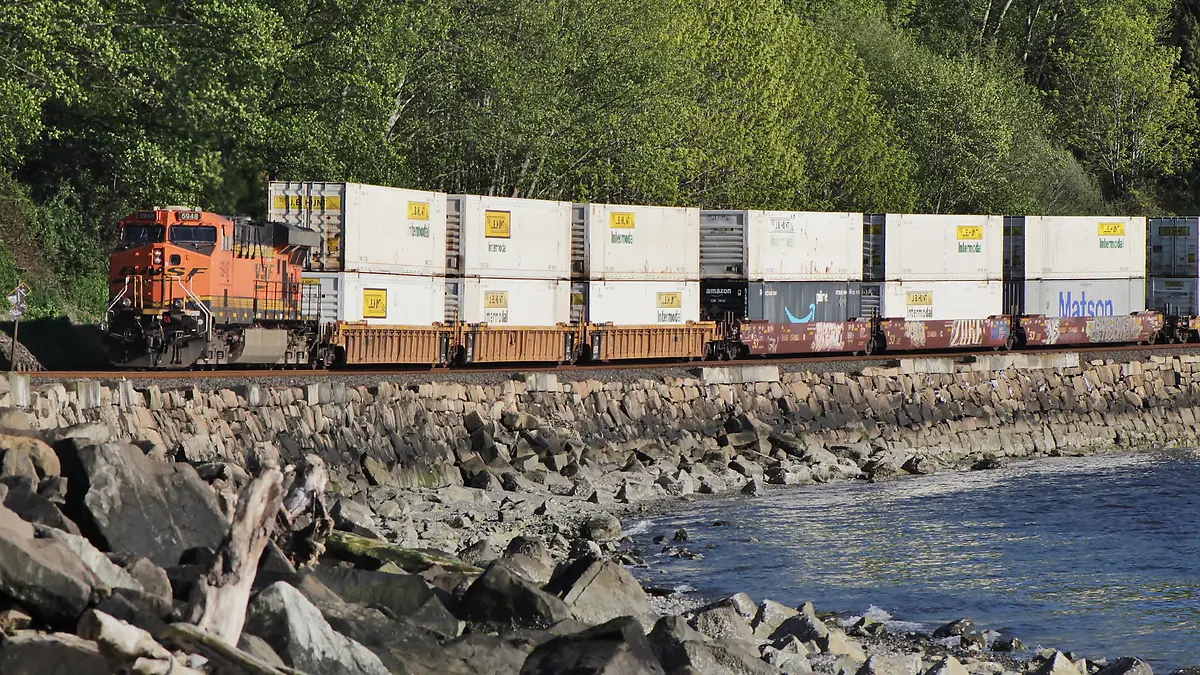
BNSF and NS already handle joint intermodal traffic from the West Coast to the Lehigh Valley in eastern Pennsylvania, with BNSF moving the loads to Chicago and NS carrying them onward. BNSF argues that a merged UP/NS would have the ability and the incentive to ensure that BNSF is no longer a competitive option on price and service for that business, enabling the combined carrier to raise prices for its customers.
To mitigate that loss of competition, BNSF expects to request overhead trackage rights over a continuous route via Cleveland and Harrisburg. It is made up of five NS lines, from the Chicago Line to the Harrisburg Line, plus segments of the Reading and Lehigh lines east of Wyomissing Junction, Pennsylvania. BNSF also anticipates seeking access to certain intermodal terminals and yards, as well as the right to serve new intermodal or automotive facilities that locate on the lines covered by the rights.
NS lines in BNSF’s planned trackage rights route
| NS line | From | To | Approx. route miles |
|---|---|---|---|
| Chicago Line | Chicago, IL | Cleveland, OH | 341 |
| Cleveland Line | Drawbridge (Cleveland), OH | Alliance, OH | 56 |
| Fort Wayne Line | Alliance, OH | West Pitt, PA | 83 |
| Pittsburgh Line | West Pitt, PA | Harrisburg, PA | 249 |
| Harrisburg Line | Harrisburg, PA | Wyomissing Junction, PA | 52 |
| Reading Line and Lehigh Line (segments) | Wyomissing Junction, PA | East of Wyomissing Junction, PA | 43 |
| Total route | Chicago, IL | Bethlehem, PA | 824 |
The Chicago Line and the Pittsburgh Line together account for about 590 of the roughly 824 route miles, or more than two-thirds of the route (editorial calculation: 341 + 249 = 590; 590 ÷ 824 ≈ 72%). All mileages are approximate figures stated by BNSF, and the segment figures add up to its stated total. Source: BNSF Railway Company, Description of Responsive Application (BNSF-53), STB Finance Docket No. 36873, September 9, 2026.
Neutral terminal railroad for Gulf Coast shippers
The second request concerns the Gulf Coast territory stretching from Corpus Christi, Texas, to the west bank of the Mississippi River. BNSF says many shippers there depend on the UP network without a competitive rail alternative, and that the merger would make this worse because Gulf customers send significant volumes to eastern markets where CSX and NS compete today.
BNSF plans to ask the board to require UP to install a neutral switching or terminal railroad that would directly serve all BNSF- and UP-served facilities in the territory and hand traffic to either carrier at nearby interchange points. It could be jointly owned and managed by UP and BNSF, with other railroads possibly taking part depending on the area, or operated by a third-party short line or switching railroad. Participating Class I railroads would hold equal voting power, and any action with a substantial effect on operations, maintenance or administration would require a unanimous vote.
BNSF says the arrangement would not require any transfer or divestiture of existing assets. It will not file a responsive application for this condition, since the board would evaluate any necessary operating authorizations when UP presents the transaction for approval.
BNSF still opposes the UP-NS merger
BNSF presented both requests as a way to reduce, rather than remove, the competitive harm it expects from the deal. The filing states:
“To be absolutely clear, no combination of conditions and responsive applications can solve the intractable problems that this merger would create.”
The railroad argues that a combined UP/NS would control 50% of all rail shipments originating in the United States on Class I railroads and would hold a monopoly on transcontinental single-line rail service. It points to opposition from shipper associations, labor unions and the Republican attorneys general of Montana, Iowa, Florida, North Dakota, South Dakota, Tennessee and Kansas.
Shippers have also raised broader conditions with BNSF, such as an open access framework that would give direct commercial access to origin or destination facilities served only by the merged carrier. BNSF said it may support such proposals in its November submission.
Context
UP and NS filed their revised merger application on April 30, 2026, after the board rejected the original December 2025 application as incomplete. The board accepted the revised filing on May 28 but held the proceeding in abeyance until the applicants supplied more information. Their July 27 supplement added four commitments, among them an expanded Committed Gateway Pricing program and a Targeted Access Program under which sole-served shippers in a terminal area could become eligible for reciprocal switching if service falls below set standards. The applicants also reported a settlement agreement with CN. The board resumed the proceeding on August 18, 2026, setting final briefs for May 28, 2027, with the public hearing date still to be determined.
Upcoming dates in the STB review
| Date | Step |
|---|---|
| September 30, 2026 | Notices of intent to participate due (extended from September 4, 2026) |
| October 5, 2026 | Petitions for waiver or clarification concerning responsive, including inconsistent, applications due |
| November 13, 2026 | Responsive environmental information and environmental verified statements due |
| November 18, 2026 | Comments, protests, requests for conditions and other opposition evidence due; responsive, including inconsistent, applications due |
| December 3, 2026 | Preliminary comments from the U.S. Department of Justice and the U.S. Department of Transportation, if any, due |
| December 18, 2026 | Notice of acceptance of responsive applications, if any, published in the Federal Register |
| February 16, 2027 | Responses to comments and opposition, rebuttal in support of the revised application, and responses to responsive applications due |
| March 29, 2027 | Rebuttals in support of responsive applications due |
| To be determined | Public hearing |
| May 28, 2027 | Final briefs due |
| To be determined | Close of the record |
| Up to 90 days after the record closes | Service of the final decision |
After the September 9 descriptions, the next main deadline is November 18, 2026, when responsive applications and opposition evidence are due; final briefs follow on May 28, 2027. The dates come from the board’s August 18, 2026, decision, with the later extension for notices of intent listed on the STB’s UP-NS merger resources page. The board has said it will endeavor to issue its final decision within 90 days of the close of the record, provided the environmental review is complete.


