Automated railroad track inspections reshape safety rules
06.12.2025
Automated railroad track inspections are set to take on a larger share of the work of monitoring the nation’s freight infrastructure.
This is reported by the railway transport news portal Railway Supply.
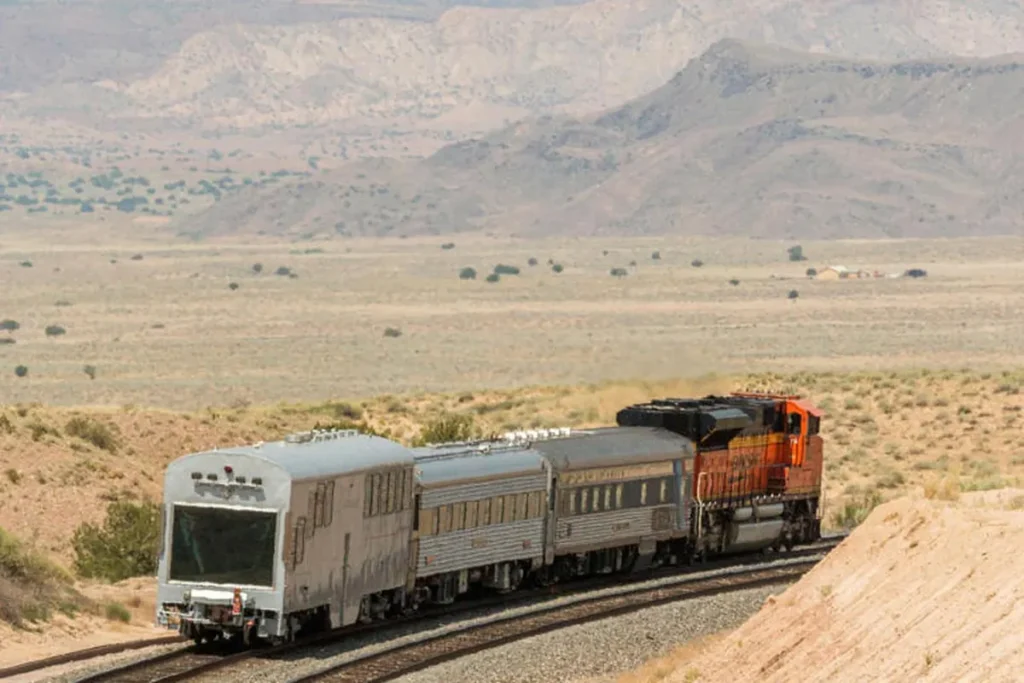
The federal government has approved an industry waiver that allows companies to lean more on technology and scale back some traditional visual checks, as reported by the Associated Press.
FRA waiver changes visual inspection rules
The Association of American Railroads trade group asked that inspection rules dating to 1971 be relaxed, arguing that automated railroad track inspections and other modern tools are now good enough at spotting early issues that visual patrols no longer have to be as frequent. As support, the group pointed to extended BNSF and Norfolk Southern inspection tests where, by the railroads’ account, safety improved even as human inspections were reduced from twice a week to twice a month.
Don’t miss…Gold Runner California rail service connects Central Valley
The Federal Railroad Administration (FRA) did not go as far as the industry had hoped. Under the track inspection waiver, freight railroads that use automated systems on a regular basis may cut visual track inspections to once a week. Regulators rejected, however, the request to give railroads up to three days to correct defects flagged by the systems. The FRA kept in place the requirement that serious defects be fixed immediately, and that all other problems identified in inspections be addressed within 24 hours. The same waiver and the safety debate around it have also been covered by Railway Supply.
How automated railroad track inspections work?
Under the new framework, railroads can rely more heavily on automated inspection systems that mount arrays of cameras and lasers on locomotives or railcars operating in regular service. As trains move, these systems measure whether the rails are shifting, drifting out of alignment or otherwise slipping outside acceptable standards, and they flag track geometry defects when that happens. Railroads say this approach allows automated railroad track inspections to scan long stretches of infrastructure consistently, while human inspectors still carry out periodic visual patrols. An explainer from GoRail offers additional background on how Automated Track Inspection technologies are deployed across the U.S. network.
Union warns about limits of technology
The Brotherhood of Maintenance of Way Employes Division, which represents track inspectors, argues that technology cannot replace visual track inspections without increasing the risk of derailments. Union officials say automated systems cannot see everything that matters on the ground: shifting ballast beneath the track, vegetation pushing into the train’s path, cracks in the rail or railroad ties that are rotting away. They also emphasize that inspectors can pick up on a combination of small defects that together might be enough to derail a train, even when the machine output does not show a clear problem.
Union president Tony Cardwell says many of the everyday defects uncovered during visual inspections simply do not appear in automated readings. He characterizes the technology, which he notes has been around for roughly 30 years, as “a glorified tape measure” — useful for measurement, but not a full stand-in for experienced people on the ground. The Brotherhood of Maintenance of Way Employes Division acknowledges that automated tools do help to spot problems, yet insists they should supplement, not replace, frequent human inspections of the track.
Railroads cite BNSF and Norfolk Southern inspection tests
Railroads respond that when ballast moves, ties rot or other conditions change under and around the rail, those issues ultimately show up as track geometry defects. Mike Rush, senior vice president of safety and operations at the Association of American Railroads, explains that if the components supporting the rail are doing their job, the geometry of the track stays within limits; when they begin to fail, the geometry shifts and automated inspection equipment flags the anomaly.
BNSF told regulators that its automated inspection technology has proved far more sensitive and effective at detecting track geometry defects on its network than the manual inspection regime required by historic rules. Over two years of testing, the railroad reported that manual inspections alone found just 0.01 defects per 100 miles. On the segment where technology was used and visual checks were reduced, the combined approach of automated and human inspections identified 4.54 defects per 100 miles. The Federal Railroad Administration concluded that, where automated railroad track inspections are used regularly, tracks do not need to be inspected visually as often as before.
Cardwell and the union’s safety director, Roy Morrison, maintain that frequent visual track inspections still provide a unique layer of protection. They say inspectors who are out on the same mainline twice a week become closely familiar with their territory and can notice subtle changes more quickly. Morrison describes how an inspector who knows every curve and joint can sense that something is wrong, step out of the truck, take measurements and then confirm the specific nature of the defect.
Refocusing inspectors on manual-only equipment
Railroads say the FRA waiver will free some inspectors from routine track patrols and let them concentrate on switches and other equipment that must be inspected manually and cannot be covered by automated geometry systems. Norfolk Southern noted in its comments that, even with fewer routine inspections, special inspections will still be carried out after major storms, flooding or other disruptive events to ensure that track conditions have not been compromised.
During its 18-month Norfolk Southern inspection test, the railroad used automated inspection systems while reducing how often some visual checks were performed. The company reported improvements in areas that the automated system itself could not detect, attributing those gains to the fact that inspectors, with technology covering basic geometry defects, were able to devote more time to the specific locations and components that still require hands-on, manual inspection.
News on railway transport, industry, and railway technologies from Railway Supply that you might have missed:
Find the latest news of the railway industry in Eastern Europe, the former Soviet Union and the rest of the world on our page on Facebook, Twitter, LinkedIn, read Railway Supply magazine online.Place your ads on webportal and in Railway Supply magazine. Detailed information is in Railway Supply media kit