Australian rail investment pipeline: ARA 10-year outlook
18.12.2025
Australian rail investment pipeline research released by the Australasian Railway Association (ARA) in October sets out how rail construction and maintenance activity could unfold across Australia over the next decade, as outlined by Rail Express.
The outlook is presented in the ARA National Rail Procurement Pipeline Annual Report, which looks at market conditions and forecast activity across every state and territory. Produced by Oxford Economics Australia, the report says the sector is moving into a new phase of the investment cycle after years of sustained growth, with construction and maintenance activity having tripled over the past decade.
This is reported by the railway transport news portal Railway Supply.
What the Australian rail investment pipeline shows?
A central takeaway is the scale of work already delivered. Since 2014–15, the report records $132 billion in construction and maintenance activity—evidence of the pace of rail network expansion over the past 10 years.
Looking ahead, the pipeline is still described as strong as construction heads toward a peak. Rail construction activity is expected to reach $17.3 billion in 2025–26, remain above current levels until 2027–28, and then ease to $11.3 billion in 2031–32, as summarised in an ARA media release.
Construction peaks, with most work concentrated on the east coast
The report points to the east coast continuing to carry most of the publicly funded workload. Over the next five years, construction programs in New South Wales, Victoria and Queensland are forecast to account for 94 per cent of project work.
Don’t miss…Systra selected for rail projects as EFE plans two Santiago lines
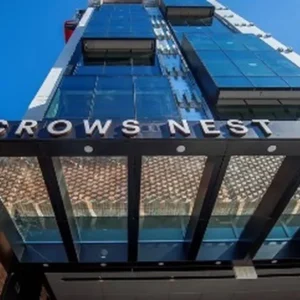
Within that mix, Queensland is expected to post the strongest growth profile. The report ties this to a substantial program spanning both passenger and freight investment, including delivery of the Cross River Rail project.
Maintenance growth, skills pressure, and the wider benefits of rail
Beyond new builds, the report forecasts that rail maintenance will keep growing. It attributes that shift to network expansion, ageing infrastructure and climate events, all of which are expected to lift maintenance activity and sustain a pipeline of work after the construction peak.
In this context, the ARA argues that certainty matters while the nature of rail investment transitions. Demand for construction and maintenance is expected to remain high, and the report says Australia will need a strong skills base as well as continued investment in supply chain capability to support delivery.
That is why the ARA is advocating for a certain, long-term and nationally coordinated investment pipeline. A clearer pipeline, the text notes, helps governments and industry plan ahead, supports workforce retention, and gives rail organisations more confidence to invest for future needs. The ARA Strategic Plan 2025–2030 also identifies a sustainable investment pipeline as a key policy priority, as set out in the ARA Strategic Plan 2025–2030. The ARA says it will continue advocating on this issue in the year ahead.
The report also returns to a familiar issue in infrastructure delivery: the need to smooth traditional peaks and troughs. It argues that a steadier investment profile can support more efficient project delivery over time.
Skills shortages remain a constraint even as construction nears its expected peak. The text says Australia has developed an outstanding skilled workforce through recent project delivery, but shortages for key roles persist. A more certain pipeline, it adds, would help retain that skills base and support productivity and efficiency gains across the rail supply chain.
The pipeline report also frames skills attraction and retention as ongoing priorities. The ARA says it continues to support initiatives that promote rail as an industry of choice for job seekers and strengthen pathways into the sector—an issue it describes as critical for Australian rail.
Finally, the article links the investment cycle to broader outcomes from recent projects. It says the latest wave of work has helped address years of historic underinvestment and is transforming cities, pointing to Sydney Metro as an example of rail reshaping travel patterns while enabling housing and urban renewal opportunities. It adds that Victoria can expect similar benefits later this year as Melbourne Metro Tunnel operations get underway, while projects in Brisbane and Perth are also creating new growth opportunities for their communities.
In passenger rail, major projects are described as helping meet growing demand and making public transport the mode of choice for more people. The text connects this to reduced congestion and fewer cars on the road, alongside housing and redevelopment opportunities linked to rising populations.
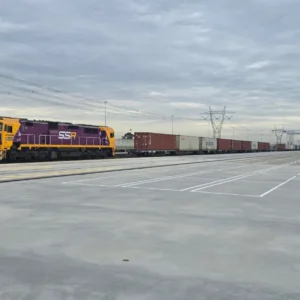
In the freight sector, the ARA says investment can support safer and low emissions freight transport, improving community safety and environmental outcomes. It notes that the ARA’s soon-to-be-released Value of Rail 2025 report confirms that greater use of rail freight can deliver significant community benefits and support a more efficient national freight and logistics supply chain. The ARA says it will keep advocating for further investment in rail freight upgrades, along with broader national policy reform, to encourage greater use of rail in freight.
News on railway transport, industry, and railway technologies from Railway Supply that you might have missed:
Find the latest news of the railway industry in Eastern Europe, the former Soviet Union and the rest of the world on our page on Facebook, Twitter, LinkedIn, read Railway Supply magazine online.Place your ads on webportal and in Railway Supply magazine. Detailed information is in Railway Supply media kit