Australia freight supply chains linked to rail upgrades
09.07.2026
Australia freight supply chains have again come under sharper focus as the Iran conflict and the resulting global fuel crisis underline how much the country depends on secure, resilient supply chains.
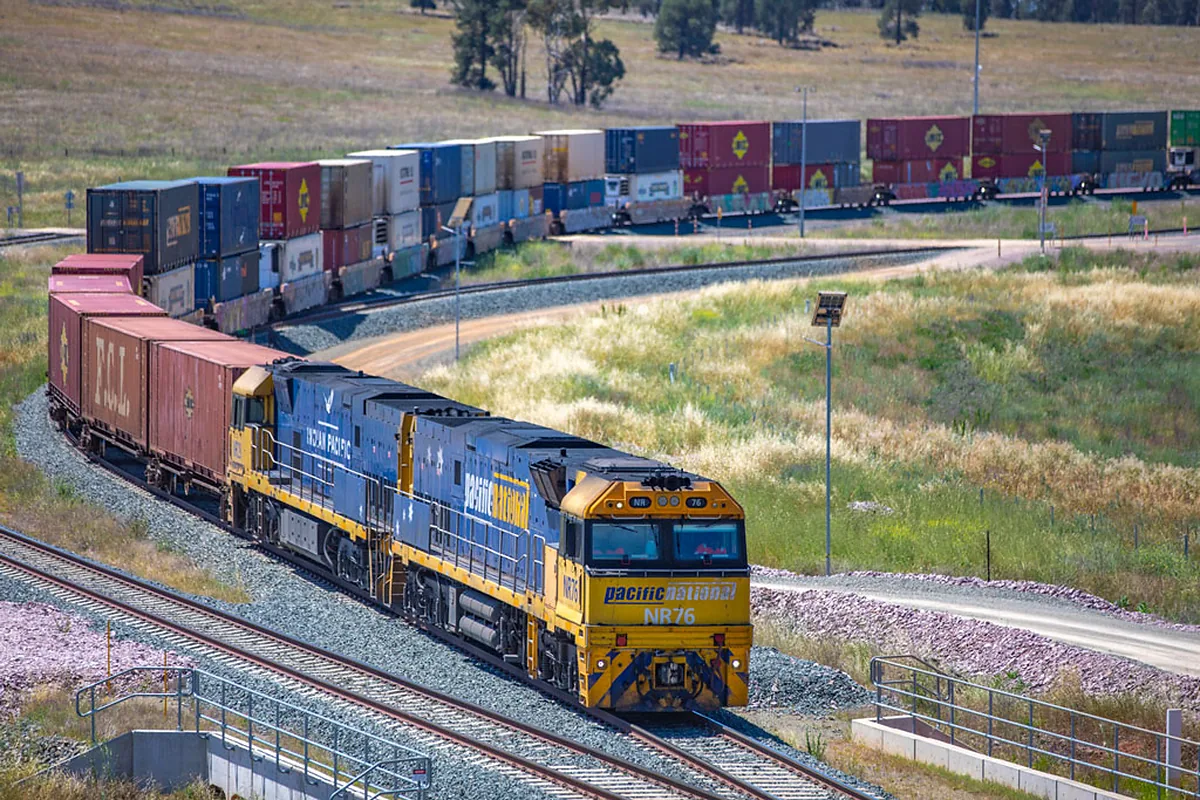
Freight rarely attracts broad public attention, but the movement of goods by rail, road, sea and air sits at the centre of Australia’s position as an island trading nation. These networks support both economic prosperity and national sovereignty.
The COVID-19 pandemic had already shown how essential supply chains and freight workers are. Still, many people outside the industry have little reason to see the scale, complexity and constant coordination involved in moving goods every day.
Australia freight supply chains and rail capacity
Rail alone shows the size of the task. Bureau of Infrastructure and Transport Research Economics (BITRE) figures indicate that around 447 billion tonne kilometres of freight moved by rail in Australia in 2024-25. Those operations took place across 31,000 kilometres of rail track networks.
In the years after the pandemic, the world is also dealing with sharper geopolitical tensions, energy transition pressures, global energy shocks and inflation. Against this background, China and the United States are putting large sums into freight infrastructure, technology and operations to make supply chains more stable and robust.
China’s current five-year plan points to roughly US$3–5 trillion for transport and supply-chain networks and systems. In the United States, investment in freight-related infrastructure across all levels of government is expected to be about US$1–1.5 trillion over the next five years.
Where secure and resilient supply chains are weakened by bottlenecks, pinch points, ageing or poorly maintained infrastructure, outdated technology, or insufficient public and private investment, delays and extra costs follow. Those costs add further pressure to the cost-of-living crisis.
Fragile and fragmented logistics networks have direct consequences for Australian consumers, who face higher prices at supermarket checkouts. They also reduce the competitiveness of exporters, including farmers, manufacturers and miners, who sell into demanding global markets.
Don’t miss…Australind train service returns on Perth–Bunbury route
For a regional exporter, missing a scheduled port delivery window for loading commodities onto a chartered vessel bound for an overseas market can lead to tens of thousands of dollars in demurrage charges.
Primary producers are already dealing with historically high fuel and fertiliser prices. They should not also have to absorb extra costs created by freight networks and operations that do not perform properly. Large construction projects and home builds can also run over budget when disrupted logistics block the movement of cement, steel, masonry, timber or glass.
Freight and logistics sector costs
A slow and inefficient supply chain ultimately carries a price for everyone. Even a simple online order for an imported household item may pass through more than a dozen steps across international and domestic logistics before it reaches a front door.
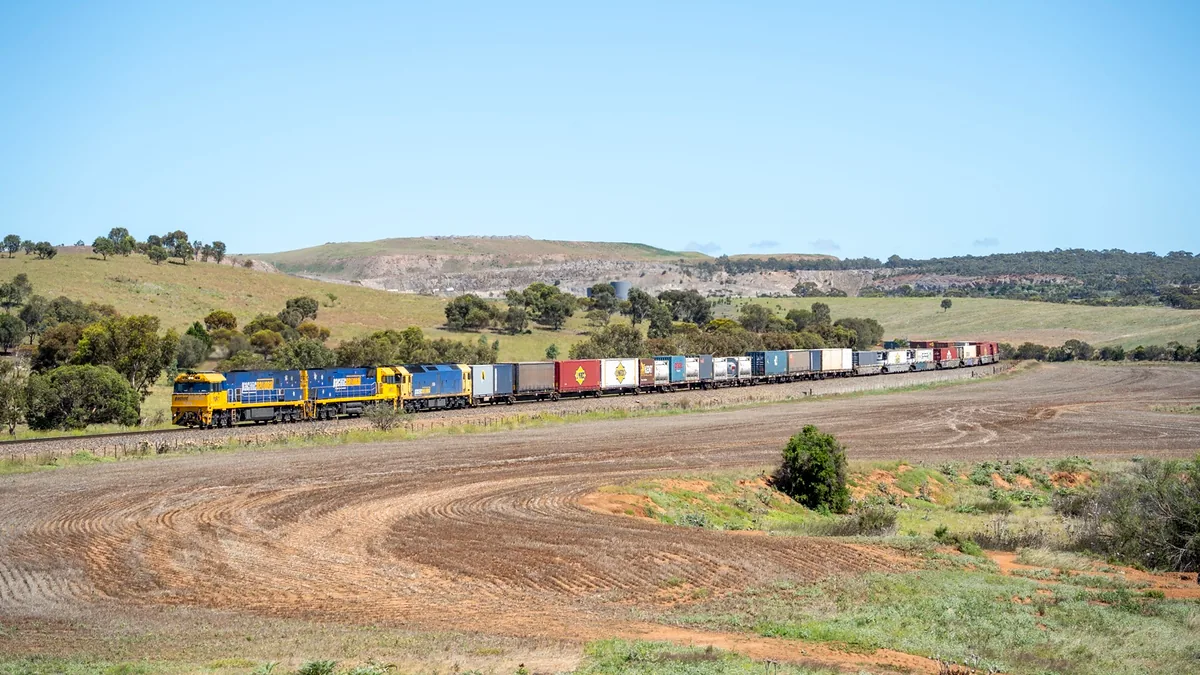
Many products move through several freight and logistics modes. Cargo ships and port stevedoring, aircraft, trains, trucks, intermodal terminals, warehouses, distribution centres, white vans and postal delivery can all form part of the same chain. For a household or business to receive goods intact and on time, each stage has to connect properly with the next.
Poor freight efficiency also affects communities and the environment. It can increase transport and traffic congestion and contribute to higher operating emissions.
Reliable supply chains also have a strategic dimension. They help protect a nation’s self-sufficiency and therefore its sovereignty, while also supporting social cohesion. The scenes of people fighting over toilet paper in supermarkets showed how quickly supply disruption can become visible to the public.
For Australia, described as a middle maritime power dependent on sea trade and commerce with Indo-Pacific neighbours and allies, efficient domestic freight and logistics networks also help support a rules-based regional order.
The economic and social stakes are substantial. Australia’s freight and logistics industry supports about 1.2 million jobs overall and generates more than $160 billion annually, equal to around eight per cent of national GDP.
There are also large potential gains for a resource-rich exporting nation that improves supply-chain productivity. Freight networks can underpin Australia’s role in producing critical minerals for the energy transition, including copper. A battery electric vehicle requires about 70 to 80 kilograms of copper, while some estimates point to annual global sales of 30 million EVs by 2030, creating a major opportunity for the country.
Australian rail freight networks and investment
Some important groundwork has already been put in place to improve interstate rail freight networks and operations.
Two recent examples are the Australian Government’s $2.8 billion Network Investment Program for upgrades to the ARTC’s 9,600-kilometre national rail network and the Intermodal Terminal Company’s $400 million private investment to develop the country’s largest intermodal facility in Melbourne.
Work by federal, state and territory infrastructure and transport ministers on digital train control interoperability, or harmonisation, is another timely initiative. The aim is to improve the future safety, efficiency and productivity of both passenger and freight rail operations and services.
Australia’s freight debate sits within a wider national policy framework. In 2025, federal, state and territory infrastructure and transport ministers agreed a refreshed National Freight and Supply Chain Strategy and a new National Action Plan, with 14 nationally significant actions focused on productivity, resilience, decarbonisation and data. The department also states that Australia’s domestic freight task is projected to increase by 26% between 2020 and 2050. That official outlook gives additional context to the article’s focus on rail freight investment, intermodal capacity and digital train control interoperability.
Australia’s 24th Prime Minister Paul Keating also understood the role of freight foundations, including rail as a central element.
Speaking in 1995 at the launch of the so-called “One Nation Train”, the first service to run on the standard gauge ‘rail highway’ between Brisbane and Perth, he said:
“We devised One Nation to get Australia moving. One element of that was to make the railways run more smoothly. But the commitment also required that we improve air, sea and road transport, and dovetail them all together.”
News on railway transport, industry, and railway technologies from Railway Supply that you might have missed: