Ottawa funds Victoria–Langford rail study; 2020 commuter estimate was C$230M
The federal government is putting C$500,000 into a Victoria–Langford rail study on Vancouver Island, joining C$523,100 from the Capital Regional District for work on potentially restoring rail service.
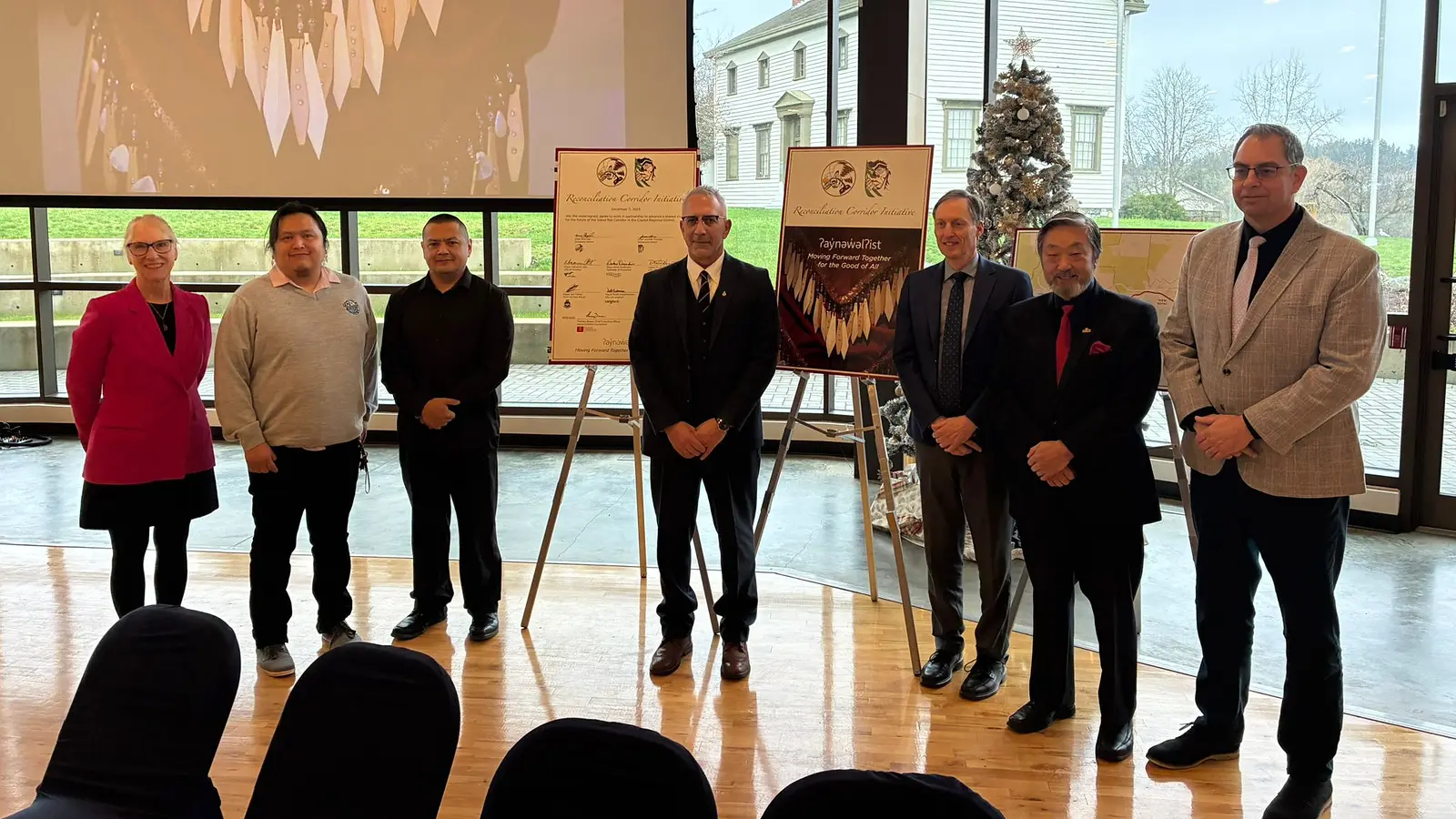
The contribution was announced in Esquimalt on September 16 by Stephanie McLean, Secretary of State (Seniors), on behalf of Gregor Robertson, the Minister of Housing and Infrastructure responsible for Pacific Economic Development Canada (PacifiCan). The money comes from the Local Impact Stream of the Build Communities Strong Fund and goes to the Island Corridor Foundation, a non-profit that will carry out feasibility and technical studies on the Victoria West–Langford section of the line.
The studies will cover planning for the corridor, a review of how land along it is used, and consultation with communities and partners. PacifiCan says the work is also meant to pinpoint possible economic opportunities for the Songhees and Esquimalt Nations.
The foundation works alongside the Reconciliation Corridor Initiative, an Indigenous-led effort headed by the Lekwungen Nations – the Songhees Nation and Esquimalt Nation (Kosapsum) – that works in partnership with local governments on the future of this part of the Island Rail Corridor. Barb Desjardins, co-chair of the Island Corridor Foundation, described the stakes this way:
“The Reconciliation Corridor Initiative project is not only a possible solution to our regional transportation challenges, but also an opportunity to help right historic damages to First Nations and bring economic benefit to First Nations and communities of the region.”
Who is paying for the feasibility work
The federal money is one of three contributions named in the announcement. The Capital Regional District is adding C$523,100 to the same feasibility study. B.C. Transportation and Transit Minister Mike Farnworth said the province had already set aside C$300,000 for this technical planning, drawn from C$18 million it committed in 2023 for planning work and consultation involving Indigenous communities and regional districts. Taken together, the three amounts come to C$1,323,100.
The Local Impact Stream is a C$1 billion, four-year strand of the Build Communities Strong Fund, which was announced in Budget 2025. Through it, PacifiCan plans to invest C$136.3 million in British Columbia communities over four years starting in 2026–27.
A corridor without passenger trains since 2011
The Island Rail Corridor, formerly the E&N line, runs about 289 km from Victoria to Courtenay, with a branch from Parksville to Port Alberni and a link to the Nanaimo waterfront. The Island Corridor Foundation owns it, and Southern Railway of Vancouver Island holds the operating contract.
| Segment | C$ million |
|---|---|
| Victoria–Langford | 7.2 |
| Langford–Duncan | 24.2 |
| Duncan–Nanaimo | 31.1 |
| Nanaimo–Parksville | 16.6 |
| Parksville–Courtenay | 34.7 |
| Parksville–Port Alberni | 49.5 |
| Wellcox, Port Alberni and Victoria yards | 2.4 |
| All segments | 165.7 |
Victoria–Langford was the least expensive main-line segment to bring back to class 2 in the 2020 estimate.
Source: B.C. Island Rail Corridor Condition Assessment, March 2020, Appendix G cost estimate, initial phase. Values rounded by Railway Supply to one decimal place; the yard figure combines three yards.
Passenger trains stopped running in 2011 because of safety concerns over the track and bridges. Transport Canada noted in 2023 that only a 16 km section remains in use, hauling forest products to a Nanaimo barge ramp.
Ottawa has backed the line before: in April 2012 it matched a C$7.5 million provincial commitment to restore the railway, yet passenger service did not come back. In March 2023 the province and Transport Canada issued a joint statement that treated the return of land crossing the Snaw-Naw-As First Nation reserve as the first step toward a shared vision for the corridor.
The 2020 cost estimate for a Victoria–Langford commuter service
The province estimated the cost of a commuter service on this section in its March 2020 Island Rail Corridor Condition Assessment. The estimate for the Victoria–Langford segment comes in three stages: about C$7.2 million to restore the track to class 2, a further C$6.2 million to reach class 3, and C$216.6 million for frequent commuter service and ballast work. Combined, that is roughly C$230 million in 2020 dollars, covering track, stations, land, a maintenance facility and signalling as well as trains; rolling stock accounts for C$38.4 million of the total.
| Cost item | C$ million |
|---|---|
| Maintenance facility | 75.5 |
| Property acquisition | 44.2 |
| Rolling stock | 38.4 |
| Six new stations | 27.2 |
| Signalling upgrades | 26.0 |
| Ballast, undercutting, resurfacing and track geometry testing | 3.6 |
| Commuter storage sidings | 1.6 |
| Commuter stage total | 216.6 |
The maintenance facility and land purchases alone make up more than half of the commuter stage, about C$119.7 million of C$216.6 million.
Source: B.C. Island Rail Corridor Condition Assessment, March 2020, Appendix G cost estimate. Values rounded by Railway Supply to one decimal place; the ballast row combines the four ballast-programme lines for the segment, including C$50,000 for track geometry testing. The estimate covers upgrading the existing line and is not a result of the study now being funded.
That estimate assumed upgrading the existing line for a commuter service, and it predates the current initiative. For the whole corridor, a 2022 business case by the Island Corridor Foundation put restoration for mixed commuter, freight and tourist use at C$431 million, Transport Canada noted.
PacifiCan said the new study is meant to guide future passenger rail decisions for the Capital Regional District. The announcement did not give a completion date or commit money to construction.


