Auckland City Rail Link’s first weekday sees network boardings rise 55%
In New Zealand, Auckland Transport estimated roughly 90,000 network-wide rail boardings on the Auckland City Rail Link’s first full weekday, about 55% more than the previous Monday.
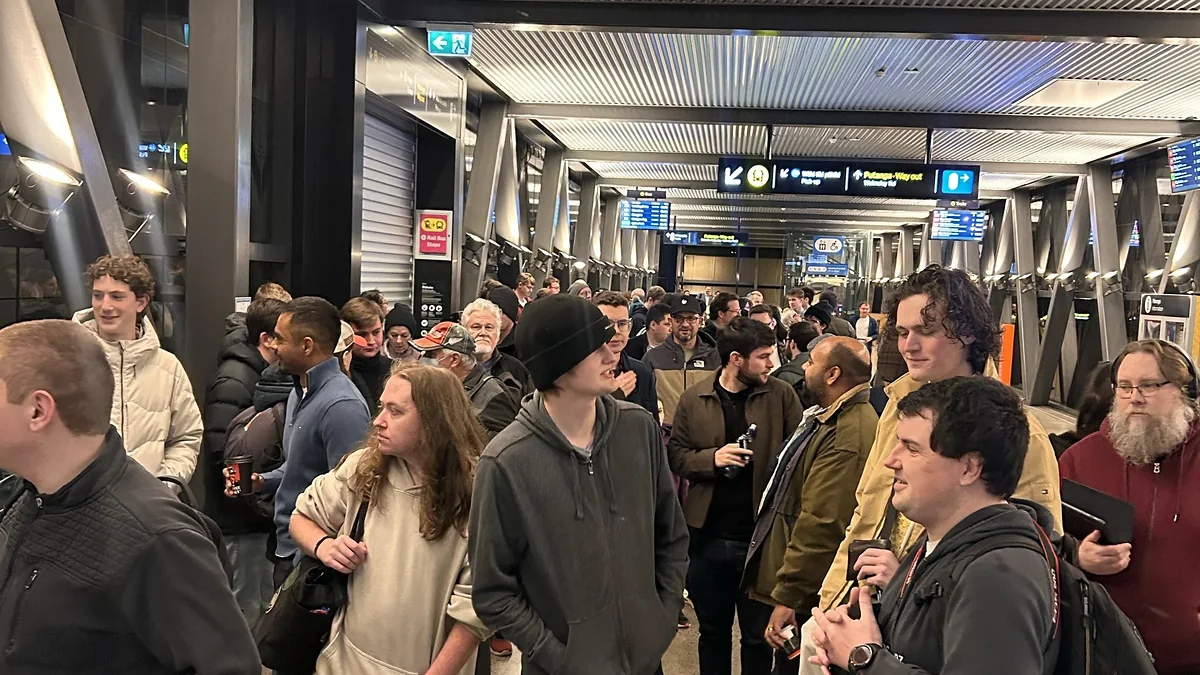
Auckland Transport treated Monday as the first full weekday test of the reshaped network. Its early data showed higher use across the day, with the largest proportional increase occurring between the morning and evening peaks.
Concession travel led the between-peak increase
SuperGold Card holders made about 130% more trips than on the previous Monday. That was the sharpest rise in any group covered by Auckland Transport’s early data. Community Connect users and tertiary students followed, each on roughly 60% more trips.
“We actually saw the biggest percentage increase in people travelling on the rail network in between our peak periods, with SuperGold card holders leading the charge.”
AT chief executive Stacey van der Putten also noted the busy morning commuter peak. Even so, Auckland Transport recorded the largest proportional increase between the morning and evening peaks.
The margin over last week widened as Monday went on
Counts taken through the day show the same pattern. By 9am about 24,000 people had boarded, against 19,000 a week earlier. That is a gain of roughly a quarter. By 5pm, the running total had reached an estimated 72,500 boardings, 25,000 more than at the same point the previous Monday. The full-day estimate then reached roughly 90,000.
So the lead over the previous week grew steadily, instead of peaking at breakfast time.
| Measurement point | Boardings | Same point a week earlier | Change stated by Auckland Transport |
|---|---|---|---|
| Sunday 13 September, whole day | about 70,000 | not published | at least three times higher |
| Monday 14 September, by 9am | about 24,000 | 19,000 | about 25% higher |
| Monday 14 September, by 5pm | about 72,500 | not published | 25,000 more boardings |
| Monday 14 September, whole day | about 90,000 | not published | about 55% higher |
| Tuesday 15 September, by midday | about 44,000 | 30,000 | not stated |
Every available comparison sits above the equivalent point of the previous week. On Monday, the reported advantage widened from about 5,000 boardings by 9am to 25,000 by 5pm, before the full-day total finished about 55% higher. Sources: Auckland Transport, 14 September 2026 and 15 September 2026. Where a prior-week count was not released, the cell is marked as not published rather than calculated.
Sunday set a separate network record
Around 70,000 people boarded trains on 13 September, the opening day of Auckland City Rail Link, at least three times the previous Sunday. Moreover, Auckland Transport described it as the busiest Sunday its rail network has recorded.
That pattern was not ordinary travel, though. AT said the data suggested a different behaviour. Many riders were boarding and alighting to experience the tunnels and the new stations, rather than travelling between two places. Among the new stations, Karanga-a-Hape drew the heaviest use, followed by Te Waihorotiu and then Maungawhau.
Punctuality held through both weekday mornings
Operationally, the first commute went cleanly. A South-City Line departure opened the Monday timetable. It left Pukekohe at 5.06am and reached Karanga-a-Hape at 6.15am. Punctuality that morning ran at 99%, measured as arrivals within five minutes of schedule.
Auckland One Rail reported that 84 trains were in service on Monday, supported across the day by 200 drivers and 150 train managers. Ambassadors and customer service staff numbered more than 100 across the stations, alongside more than 100 security staff. Teams concentrated on Karanga-a-Hape and Maungawhau. At both, passengers switch between the East-West line and the South-City or Onehunga-West lines.
Where the initial timetable changed frequencies
The frequency changes introduced at opening are uneven, as AT explained beforehand. Peak services outside the city centre initially run at frequencies similar to the previous timetable. AT says frequencies will rise after more confidence is gained in operating the new network. Off peak, by contrast, the three new lines moved to a 15-minute headway. That applies throughout the day outside peak periods and at weekends, against 20 minutes before.
Auckland Transport has said this initial timetable will hold through the opening months. Reliability is the stated priority at opening. Before the City Rail Link opened, city-bound trains terminated at Waitematā instead of running through the city centre. On 13 September, three through-running lines replaced that structure: East West, South City and Onehunga West.
| Service period | Before 13 September | Initial timetable |
|---|---|---|
| Off peak on the three new lines, all day and at weekends | every 20 minutes | every 15 minutes |
| Combined peak service through the city centre | no through service; trains terminated at Waitematā | every five minutes |
| Peak at stations outside the city centre | not stated | frequencies similar to before at first, rising later; about 10 minutes on average across the rest of the network |
The table shows that the clearest published frequency improvement came off peak, while the city centre gained a combined through service every five minutes at peak. Frequencies at stations further out initially remained similar to those under the previous timetable. Sources: Auckland Transport, 27 July 2026 and 6 August 2026.
Tuesday tracked ahead of the previous week
Demand stayed elevated into the second weekday. By midday on Tuesday 15 September about 44,000 boardings had been counted. A week earlier the figure at the same hour was 30,000. Network reliability sat at roughly 97% across the morning peak. In addition, 99% of services arrived within five minutes of their scheduled time.


