Amtrak Thanksgiving storm disruptions and travel demand
01.12.2025
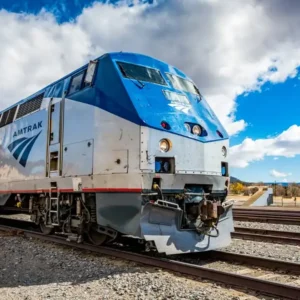
Amtrak Thanksgiving storm disruptions were far less severe than the chaos that hit airline passengers, even as a wind-driven snowstorm froze air travel across the Midwest and Great Lakes over the holiday weekend.
This is reported by the railway transport news portal Railway Supply.

While thousands of flyers were stranded by cancellations and long delays, most Amtrak services kept running. This overall picture is reflected in Trains.com’s coverage of the storm’s impact on Amtrak.
Amtrak Thanksgiving storm disruptions at the Chicago hub
In Chicago, the main node for Midwest snowstorm impact on Amtrak services, sold-out Amtrak trains Thanksgiving weekend mostly departed on time despite the weather. The key exception on Saturday, Nov. 29, was the Floridian, which left roughly an hour and a half late while about 8 inches of windblown snow fell throughout the day.
Don’t miss…SMART-TD Union Pacific five-year agreement ratified by members
Even so, Amtrak mechanical crews kept working in difficult conditions to prepare equipment and send trains out of the yard, which helped keep overall Amtrak Thanksgiving storm delays relatively contained.
A visit by Trains to Chicago Union Station that afternoon, when every departing train was sold out, showed that crowd handling had improved compared with previous Thanksgiving weekends. Instead of long lines forming in the Great Hall and then being marched together toward the platforms, travelers could wait around the Great Hall’s large Christmas tree. Only when their train was called were they directed to the passage under Canal Street, where they joined a more controlled boarding line.
Despite the generally strong on-time performance, one of the most notable Texas Eagle minor derailment incidents occurred just north of Joliet, Ill. The inbound Texas Eagle derailed slightly and apparently blocked the route needed for its westbound counterpart. In a Sunday evening statement, Amtrak reported that at about 1:35 p.m., two sets of wheels on the locomotive and one set on a car left the rails at around 15 mph. The locomotive continued supplying power until charter buses arrived to carry the 253 passengers the rest of the way to Chicago. Because the equipment reached the city late, the outbound Texas Eagle, already boarded for a scheduled 1:52 p.m. departure, did not leave Chicago until 4:09 p.m.
Earlier setbacks for Wolverine and Lincoln Service trains
A small cluster of earlier interruptions appeared between late Thursday and Friday. Amtrak spokesman Marc Magliari told Trains that a suspected debris strike disabled eastbound Wolverine No. 352 on Thanksgiving evening near Marshall, Mich., just east of Battle Creek. According to a Calhoun County Sheriff’s Office press release and coverage by Railway Supply, 107 passengers were taken by Marshall Public Schools buses to the Amtrak station in Battle Creek, where they boarded heavily delayed eastbound Wolverine No. 354. That train reached Pontiac, Mich., at 7:53 a.m. Friday. Thursday’s westbound Wolverine train, No. 355, which had been stuck east of the other two trains, arrived in Chicago at 6:53 a.m. Friday instead of its scheduled 10:40 p.m. arrival on Thursday. Together, these Wolverine train delays near Marshall and Battle Creek, Mich., became one of the more visible localized effects of the storm.
Another major incident unfolded early Friday morning in St. Louis, where a massive fire in a vacant warehouse near the tracks halted all rail traffic through the area. The equipment assigned to early Lincoln Service trains Nos. 300 and 302 was trapped at the station, so Amtrak substituted buses for those departures. This Lincoln Service buses replacing trains after the St. Louis warehouse fire episode showed how the operator kept passengers moving despite the blockage. Even so, these cases remained isolated exceptions within the broader Amtrak Thanksgiving storm disruptions story.
Empire Builder and Northeast Corridor disruptions
The weather also affected a number of regional and long-distance services beyond Chicago and St. Louis. Two eastbound Empire Builders battled blowing snow on Saturday and ran one to two hours late. That same day, the westbound Empire Builder lost four hours in Wisconsin because of an “intermittent communication outage and rail congestion.” Early the following day, the eastbound train encountered a disabled BNSF Railway freight east of Libby, Mont., which led to a five-hour delay. These Empire Builder delays in blowing snow and rail congestion show that even long-distance trains were not entirely spared, although reduced freight traffic over the holiday still meant fewer conflicts overall.
The heavily used Northeast Corridor also experienced a small set of problems. On Saturday, Washington-bound Northeast Regional No. 121 left New York almost two hours late, and its return trip, No. 122, departed with a similar delay. On Sunday, Providence, R.I., TV station WJAR reported that Acela No. 2153 from Boston, operating with a legacy trainset, was terminated at Providence after a fire broke out under one of the cars. The two following southbound Acela trains to Washington each ran more than an hour late. These Northeast Corridor disruptions, including the Acela fire near Providence, R.I., confirmed that even the busiest corridor was not completely immune to storm-related issues and equipment problems.
Sold-out Amtrak trains Thanksgiving weekend
Despite the scattered incidents, passenger demand remained extremely strong. Walk-up fares on Sunday were approaching $300, as discussed in Trains.com’s analysis of Thanksgiving capacity pinch points. Of the 37 Washington–New York round trips, 14 trains to New York and seven to Washington were already sold out or blocked for sale in coach or Acela business class by midday Saturday.
The busiest segment appeared to be between Baltimore and Wilmington, Del., where there are no commuter rail alternatives. By Saturday, most Sunday Harrisburg–Philadelphia–New York eastbound Keystone departures were also sold out.
In the Midwest, a similar pattern emerged. In addition to complete sellouts on the Detroit and St. Louis corridors, Sunday sellouts extended to all midday Chicago–Milwaukee Hiawatha departures and the Borealis in both directions.
Taken together, the intense holiday demand, sold-out Amtrak trains Thanksgiving weekend, and only a limited number of significant operational problems meant that overall Amtrak Thanksgiving storm disruptions remained relatively contained compared with the widespread cancellations and delays seen in the airline sector.
News on railway transport, industry, and railway technologies from Railway Supply that you might have missed:
Find the latest news of the railway industry in Eastern Europe, the former Soviet Union and the rest of the world on our page on Facebook, Twitter, LinkedIn, read Railway Supply magazine online.Place your ads on webportal and in Railway Supply magazine. Detailed information is in Railway Supply media kit