Amtrak record ridership: What’s driving the 2025 surge
02.01.2026
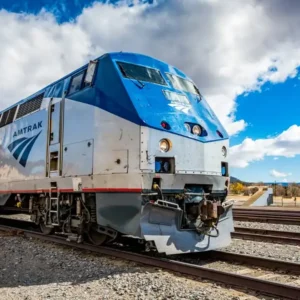
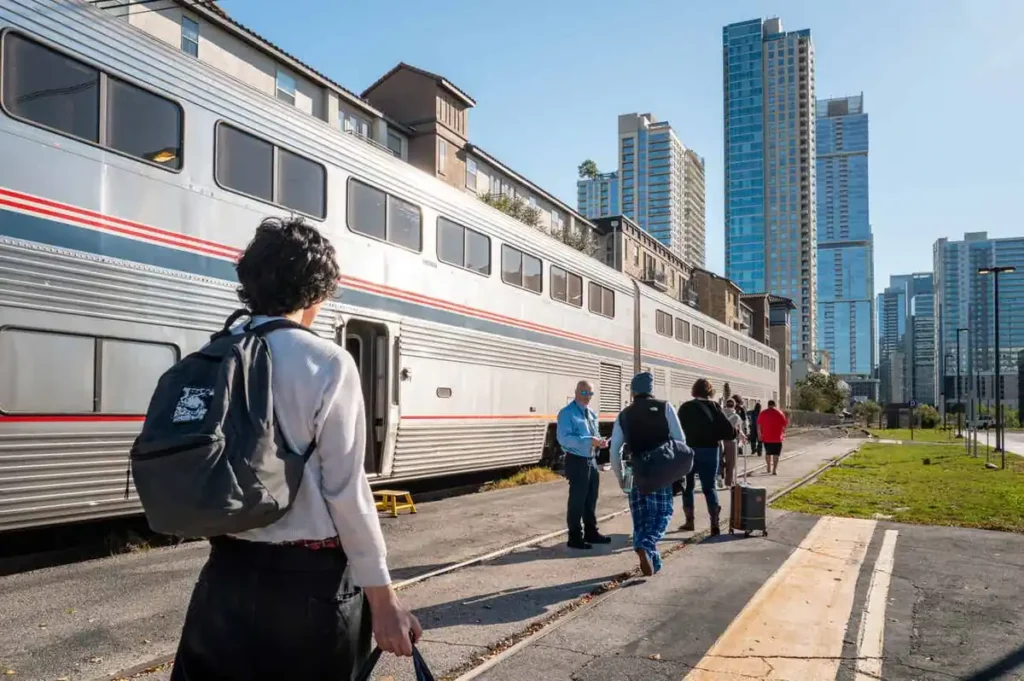
Amtrak record ridership is drawing attention as more Americans opt for trains instead of planes and highways. In 2025, the operator delivered its strongest ridership and revenue results in its 54-year history, supported by major investment and rising demand as travelers grow tired of flying and driving.
This is reported by the railway transport news portal Railway Supply.
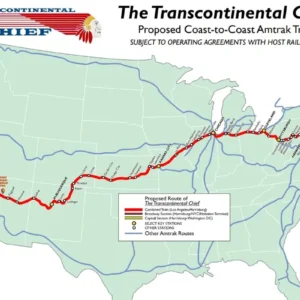
After countless cross-country flights, I chose the scenic alternative from Los Angeles to Chicago on Amtrak’s Southwest Chief. The trip cost close to four times as much as flying and took about 38 hours longer.
Even so, the ride offered what air travel doesn’t: stunning desert views, communal meals with strangers, and long stretches of unhurried time that included chess with my husband. By the end, I was already planning our next long train trip.
Don’t miss…California high-speed rail 2026: Contracts and milestones
Amtrak’s record ridership in 2025, in numbers
The broader picture shows up in Amtrak 2025 revenue and ridership results. Amtrak laid out the fiscal-year milestone in “Amtrak: A Year of Records”. For its fiscal year ending in September, the railroad reported 34.5 million customer trips and $2.7 billion in adjusted ticket revenue, a 10% year-over-year increase. A trade-media recap, Railway Supply’s FY25 overview, also sums up those headline figures.
Even with that growth, the quasi-public rail service continues to rely on federal funding as it aims to become operationally profitable by 2028. Still, the results point to a shift on American rails—driven by investment, demand, and frustration with other ways of getting around.
Investment and upgrades, from stations to NextGen Acela trains
Though organized as a for-profit corporation, Amtrak is majority-owned by the US government and operates as a federally chartered corporation. Congress created Amtrak in 1970 after private railroads were losing money on passenger operations, even as passenger service was viewed as an important public good.
Today, Amtrak runs three main types of service: the Northeast Corridor from Boston to Washington, DC (with many stops in between), long-distance routes that travel cross-country, and shorter state-supported routes.
The Northeast Corridor is often described as Amtrak’s “crown jewel,” according to Allan Zarembski, a professor and director of the University of Delaware’s Railroad Engineering and Safety Program. Marc Magliari, an Amtrak spokesperson, likewise said a large majority of Amtrak’s ridership is on shorter routes rather than cross-country journeys.
Complaints about frequent delays and aging, poorly maintained train cars haven’t disappeared. But Sarah Kaufman, director of New York University’s Rudin Center for Transportation, said recent capital spending has improved the experience, with upgrades that have supported more on-time trains and more comfortable facilities.
A key boost came from the 2021 bipartisan infrastructure bill, which included $22 billion to go directly to Amtrak over five years to replace aging assets, improve stations, and modernize the fleet, as outlined on Amtrak’s New Era of Rail page. In its 2025 fiscal year, Amtrak said it invested a record $5.5 billion in capital projects, a 24% year-over-year increase.
Those projects include rolling out newer, faster NextGen Acela trains in the Northeast, adding new long-distance locomotives, and upgrades to the Superliner fleet.
Why train travel competes with flying and driving?
When the difference between a train, a car, and a plane is narrow, people often pick rail, Zarembski said, and cost, convenience, and comfort usually decide the outcome. Magliari described driving as Amtrak’s primary competition and said it has become more unpleasant as roads grow more congested and distracted driving becomes more common.
Trains offer something cars can’t: time you can actually use. Magliari called “windshield time” wasted time, while train riders can work during the trip, including running up billable hours because they’re able to stay productive.
Amtrak also competes with flying in certain markets, especially on shorter-distance routes in the Northeast or Midwest. Zarembski said rail is often price-competitive on those trips, and Kaufman emphasized practical advantages: simpler boarding, no takeoff-and-landing process, fewer restrictions on what you bring onboard, and the chance to enjoy the scenery along the way.
Politics, profitability, and the long-distance challenge
Amtrak still faces hurdles, particularly on long-distance routes that often run on tracks owned by freight railroads. Those trains can be delayed by congestion or weather, and some routes continue to wrestle with aging equipment. Experts noted those issues tend to be less noticeable on shorter, high-demand corridors, where most riders are traveling.
The company’s finances are also shaped by politics. Since its creation, Amtrak has never been profitable, which critics often highlight. Zarembski said that’s typical for passenger rail worldwide: some systems can cover operating costs, but almost none can pay their capital costs.
Amtrak has noted it was not created with the expectation of profitability, but to provide efficient and effective passenger rail service. It also argues that other federally subsidized transportation services—highways, public transit, and air services—are not profitable and are not expected to be.
Still, Zarembski called politics the “elephant in the room.” When the political climate supports passenger rail, federal funding tends to follow; when that support wanes, Amtrak can struggle. He said the past several years have been “passenger-friendly.”
Kaufman said a “pro-Amtrak president” in former President Joe Biden—nicknamed “Amtrak Joe” for his love of trains and daily Amtrak commute while in Congress—was extraordinarily helpful. She also said it’s hard to predict what the future will hold for capital investment, adding that Amtrak has been “smartly investing” in real estate around its stations as a potential, more sustainable source of income.
A cultural shift has reinforced the momentum, too. Interest in lower-emission and experience-driven travel has helped, and Magliari said Amtrak is performing very well with younger demographics. From his perspective, the appeal is simple: the clouds look similar at 35,000 feet, but the country looks very different at ground level—sometimes “for good or not”—from the window of a train.
News on railway transport, industry, and railway technologies from Railway Supply that you might have missed:
Find the latest news of the railway industry in Eastern Europe, the former Soviet Union and the rest of the world on our page on Facebook, Twitter, LinkedIn, read Railway Supply magazine online.Place your ads on webportal and in Railway Supply magazine. Detailed information is in Railway Supply media kit