Amtrak Mardi Gras service shows Gulf Coast rail demand
23.12.2025
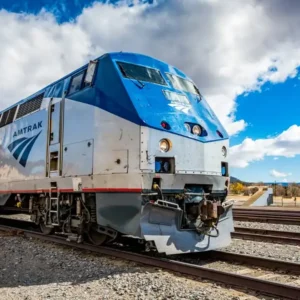
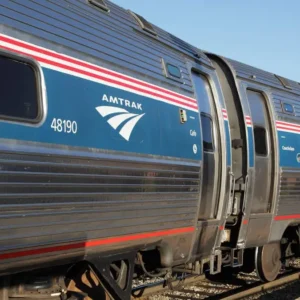
Amtrak Mardi Gras service is off to an encouraging start, and the early data is being read as another sign that the South is ready to embrace passenger rail.
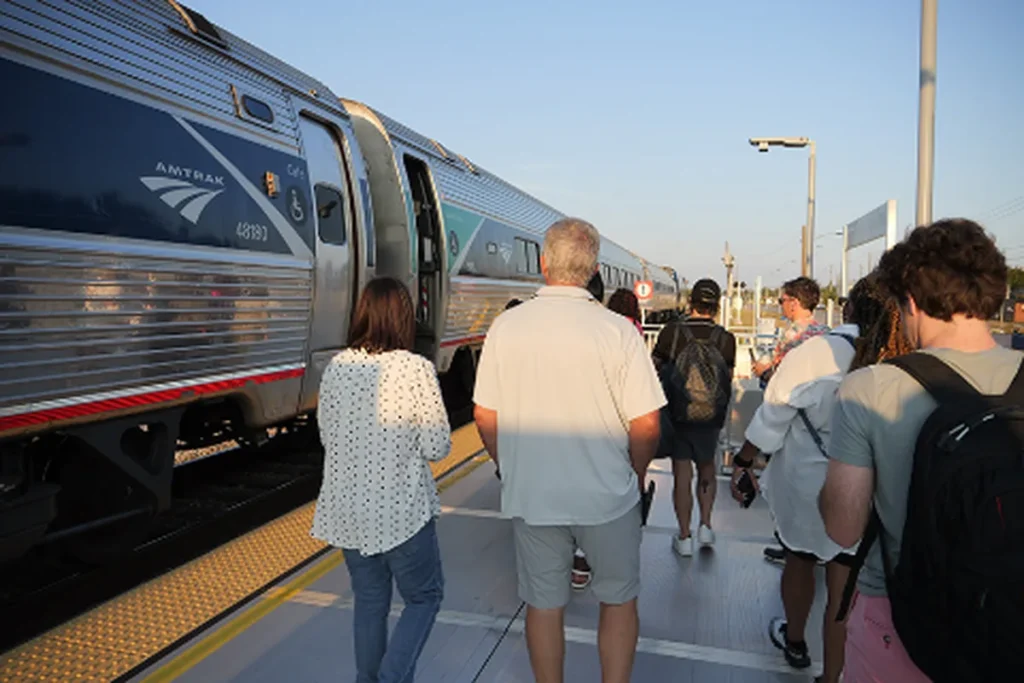
The Mobile–New Orleans passenger rail route runs two round trips a day, stopping in Mississippi at Pascagoula, Biloxi, Gulfport and Bay St. Louis. Service began rolling in August. In its first three months, Amtrak says the Mardi Gras carried 46,000 passengers — an average of 458 riders per day — as previously covered by Railway Supply.
Amtrak also reports a 96% customer satisfaction rate, the highest across any Amtrak route, despite the limited number of trains and an average speed of 39 mph.
Don’t miss…Freight railcar purchases: orders by CN, Traxtion and Europe
At the Southern Rail Commission’s quarterly meeting in Bay Saint Louis, chairman Knox Ross said the results align with what supporters have argued for years: passenger rail is essential to the future of mobility along the Gulf Coast. He added that the Gulf Coast rail service is connecting communities, strengthening local economies, and giving travelers a reliable and enjoyable way to experience the region.
To the authors, those early numbers reinforce the case that demand for serious train service in the South is real.
Why the South is looking again at passenger rail?
Much of the modern South took shape in the automobile era. Highways and low-density, car-oriented sprawl dominate many metro areas, a pattern that is rarely ideal for rail travel. Still, the text argues that the region includes people who cannot drive, either because of personal limitations or because they do not have access to a car.
It also points to people who can drive but dislike it. Driving can be tiring, tedious and dangerous, and traffic congestion is growing. For them, passenger rail can serve as an alternative.
Brightline Florida service shows what higher frequencies can do
Beyond Amtrak Mardi Gras service, the article highlights rail growth in Florida. Brightline Florida service operates between Orlando and Miami, covering 235 miles in 3½ hours — an average speed of 67 mph with a top speed of 125 mph.
Service levels are far higher than on the Gulf Coast. Brightline runs 16 full round trips per day, plus two additional round trips between Miami and West Palm Beach. The company went from zero riders in 2018 to 2.7 million riders in 2024, according to a KBRA credit report.
The contrast is central to the argument: even with service levels on Amtrak that are well below optimal, trains still attract passengers. When speed and frequency improve, ridership can surge.
Charlotte transit funding and a case for bigger corridors
The piece also cites Charlotte and Mecklenburg County as a sign that voters will back rail transit when asked. In November, voters approved a one-percentage-point sales tax increase, raising the rate from 7.25% to 8.25%, as noted by the City of Charlotte. The tax is expected to generate $19.4 billion over 30 years for transportation projects, mostly transit.
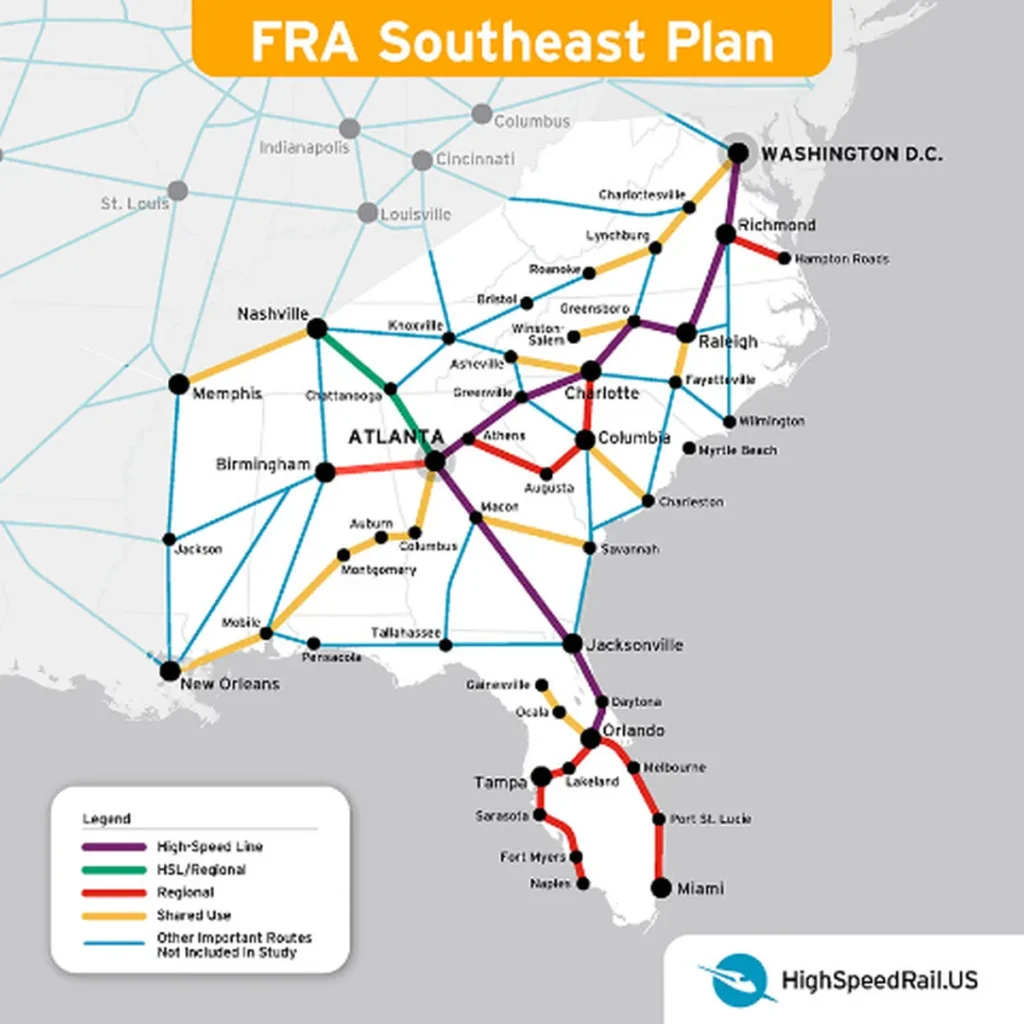
From there, the focus shifts to upgrading inter-city rail and the development of a high-speed line between Washington, DC and Orlando. Various planning efforts to improve speed and frequency are described for several segments: Washington to Richmond, VA; Richmond to Raleigh, NC; Raleigh to Charlotte; Charlotte to Atlanta; and Atlanta to Orlando.
The time comparisons in the text underline the need. Traveling from Charlotte to Washington takes 10½ hours by train on the Carolinian, versus just over six hours by car. From Atlanta to Washington, the Crescent takes almost 14 hours, compared with 10 hours by car. Even so, the train is often booked to capacity.
The authors conclude that reaching the level of service the rest of the world has enjoyed for about a century will require investment in the billions. They argue that large sums are routinely directed to highway expansion, and they view passenger rail investment as increasingly tied to economic sustainability.
When that shift arrives, they say, the South should not be dismissed as a region where trains don’t belong.
News on railway transport, industry, and railway technologies from Railway Supply that you might have missed:
Find the latest news of the railway industry in Eastern Europe, the former Soviet Union and the rest of the world on our page on Facebook, Twitter, LinkedIn, read Railway Supply magazine online.Place your ads on webportal and in Railway Supply magazine. Detailed information is in Railway Supply media kit