Algeria Trans-Saharan Railway backed by AfDB investment
20.11.2025
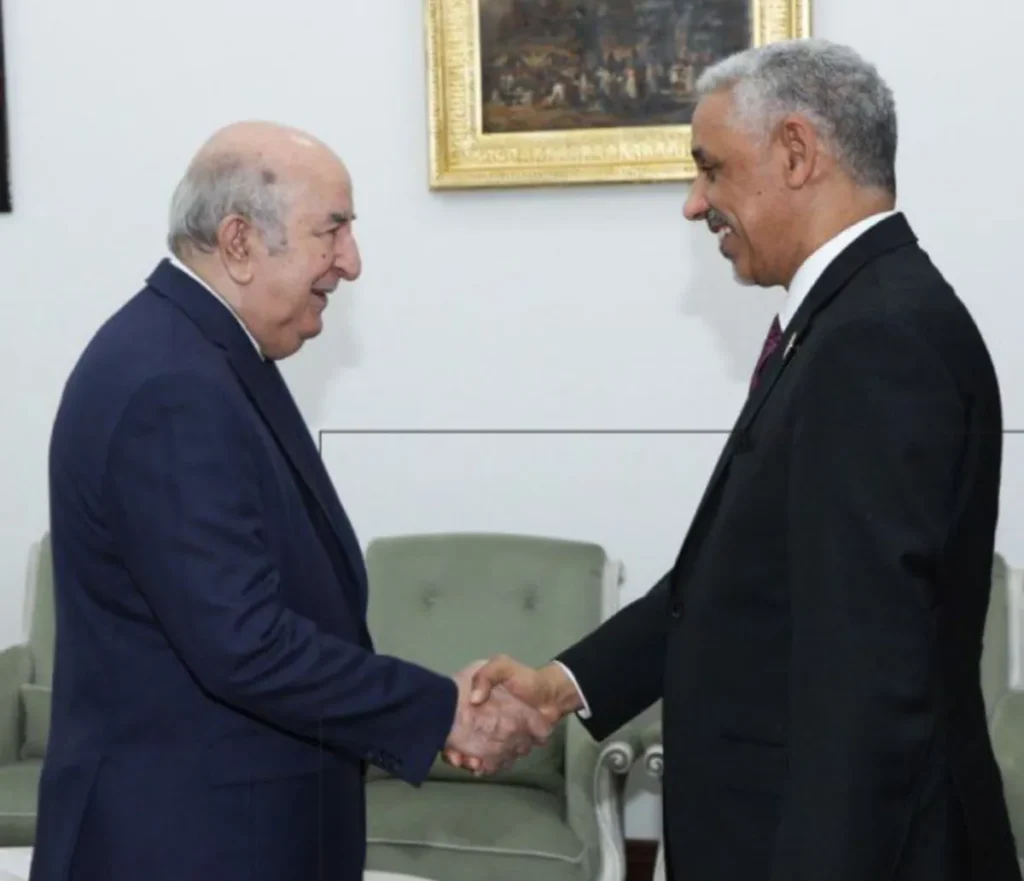
Algeria Trans-Saharan Railway ambitions now sit at the centre of the country’s 2025 investment strategy. The government has selected the African Development Bank (AfDB) as its main external partner for new financing initiatives — a choice set out in a recent press release from the African Development Bank (AfDB) and reinforced during AfDB President Dr Sidi Ould Tah’s visit to Algeria on 16–17 November, when he met President Abdelmadjid Tebboune and senior officials to discuss 2025 investment priorities with rail firmly on the agenda.
This is reported by the railway transport news portal Railway Supply.
One of the headline measures under the 2025 Finance Law is the Laghouat–Ghardaïa–El Meniaa railway, a 495 km line budgeted at USD 2.8 billion, as reported by Railway Pro. This section is planned as the opening phase of the broader Algeria Trans-Saharan Railway corridor — a strategic north–south axis that will ultimately push on to Tamanrasset and connect with Niger. In practice, Algerian authorities expect the new route to unlock the country’s southern regions and provide a logistics spine for landlocked Sahel states, improving access to markets and helping to push transport costs down.
Don’t miss…Amtrak ridership record and path to 2028 profitability
Algeria Trans-Saharan Railway and 10,000 km rail network by 2030
The Laghouat–Ghardaïa–El Meniaa project is folded into Algeria’s wider plan to double its rail network to 10,000 km by 2030, with a longer-term ambition of reaching 15,000 km — a goal also highlighted by Railway News. This expansion drive is meant to bring isolated regions into the national rail grid, support new industrial activity and strengthen domestic processing of natural resources, especially in the south, where many deposits of critical minerals still sit far from existing infrastructure.
Minister of Hydrocarbons and Mines Mohamed Arkab stresses that tying mining regions into the rail system is essential if more value is to be kept at home. “We can no longer accept exporting our raw materials in their unprocessed state,” he said, pointing to Algeria’s target of lifting the share of domestically transformed hydrocarbons from 30% to 60% by 2035 and of ramping up processing capacity in petrochemicals, hydrogen, fertilisers, tyres and minerals.
Within this broader industrial push, the Trans-Saharan Railway is expected to become a key tool for opening up remote reserves of iron, zinc, gold and rare earth elements. By tightening up logistics, the corridor should make it easier both to channel these resources into domestic value-added processing and to move export volumes more efficiently along Algeria’s emerging north–south rail corridors.
AfDB: rail corridors as engines of Africa’s industrial future
For AfDB, Algeria’s agenda dovetails closely with its own strategic focus on value chains and connectivity. Dr Ould Tah underlined that building strong transport corridors is central to reinforcing mineral value chains across the continent. “The localisation of value, industrialisation, and mineral sovereignty are key pillars of Africa’s future,” he noted, referring to recent analyses that see Africa holding competitive advantages in the production of battery precursor materials.
Against this backdrop, he called for more coordinated action among African states to develop infrastructure that supports sustainable resource development. The Trans-Saharan axis, in this reading, serves as a flagship example of AfDB-backed rail corridors designed to drive Africa’s industrialisation.
Rapid project delivery and national capabilities
Algeria’s recent track record was also put forward as evidence that these plans can move from paper to construction. During the visit, officials highlighted the delivery of 950 km of new railway over a 24-month period, achieved using domestic resources and expertise alone. Minister of the Interior, Local Authorities and Transport Saïd Sayoud, together with Minister of Public Works and Basic Infrastructure Abdelkader Djellaoui, argued that this capacity is crucial for accelerating large North–South corridors and dedicated mining lines tied to the broader Algeria Trans-Saharan Railway vision.
Dr Ould Tah, for his part, praised both the scale and the level of ambition in Algeria’s infrastructure pipeline. In his view, the country’s ability to execute major rail and infrastructure schemes on this scale makes it “a central partner for Africa’s transformation.”
News on railway transport, industry, and railway technologies from Railway Supply that you might have missed:
Find the latest news of the railway industry in Eastern Europe, the former Soviet Union and the rest of the world on our page on Facebook, Twitter, LinkedIn, read Railway Supply magazine online.Place your ads on webportal and in Railway Supply magazine. Detailed information is in Railway Supply media kit