AIIB Backs Bosphorus Rail Crossing with Up to $1.5bn
AIIB has signed the first phase of a financing package worth up to $1.5 billion for Türkiye’s Bosphorus rail crossing, a 127-kilometer passenger and freight bypass through northern Istanbul.
A second rail route between Europe and Asia
The Asian Infrastructure Investment Bank and the Republic of Türkiye signed the first financing phase for the Istanbul North Rail Crossing Project, known as INRAIL. AIIB announced the agreement on July 21, 2026.
The package is structured as two loans of $750 million each, with the second commitment dependent on implementation progress and financing needs.
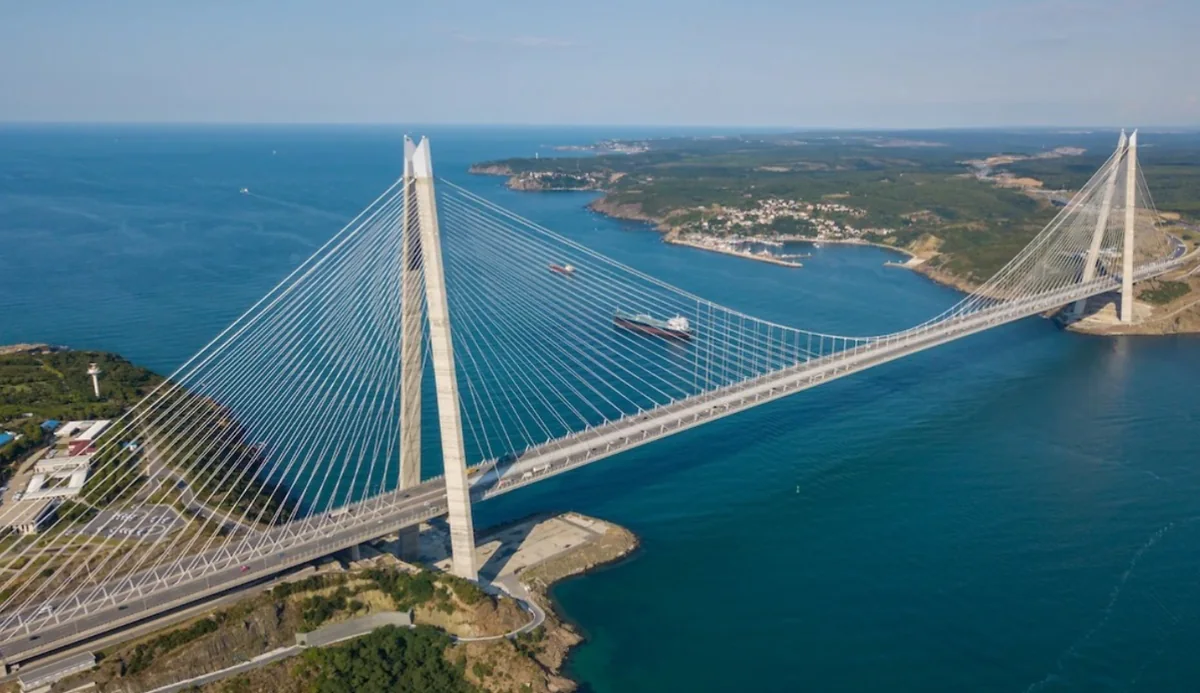
INRAIL will run from Çayırova on the Asian side to Çatalca on the European side. The double-track line will be electrified and fully signalled, and it will use the rail-ready space reserved on the Yavuz Sultan Selim Bridge to cross the Bosphorus.
The route is intended to bypass congested central Istanbul and complement the existing Marmaray tunnel. Passenger trains are planned to operate at up to 160 km/h, while freight services will run at 80–120 km/h.
Don’t miss…Colorado Connector Passenger Rail Set for 2029 Launch
Airport and freight journeys would become faster
The new line will connect Istanbul Airport and Sabiha Gökçen International Airport with each other and with Türkiye’s high-speed rail network. Public-transport travel between the two airports is expected to fall from about 120 minutes to 65 minutes.
Freight trains currently need around 13 hours to move between Çayırova and Çatalca because they share constrained infrastructure through Istanbul. INRAIL is expected to reduce that journey to 3.6 hours by moving part of the freight flow away from the heavily used Marmaray corridor.
The Turkish infrastructure investment directorate says the project will include 122.3 kilometers of double-track main line and 4.7 kilometers of single-track connections. Its maximum freight capacity is designed to reach 50 million tonnes per year.
Tunnels, bridges and multibank financing
The planned civil works include five twin-tube tunnel-boring-machine tunnels totalling 36.2 kilometers, 22 conventionally excavated tunnels totalling 23.3 kilometers, 17 cut-and-cover tunnels, and 40 bridges with a combined length of 22.1 kilometers.
The main civil and electrification procurement will be divided into four lots, while signalling and telecommunications will be tendered separately.
The project is estimated to cost about $8.27 billion. The World Bank approved a $2 billion loan in March 2026, and the six participating development banks are coordinating $6.75 billion in financing. The group also includes the Asian Development Bank, Islamic Development Bank, European Bank for Reconstruction and Development, and OPEC Fund for International Development.
Environmental and social assessments identify substantial risks involving land acquisition, resettlement, biodiversity, noise, vibration and construction impacts across 53 localities in Istanbul and Kocaeli provinces. Compensation, livelihood-restoration and environmental-mitigation plans will therefore be required before and during construction.
Once operational, the project is forecast to avoid about 16 million tonnes of carbon-dioxide-equivalent emissions over the operating period assessed by the lenders.
News on railway transport, industry, and railway technologies from Railway Supply that you might have missed:


