Rail passenger services begin on the new suburban Red Line in Lagos
24.10.2024
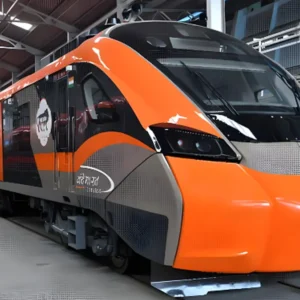
Rail passenger services started on October 15, 2024, along the first phase of the Red Line in Lagos. This was reported by the railway transport news portal Railway Supply.

Rail passenger services started on October 15, 2024, along the first phase of the Red Line in Lagos. The 27-kilometer section between Agbado and Oyingbo, including eight stations, was built by China Civil Engineering Construction (CCECC). An official ceremony marking the completion of the construction took place in February 2024, while test runs began in July of the same year.
Tashkent Revives the Tram System: Key Developments and Future Prospects
The Lagos Metropolitan Area Transport Authority (LAMATA) managed the project, and the Nigerian company First Metro Infrastructure (FMIL) operates the line. The Red Line partly overlaps with the Lagos-Ibadan railway, which has a 1435-millimeter gauge. This new line improves transport, making travel easier for Lagos residents.
Rail passenger services extend to Lagos airport, enhancing connectivity
Construction of the second phase of the Red Line, extending to Marina Station, is ongoing. This phase will connect with the Blue Line metro, which began operations in January 2023. When fully completed, the Red Line will cover 37 kilometers, enhancing transportation efficiency and capacity across Lagos.
There are future plans to build an extension from Ikeja Station to Murtala Muhammed International Airport, located in the northern suburbs of Lagos. This extension will improve connections between the city and the airport, making travel easier for international passengers. Rail passenger services will thus become an essential part of the city’s infrastructure.
Currently, the Blue Line metro and the suburban Red Line form the foundation of the Lagos Rail Mass Transit (LRMT) system. Four additional lines are planned for the future, expanding the city’s transportation network. These developments will not only ease urban mobility but also stimulate Lagos’ economic growth.
Such projects help reduce road traffic and improve air quality by lowering pollution levels. The Lagos authorities believe that rail passenger services will increase mobility for residents, improving overall quality of life. As a result, the Red and Blue Lines are set to become vital components of the city’s public transportation network.
In conclusion, the development of Lagos’ rail system represents a significant step toward building a modern and efficient transit system. The expansion of the rail network will help reduce pollution and carbon emissions, as more people will prefer trains over private cars.
News on railway transport, industry, and railway technologies from Railway Supply that you might have missed:
Locomotives for lease: Green Mobility Partners expands its opportunities in the European market
Find the latest news of the railway industry in Eastern Europe, the former Soviet Union and the rest of the world on our page on Facebook, Twitter, LinkedIn, read Railway Supply magazine online.Place your ads on webportal and in Railway Supply magazine. Detailed information is in Railway Supply media kit