Indian Railways accessibility for Divyangjan and senior citizens
11.12.2025
Indian Railways accessibility for Divyangjan and senior citizens has been stepped up through a mix of wheelchairs, battery-operated vehicles and dedicated berth quotas.
In a written reply to the Lok Sabha, Union Railway Minister Ashwini Vaishnaw outlined these measures, as reported by Economic Times Infra. Together, these Indian Railways facilities for Divyangjan and senior citizens are intended to make day-to-day journeys more manageable for passengers who need assistance.
This is reported by the railway transport news portal Railway Supply.
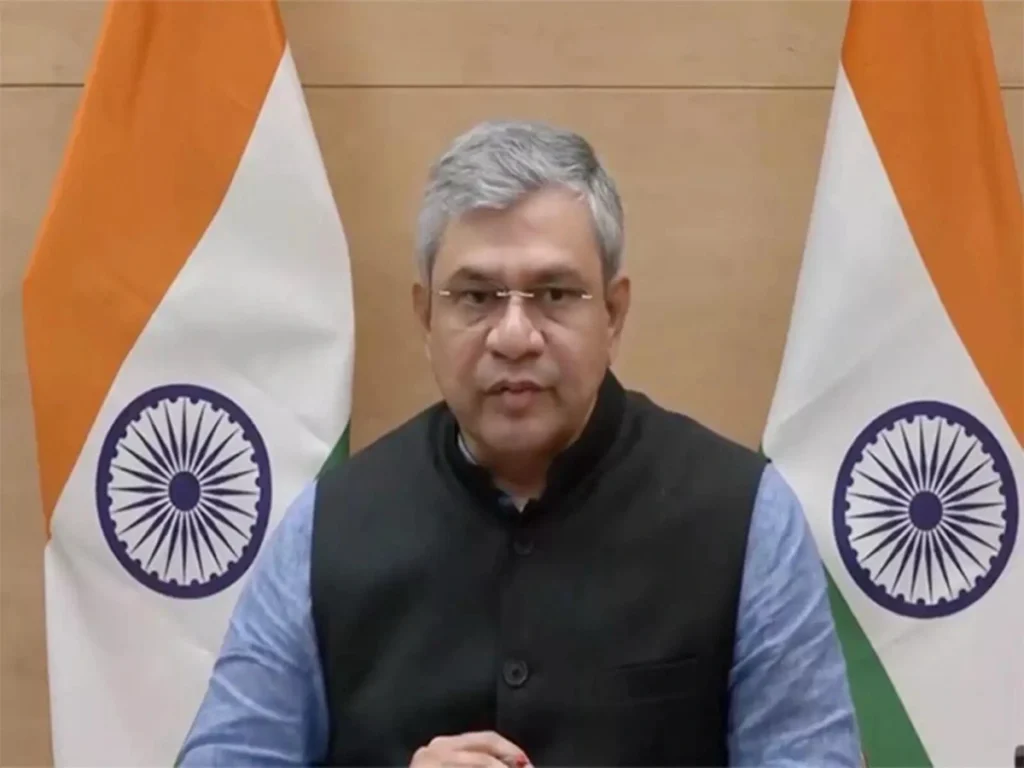
Indian Railways accessibility for Divyangjan and senior citizens: wheelchairs and BOVs
In his reply, the minister noted that wheelchairs are now available at 5,868 railway stations across the network to support Divyangjan (physically challenged persons) and senior citizens.
In practical terms, this figure answers the question of how many Indian railway stations have wheelchairs for Divyangjan and senior citizens and shows the scale of the programme, which is also reflected in data from the Press Information Bureau of the Government of India. Wheelchairs are provided by the Railways free of cost to attendants of these passengers, helping them board and alight from trains.
Don’t miss…UPVETS Houston Toys for Tots toy drive rolls by rail
If no attendant is travelling with the passenger, licensed porters (Sahayaks) can be hired at a fixed nominal charge to escort them. Information on how to obtain wheelchairs and Sahayak assistance is to be displayed at prominent points within station premises so that passengers can easily locate these wheelchair and BOV services at Indian railway stations when needed.
Vaishnaw also pointed to the deployment of Battery Operated Vehicles (BOVs) at major stations to support passengers with reduced mobility. In total, 196 battery operated vehicles are in service at 79 major railway stations, with due preference given to Divyangjans, senior citizens, sick passengers and pregnant women.
These Indian Railways battery operated vehicle service options operate on a “first-come, first-serve” basis: 165 vehicles are chargeable through service providers, 10 are free via the publicity route and 21 are free under Corporate Social Responsibility (CSR) sponsorship. The emphasis on such support services for Divyangjan and seniors is also reflected in industry coverage from Construction World.
Lower berth quota and reservation rules for elderly and disabled passengers
The minister further explained how the Indian Railways lower berth quota for elderly and disabled passengers is implemented through the computerised Passenger Reservation System (PRS). The system is designed to automatically allot lower berths to senior citizens and to female passengers aged 45 years and above, even when they do not explicitly request a lower berth, provided accommodation is available at the time of booking.
A combined quota of six to seven lower berths per Sleeper class coach, four to five lower berths per Air Conditioned 3-tier (3AC) coach and three to four lower berths per Air Conditioned 2-tier (2AC) coach is earmarked for senior citizens, women aged 45 years and above and pregnant women, depending on how many coaches of each class are attached to a given train.
For suburban sections of all Zonal Railways, separate instructions require that at least seven seats for senior citizens be earmarked in both the first and the last second-class general compartments for the full duration of local train services.
This arrangement adds to the lower berth quota and reservation rules for elderly and disabled passengers by increasing the likelihood that older travellers will find a seat on busy commuter services.
There are also provisions that come into play after a train has left its originating station. If any lower berths are still vacant once the train has departed, and a person with disability travelling on the authority of a handicapped concession, a senior citizen or a pregnant woman who has been allotted an upper or middle berth asks for a lower berth, on-board ticket checking staff are authorised to reassign those vacant lower berths to them.
The staff must record any such change in the reservation chart so that the allocation is properly documented.
A separate reservation quota for disabled passengers in Indian Railways has been set aside on all Mail/Express trains, including Rajdhani and Shatabdi services, regardless of whether the passenger is using concessional facilities. Under this reservation quota for Persons with Disabilities (Divyangjan), four berths (two lower and two middle) are reserved in Sleeper class and four berths (two lower and two middle) are reserved in either 3E or 3A class.
The Zonal Railway concerned chooses whether to earmark the quota in 3E or 3A, depending on the number of coaches of these classes in the train. In addition, four berths are reserved in the Special Reserved Coach for Disabled (SLRD) coach on Garib Rath Express trains, and four seats are earmarked in reserved Second Sitting (2S) or Air Conditioned Chair Car (CC) in trains that have more than two coaches of those classes.
According to the instructions, in all Mail/Express trains that are not fully reserved, SLRD coaches are to be treated as unreserved coaches earmarked exclusively for Persons with Disabilities (Divyangjan). In contrast, for Garib Rath Express trains and other fully reserved trains, SLRD coaches are treated as reserved accommodation for Persons with Disabilities travelling on handicapped concession on a first-come, first-served basis, subject to payment of the due fare for that class.
When tickets are issued through the PRS, the guidelines state that, as far as possible, one lower berth should be allotted to the person with disability, while the escort travelling with them should be allotted a middle or upper berth nearby, subject to availability.
The minister also reaffirmed that this flexibility remains in place after train departure. If a Person with Disabilities (Divyangjan) travelling on the authority of a handicapped concessional ticket holds an upper or middle berth and later requests a vacant lower berth, the ticket checking staff on board are empowered to allocate a free lower berth and record the adjustment in the chart.
Separate counters and concessional online ticket booking
In addition, Vaishnaw described concessional online ticket booking for Divyangjan and patients with specific illnesses. The concessional online ticket booking facility has been extended to Persons with Disabilities (Divyangjan), using photo identity cards issued by the Zonal Railways, and to patients suffering from certain specified illnesses. One escort accompanying a Divyangjan passenger or a patient with such a specific disease is also eligible for the same concession, so the person assisting them benefits from the same fare reduction.
To make reservations more accessible, separate reservation counters for disabled passengers and senior citizens at PRS centres are earmarked wherever demand justifies it. At various Passenger Reservation System (PRS) centres, counters are designated to handle reservation requisitions from Persons with Disabilities (Divyangjan), senior citizens and other priority categories such as Members of Parliament, Members of Legislative Assemblies, accredited journalists and freedom fighters when the average demand per shift is less than 120 tickets.
If there is no justification for an exclusive counter for any single group, including Divyangjan, one or two counters—depending on total demand—are earmarked to collectively process reservation requests for all these categories.
Taken together, these measures — wheelchairs at 5,868 railway stations, 196 battery operated vehicles at 79 major stations, Indian Railways lower berth quota rules for senior citizens, women aged 45+ and pregnant women, the reservation quota for Persons with Disabilities (Divyangjan) in Mail/Express trains and the provision of separate counters and online concessions — form a broad framework of Indian Railways facilities for Divyangjan and senior citizens.
Within this framework, free and chargeable battery operated vehicles, improved ticketing options and dedicated seating and berth arrangements are intended to support more accessible and dignified travel across the rail network.
News on railway transport, industry, and railway technologies from Railway Supply that you might have missed:
Find the latest news of the railway industry in Eastern Europe, the former Soviet Union and the rest of the world on our page on Facebook, Twitter, LinkedIn, read Railway Supply magazine online.Place your ads on webportal and in Railway Supply magazine. Detailed information is in Railway Supply media kit