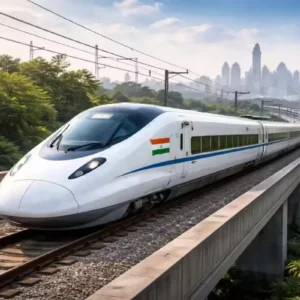
Vande Bharat Sleeper Train hits 180 kmph in CRS high-speed trial
02.01.2026
Indian Railways says the Vande Bharat Sleeper Train has cleared a key step in its modernization push after completing a Commissioner of Railway Safety (CRS) high-speed trial.
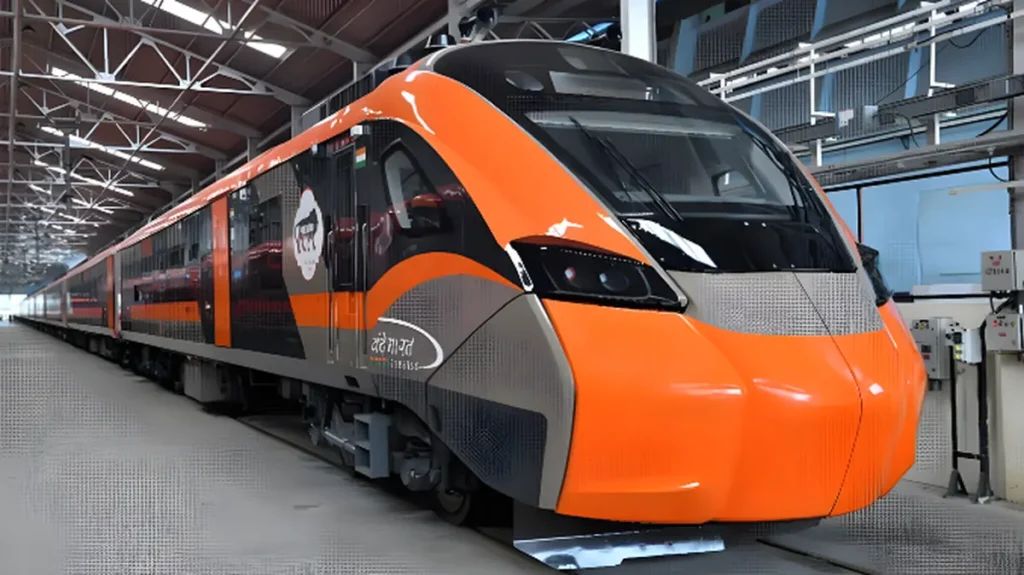
This is reported by the railway transport news portal Railway Supply.
Running on the Kota–Nagda section, the 16-coach sleeper rake reached a top speed of 180 kmph, and officials said it performed satisfactorily in the required evaluations, as reported by DD News.
CRS high-speed trial on the Kota–Nagda section
The 180 kmph CRS trial was built around checks intended to confirm safe, stable running at higher speeds. The assessments cited in the update included ride stability, oscillation and vibration behavior, braking efficiency, emergency braking systems, and overall safety mechanisms.
Don’t miss…Phoenix light rail collision disrupts Valley Metro service
After these technical evaluations, the CRS declared the trial a success—positioning the outcome as another step toward high-speed sleeper services for long-distance travel.
Ride stability at 180 kmph and the water-glass demonstration
Visuals from the Kota–Nagda run were also shared on social media by Union Minister for Railways, Information & Broadcasting, and Electronics & Information Technology, Shri Ashwini Vaishnaw. A widely noted moment was the water-glass stability demonstration: glasses filled with water stayed steady without spilling even at 180 kmph, a point also mentioned by ETInfra. The demonstration was presented as an indicator of smooth ride quality and the train’s advanced suspension system for long-distance operations.
Passenger amenities and safety systems on the Vande Bharat Sleeper Train
Unlike existing Vande Bharat chair car variants, the sleeper version is intended for overnight and longer journeys, combining speed with comfort. It is described as indigenously designed and manufactured in line with the Atmanirbhar Bharat vision.
In terms of onboard features, the 16-coach formation includes sleeper berths, ergonomically designed ladders for upper berths, centrally controlled automatic plug doors, and fully sealed wide gangways. The comfort package referenced in the briefing also includes modern toilets, digital passenger information systems, and centralized air-conditioning.
Safety features are a core part of the configuration. The Vande Bharat Sleeper Train is fitted with the KAVACH safety system, India’s indigenous train collision avoidance system, along with crashworthy semi-permanent couplers, anti-climbers, and fire barrier doors. The train also includes aerosol-based fire detection and suppression systems in electrical cabinets and lavatories, supported by CCTV surveillance across all coaches.
Other technologies cited for the rake include regenerative braking for energy efficiency, UV-C lamp-based air disinfection, emergency talk-back units, special lavatories for Divyangjan passengers, and a Centralized Coach Monitoring System.
With the Kota–Nagda high-speed trial reaching 180 kmph and passing the CRS checks described, Indian Railways presented the milestone as a move toward modern long-distance rail travel that blends speed, safety, and passenger comfort with indigenous rail innovation—an update also tracked in industry coverage such as Railway Supply.
News on railway transport, industry, and railway technologies from Railway Supply that you might have missed:
Find the latest news of the railway industry in Eastern Europe, the former Soviet Union and the rest of the world on our page on Facebook, Twitter, LinkedIn, read Railway Supply magazine online.Place your ads on webportal and in Railway Supply magazine. Detailed information is in Railway Supply media kit