Union Pacific train derailment into Colorado’s Gunnison River
04.12.2025
The Union Pacific train derailment into the Gunnison River happened late on the night of December 3, after a rockfall sent a large boulder crashing onto the tracks between Whitewater and Bridgeport, as reported by KJCT in Grand Junction. The blocked line forced the train off the rails and into the river, turning a routine movement into a serious Gunnison River train accident after rockfall.
This is reported by the railway transport news portal Railway Supply.
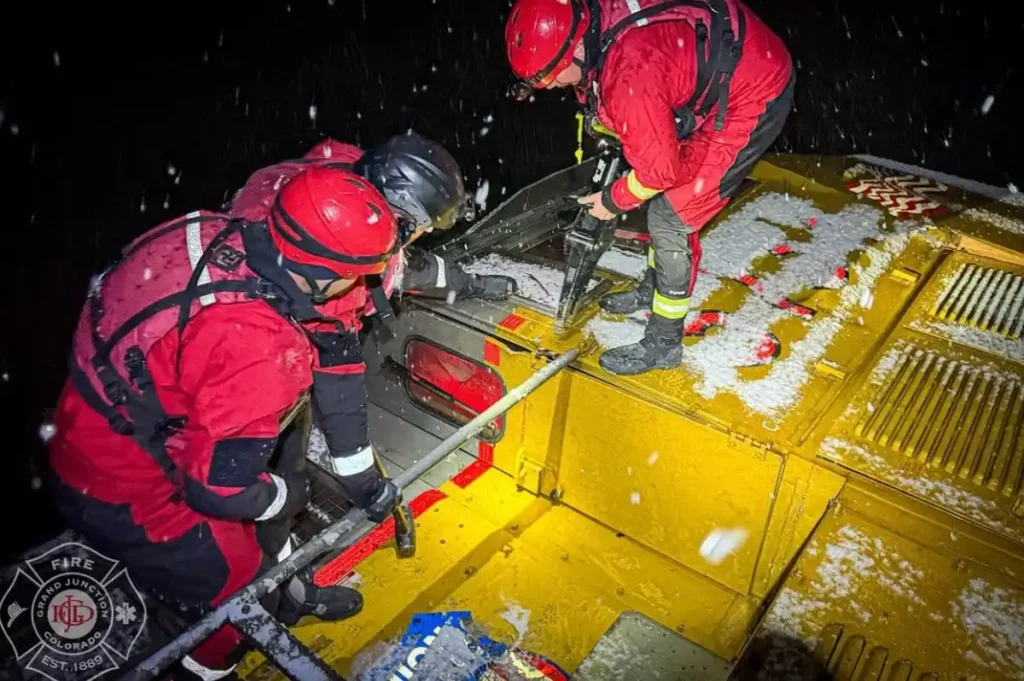
Rescue of engineers from the derailed train
At the moment of the derailment, two engineers were on board the Union Pacific train. They ended up in the water and had to be pulled out in a coordinated rescue effort. According to Union Pacific, and as also noted by Colorado Public Radio, both crew members were brought out safely, with no injuries reported.
Fire officials said the engineers were submerged in about two feet of cold water — a situation that posed a threat of hypothermia rather than drowning.
Don’t miss…FCAB hydrogen locomotive enters service in Chile
Battalion Chief Ben Blehm of the Grand Junction Fire Department explained that responders used what railroaders call a “high roller”, a pickup truck that can run on the rails, to reach the site. The vehicle carried two of the department’s technical rescue and extrication specialists, along with two members of the sheriff’s office and personnel from the Mesa County search and rescue team, forming a focused Grand Junction Fire Department technical rescue group on scene.
Once they arrived, the team walked along the rail equipment lying on its side, used extrication tools to open a door, and set up a short rope rigging system to help the engineers out of the compartment and guide them back to safety. The crew members were then moved into a warm ambulance, where a paramedic evaluated them after their time in the cold water and the associated risk of hypothermia.
Hazmat response and containment booms in the river
The derailment involved two locomotives and five loaded rail cars hauling coal. Some fuel leaked into the Gunnison River, raising concerns that diesel and oil from the locomotives and coal cars could enter the waterway. In response, hazmat units from the fire department deployed containment booms in the river to trap diesel, oil, and other materials released during the incident.
Blehm noted that crews quickly set multiple containment booms to ensure nothing moved farther downstream than they could capture. After that initial phase, the railroad brought in hazmat teams from Denver and Salt Lake to pump remaining fuel out of the equipment and remove anything that had collected in the booms. The goal of this hazmat response and containment booms in the river was to do everything possible to keep both the Gunnison River and the Colorado River clean.
Union Pacific train derailment prompts multi-agency response
The Union Pacific train derailment prompted a multi-agency response that brought together public and private partners, as detailed in a City of Grand Junction press release. The Grand Junction Fire Department provided emergency medical services and hazmat support, while the Mesa County Fire Authority contributed additional resources on the ground. The private company Suncor was also involved, forming part of the broader multi-agency response alongside Mesa County and other local partners.
Officials emphasize that the incident remains under investigation, and the information released so far is all that is currently available. The focus of responders has been on the safety of the engineers, the technical rescue carried out under cold-water conditions with a clear risk of hypothermia, and the environmental protection measures aimed at limiting the impact of the Gunnison River train accident after rockfall on both the Gunnison and Colorado rivers.
News on railway transport, industry, and railway technologies from Railway Supply that you might have missed:
Find the latest news of the railway industry in Eastern Europe, the former Soviet Union and the rest of the world on our page on Facebook, Twitter, LinkedIn, read Railway Supply magazine online.Place your ads on webportal and in Railway Supply magazine. Detailed information is in Railway Supply media kit