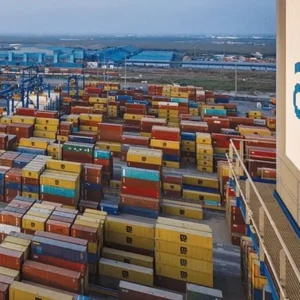
Ukraine loses $170 million daily due to port blockade
05.05.2022
As a result of blocking the work of ports by the aggressor country, Ukraine reduced its export capacity by almost half, informs the railway magazine Railway Supply citing Forbes Ukraine.

Through seaports, Ukraine exported more than 70% of all cargo for a total amount of approximately $47 billion. After the attack of the Russian Federation on February 24, the sea gates were blocked by the Russian fleet and anti-ship mines.
Hundreds of thousands of tons of cargo were locked up in ports and ships riding at anchor. Some of them were taken out by road and by rail, others are under fire or captured by the Russian military.
“Restoring the operation of ports is a critical condition for launching the Ukrainian economy. To understand the role of ports, let’s take a look at the April forecast of the Dragon Capital investment company: GDP will fall by 25% if the Black Sea remains closed, and by 22% if the ports start working. For the balance of trade, ports are even more important than for GDP: due to the blockade of ports, the economy loses about $170 million daily, estimates Oleg Nivevsky, Vice President of the Kyiv School of Economics.
So far, Ukraine does not control four ports: Mariupol, Berdyansk, Skadovsky and Kherson, says Deputy Minister of Infrastructure Yuriy Vaskov. These ports provided 7.5% of the total transshipment.
The Mariupol Commercial Sea Port has approached the war with a turnover of almost 7 million tons. According to Pavel Plotnikov, General Director of the UkrTransAgro port terminal, the businessman has not had access to the facilities for a long time. Some of the cars burned down, others were confiscated by the Russian military. Most of the grain has disappeared, according to Rail.insider.
“The terminal is completely destroyed, there are damages in some silos, the control room, the “heart and brains” of the terminal are destroyed,” said Pavel Plotnikov. The ship repair business of UkrTransAgro suffered even more. The company owned the only ship repair dock on the Sea of Azov. Without electricity, the pumps keeping the dock afloat stopped, and the structure, weighing tens of thousands of tons, went under water. “It had almost 3 tons of diesel fuel, and we don’t know if there was an environmental disaster or not,” the businessman said.
By the beginning of the war, there were about 300 000 tons of cargo in the port, six ships waiting for loading were blocked, explained the head of the Mariupol seaport, Sergei Gusakov (he was able to leave Mariupol at the end of March). According to his approximate estimate, about 70% of the administrative buildings in the port burned down.
Deputy Minister of Infrastructure Yuri Vaskov said that storage equipment, transshipment equipment and several of the 18 berths were damaged. Vessels are flooded in the waters. But if the war ends soon and the water area is quickly cleared, then it will be possible to quickly resume work at most of the berths, the head of the port believes.
In the port of Kherson (handling almost 3 million tons), the Russian occupation troops staged a robbery, Pavel Plotnikov reports the words of a local port worker he knows. They stole tugboats, infrastructure ground equipment, exported consignments of grain to the Crimea.
In Berdyansk (about 2 million tons) the situation is different. The Russians have seized the port there, but Ukrainian flags are not being removed, says the director of the port operator, who did not want to disclose the name, fearing for his business and the people who remain in the city.
At the same time, it is noted that the largest ports remained under the control of Ukraine, which accounted for more than 85% of the sea cargo turnover: Nikolaevsky, Olvia, Odessa, Chornomorsk, Yuzhny. Ports work for the return of goods, businesses can take out their goods by road and rail.
The war also affected the growth of transshipment volumes to three small ports at the mouth of the Danube – Izmail, Reni and Ust-Danube. Now these are the only three harbors out of 13 that can fully operate. In peacetime, they accounted for just under 5% of exports.
According to the Deputy Minister of Infrastructure, even if the war ends tomorrow, the Black Sea ports “will be closed for another two months due to mines.” “For the cleansing of the sea, military minesweepers coming from the Bosphorus are needed. Turkey prohibits warships from sailing in the strait,” the article explains.
Under an optimistic scenario, shipping in the Black Sea may partially recover in autumn, but only if many conditions are met: reaching an agreement on a truce, ensuring the safety of navigation, demining the water area.
According to Andrei Stavnitser, co-owner of the TIS port operator, there is another option – escorting a cargo ship with a special sea military convoy and agreements on a humanitarian corridor for them from both sides.
“The United Nations Shipping Agency in Somalia has that experience,” he says. “We are negotiating and discussing the export of grain in this way.” So far, negotiations have not been successful, as the organization has doubts about the safety of the corridor. “due to the war in Ukraine, according to UN estimates, 400 million people will be on the verge of starvation, ” the businessman emphasized. “If there is an opportunity to unlock the sea, then it should be used.»
Railway news you may have missed:
Poland and Ukraine will create a joint logistics railway enterprise
Find the latest news of the railway industry in Eastern Europe, the former Soviet Union and the rest of the world on our page on Facebook, Twitter, LinkedIn, read Railway Supply magazine online.Place your ads on webportal and in Railway Supply magazine. Detailed information is in Railway Supply media kit