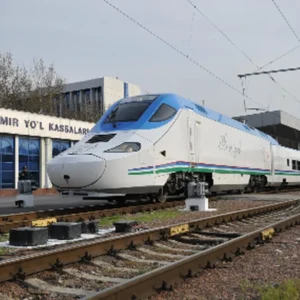
Turkey High-Speed Rail Network Surpasses 100 Million Passengers
09.07.2025
Turkey’s high-speed rail network has officially transported more than 100 million passengers, marking a major milestone in the country’s modern rail era. This is reported by the railway transport news portal Railway Supply.
Since launching its first high-speed service between Ankara and Eskişehir in 2009, the Turkey high-speed rail network has grown into one of the most advanced in the region.

According to Transport and Infrastructure Minister Abdulkadir Uraloğlu, trains have traveled over 98 million kilometers, which equals circling the globe more than 2,400 times. With 2,251 kilometers now in operation, Turkey ranks sixth in Europe and eighth globally for high-speed train service.
Don’t miss…DSB purchases Coradia Stream electric trains from Alstom
Rapid Growth and Expansion Across the Turkey High-Speed Rail Network
The Ankara–Istanbul line leads in passenger volume, carrying 38 million travelers to date. It’s followed by Ankara–Konya with 21.4 million and Ankara–Eskişehir with 21 million passengers. Additional routes such as Konya–Istanbul, Karaman–Ankara, and the newly opened Ankara–Sivas line continue to attract strong ridership.
Currently, high-speed rail directly serves 20 major cities, covering over 51% of Turkey’s population. Integrated transport options also connect remote regions like Antalya, Mersin, and Bursa via bus or conventional train links—cutting travel time significantly.
Turkey operates two primary fleets: HT65000 trainsets by CAF and Velaro TR units from Siemens Mobility. In a step toward self-reliance, Turkish manufacturer Türasaş began producing the country’s first domestically built high-speed trainsets in 2024. These units are designed for speeds of up to 225 km/h, with 14 trainsets expected between 2026 and 2028.
Future Projects Will Redefine Rail Mobility in Turkey
The Turkey high-speed rail network continues to expand. Nine new lines totaling 1,561 kilometers are under construction, with another six lines in planning. The Ankara–Istanbul Super Fast Train Project will cut travel time between the two cities to just 80 minutes by 2030, operating at speeds up to 350 km/h.
Upcoming routes include the İzmir–Ankara line, expected by 2027, which will reduce travel time from 12 to 3.5 hours. The Kayseri–Ankara route will follow, designed to serve 11 million annual passengers and boost east–west connectivity.
To meet growing demand, the government plans to establish a national High-Speed Train Consortium focused on domestic production and regional exports. Rail transport is also viewed as a key strategy for reducing road congestion, cutting emissions, and supporting sustainable mobility.
By 2035, Turkey aims to expand its high-speed rail network to 6,000 kilometers, reinforcing its position as a regional leader in clean, efficient, and integrated transportation.
Source, photo: railwaypro.com
News on railway transport, industry, and railway technologies from Railway Supply that you might have missed:
Don’t miss…MSC Launches Platform Production in Trieste
Place your ads on webportal and in Railway Supply magazine. Detailed information is in Railway Supply media kit