Traxtion rail freight investment in South Africa
04.12.2025
Traxtion rail freight investment in South Africa will see the private operator commit Rand 3.4bn ($US 197m) to 1067mm-gauge locomotives and wagons.
This is reported by the railway transport news portal Railway Supply.
The spending comes as the rail freight market opens to private operators under a government-led reform programme, according to International Railway Journal.
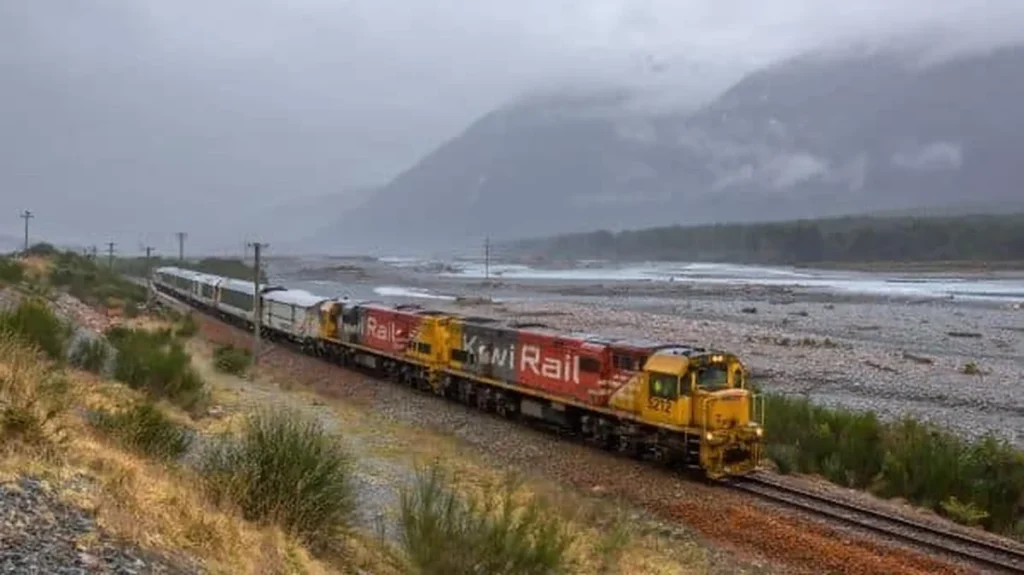
Traxtion rail freight investment: locomotives from KiwiRail
Traxtion says part of this capital will go towards buying and modernising 46 Wabtec diesel-electric locomotives, purchased second-hand from KiwiRail in New Zealand for Rand 1.8bn. The fleet consists of 42 type U26C Wabtec diesel-electric locomotives that have already received partial refurbishment and four fully refurbished type C30-8MMI units rated at 2.5MW. The company stresses that all of these KiwiRail second-hand locomotives have been well maintained and remain in good running order.
Don’t miss…Northwestern Ontario welcomes CPKC Christmas Holiday Train
Upgrading Wabtec diesel-electric locomotives in Rosslyn, Pretoria
Working with Wabtec, Traxtion plans to upgrade the U26C units to C30 specification. The programme involves replacing the existing engines with new, fuel-efficient 7FDL-EFI power units and installing Brightstar advanced control systems to boost performance and reliability, against the backdrop of the South African rail reform programme. As a result, continuous tractive effort will rise from 218kN to 240kN at 29km/h, and fuel efficiency is expected to improve by around 15%. All refurbishment and upgrade work on the 1067mm-gauge rolling stock will take place at Traxtion’s rail services hub in Rosslyn, Pretoria, a facility also highlighted by Railway Supply in coverage of Traxtion’s regional locomotive projects.
Under the current schedule, the 46 locomotives will be shipped to South Africa in four batches between April 2026 and August 2027. Each group of 10–12 locomotives will then go through a four-month workshop cycle combining engine replacement, control system upgrades, a major six-yearly service and full repainting. The first refurbished units are due to enter commercial service in the third quarter of 2026, with the full programme expected to be completed in early 2028.
Boost for the South African rail freight market
Alongside the locomotive plan, Traxtion will put money into a substantial wagon fleet for the South African rail freight market. The company intends to order approximately 920 wagons for Rand 1.6bn, which it expects to source from South African manufacturers. Subject to securing network access, Traxtion aims to launch freight operations from mid-2026. Once the locomotives and wagons are fully deployed, the operator expects its rolling stock fleet to increase rail freight capacity in South Africa by 4.5 million tonnes a year. That extra volume equates to around 5% of the minister of transport’s target to grow national freight traffic from 160 million to 250 million tonnes per year.
Traxtion says the overall programme will be financed through a mix of equity and debt, initially split 65% equity and 35% debt capital. The company expects the investment to create 662 permanent jobs, including train crew and technical staff, plus a “significant” number of additional positions linked to manufacturing the new wagon fleet.
Open access reforms and bulk freight focus
“This is the biggest private investment in rail freight in South Africa’s history,” says Traxtion CEO James Holley. He adds that the company did look at ordering new locomotives, but that the chance to acquire a large KiwiRail fleet in one go was unprecedented in his more than two decades in the rail sector. In his view, this opportunity will allow Traxtion rail freight investment plans to be realised more quickly than if the company had relied on new-build locomotives.
Holley also expects the project to act as a catalyst for further private capital in the South African rail freight market. He praises the South African government for its drive to introduce open access, arguing that “reform without investment is really meaningless,” and says the fact that the government has already managed to spark investor confidence is an encouraging sign. The wider reform of South Africa’s rail freight network, and the move to open it to private operators, has also been covered by Reuters.
Further clarity on how private operators will be able to use the rail freight network is expected with the publication of the fourth edition of the government’s Network Statement, which will set out in detail how the network will be opened to private operators. The latest version is due either later this month or in early 2026.
Traxtion has not yet revealed which services it plans to operate once access is granted, but Holley indicates that the company is likely to focus on bulk freight traffic, which he regards as the most commercially robust segment of the market.
News on railway transport, industry, and railway technologies from Railway Supply that you might have missed:
Find the latest news of the railway industry in Eastern Europe, the former Soviet Union and the rest of the world on our page on Facebook, Twitter, LinkedIn, read Railway Supply magazine online.Place your ads on webportal and in Railway Supply magazine. Detailed information is in Railway Supply media kit