TAZARA railway modernisation deal boosts Zambia trade
21.11.2025
TAZARA railway modernisation sits at the heart of a new agreement between China, Zambia and Tanzania. The three governments have signed on to overhaul the historic line and, in doing so, to strengthen trade links between African countries, as reported by Economic Times Infra.
This is reported by the railway transport news portal Railway Supply.
China–Zambia–Tanzania agreement on TAZARA railway modernisation
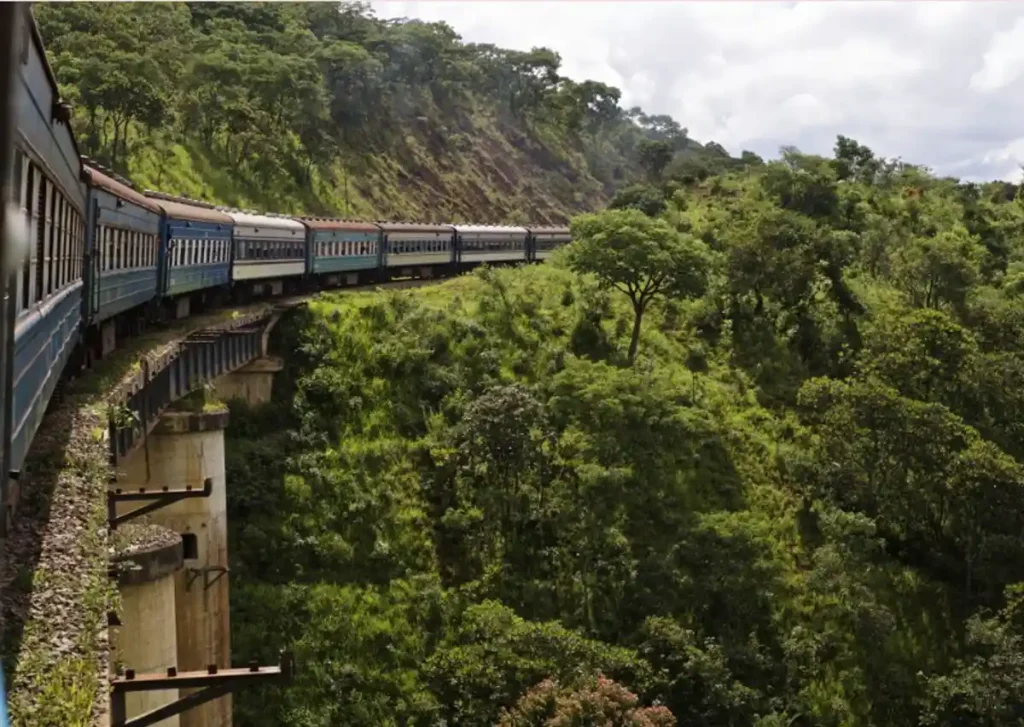
Under the China–Zambia–Tanzania agreement, the parties have concluded a $1.4 billion TAZARA railway deal to modernise the corridor that connects landlocked Zambia with the Indian Ocean through Tanzania. The line, financed by China in the 1970s to support Zambia’s copper exports and facilitate fuel imports via Tanzania, still functions as a critical railway corridor for those copper shipments.
Don’t miss…Union Pacific Lineage cold storage project at Prime Pointe
Today it is widely seen as a strategic alternative to the US- and EU-backed Lobito Corridor, a competing trade route running from Angola through Zambia to the Democratic Republic of Congo, as also highlighted by Railway Supply.
The signing of the TAZARA railway modernisation package took place during Chinese Premier Li Qiang’s visit to Zambia — the first such trip by a Chinese premier in 28 years — at a time when Africa’s second-largest copper producer is emerging from a financial crisis. In discussions with Zambian President Hakainde Hichilema before the signing, Li stressed Beijing’s intention “to work with Zambia to advance the cause of modernisation”, tying the railway project to a broader agenda of economic cooperation.
According to a representative of China Railway Corporation, the upgrade programme for the 1,860 km (1,155 mile) line will cover a wide range of works: rehabilitating stations, renewing track, refurbishing tunnels and bridges, and constructing additional infrastructure along the corridor. In practical terms, this wave of TAZARA railway modernisation is expected to push annual freight volumes on the route up from about 100,000 tonnes to 2.4 million tonnes, based on project details set out in a press release from the railway authority.
Lobito Corridor, debt relief and Belt and Road in Zambia
Li’s visit and the TAZARA railway modernisation form part of a broader push to deepen Chinese infrastructure investment in Zambia, a copper-rich country where Europe and the US are trying to position themselves as alternative benefactors. This renewed competition is playing out just as Zambia’s $13.4 billion debt has been placed on a more sustainable repayment plan, reshaping the backdrop for large, long-term financing deals.
During the visit, President Hichilema publicly thanked China for its role in Zambia’s debt restructuring process. China remains Zambia’s largest official creditor, with $5.7 billion owed, and Beijing is keen to present the country as a model participant in President Xi Jinping’s flagship Belt and Road infrastructure initiative in Africa, where corridors like TAZARA are used as showcase examples.
China’s growing economic footprint in Zambia was further underlined this week by a major project outside the rail sector. On Monday, Zambian authorities issued a licence to a joint venture with China’s Fujian Xiang Xin Corporation (FJXX) to build a $1.1 billion crude oil refinery and energy complex, complementing Chinese involvement in Zambia’s metals sector. Over the past two decades, Chinese companies have invested about $6 billion in the country, according to data from the American Enterprise Institute, with almost all of that money flowing into the metals industry that underpins Zambia’s export economy.
In an official statement carried by the Xinhua news agency, China said that together with Tanzania and Zambia it would step up cooperation centred on the TAZARA railway and promote trade among African countries. The three parties also pledged to support the implementation of China’s zero-tariff policy for African countries that maintain diplomatic relations with Beijing, “encourage the localisation of production and processing in Africa, and expand the exports of high-quality products to China”.
The same statement noted that the partners intend to promote the development of existing industrial parks and zones along the railway line and in surrounding areas. In that sense, TAZARA railway modernisation is not only about higher freight volumes but also about anchoring a wider strategy of industrial growth and Africa–China trade integration along the corridor.
News on railway transport, industry, and railway technologies from Railway Supply that you might have missed:
Find the latest news of the railway industry in Eastern Europe, the former Soviet Union and the rest of the world on our page on Facebook, Twitter, LinkedIn, read Railway Supply magazine online.Place your ads on webportal and in Railway Supply magazine. Detailed information is in Railway Supply media kit