Starline Project’s High-Speed Rail to Connect Europe by 2040
29.03.2025
Starline Project’s High-Speed Rail Network Will Transform European Travel. This is reported by the railway transport news portal Railway Supply.

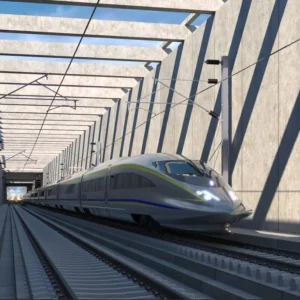
The Starline project’s high-speed rail aims to revolutionize European transport by creating a seamless network. This 13,670-mile system will reduce travel times and enhance connectivity across the continent.
Starline Project’s High-Speed Rail: A Vision for the Future
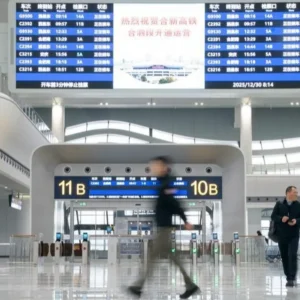
The ambitious Starline initiative proposes a vast high-speed rail network linking major European cities. The plan includes 39 strategically placed stations, ensuring accessibility across all participating nations.
Don’t miss…MRT-7 San Jose Del Monte Station Gets New Location
By 2040, trains will operate at speeds of up to 400 km/h, dramatically cutting travel times. Journeys like Helsinki to Berlin will take just over five hours, making cross-border travel faster and more efficient.
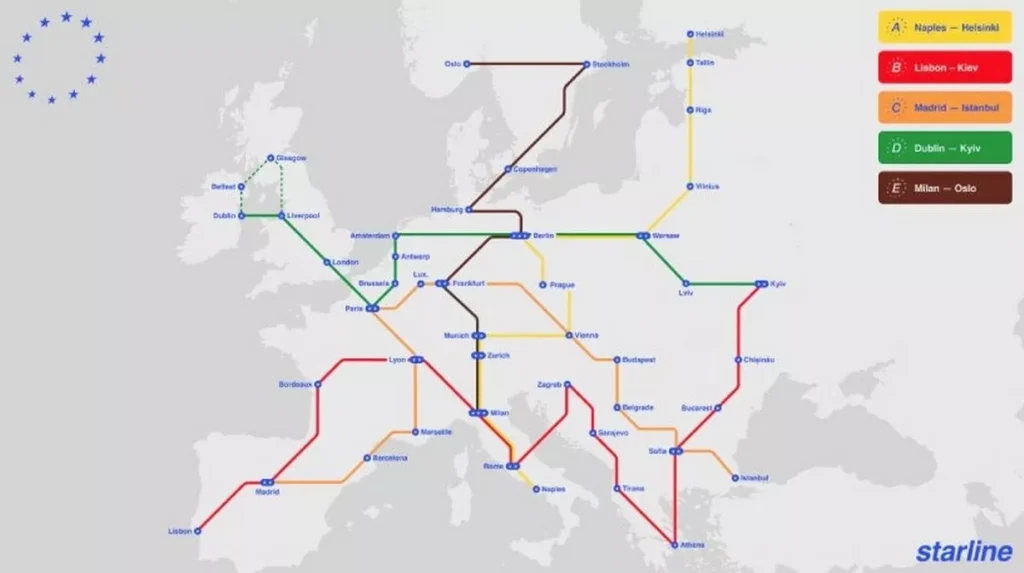
The project extends beyond the EU, connecting historically and economically significant regions. Stations in London, Istanbul, and Kyiv will strengthen trade, tourism, and cultural exchange across Europe.
Economic and Environmental Benefits of Starline Project’s High-Speed Rail
The network will also support high-value freight, moving goods such as medical supplies and fresh produce. This will streamline logistics, benefiting businesses and consumers alike.
Additionally, Starline aims to reduce short-haul flights by 80%, lowering carbon emissions. Faster travel times will also make trains a more viable alternative to cars and traditional rail services.
Starline’s design reflects European heritage, with a striking blue color inspired by the EU flag. Stations will feature modern architecture while preserving each city’s unique character.
Passengers will enjoy seamless ticketing, integrating multiple travel providers. AI-driven security systems will replace traditional checkpoints, ensuring both safety and efficiency.
Though the project’s cost remains undisclosed, funding will likely come from public investments. A new European Rail Authority will oversee coordination, ensuring long-term system expansion.
The Starline project’s high-speed rail promises to redefine European travel, making it faster, more accessible, and environmentally sustainable for future generations.
Source: www.mirror.co.uk
News on railway transport, industry, and railway technologies from Railway Supply that you might have missed:
Find the latest news of the railway industry in Eastern Europe, the former Soviet Union and the rest of the world on our page on Facebook, Twitter, LinkedIn, read Railway Supply magazine online.Place your ads on webportal and in Railway Supply magazine. Detailed information is in Railway Supply media kit