
Southern Peru railway modernisation faces a contract that ends in 2034
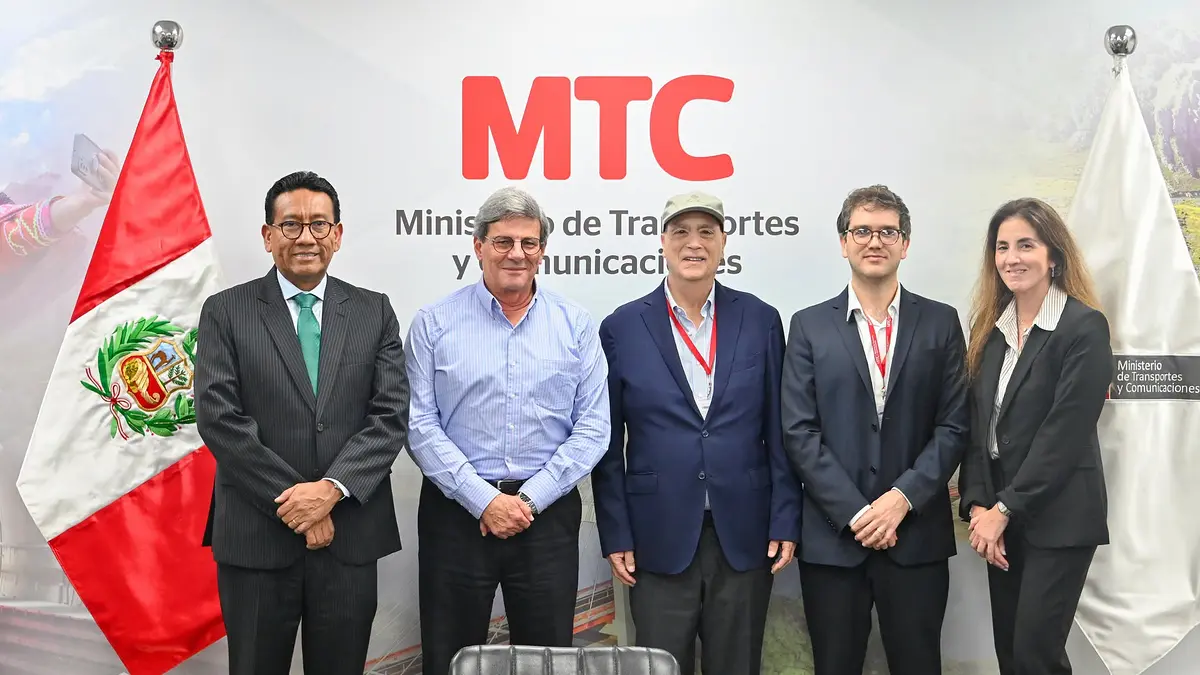
In Peru, Ferrocarril Transandino has presented a USD 800 million southern Peru railway modernisation plan to the Ministry of Transport and Communications for official evaluation.
The concessionaire manages the railway infrastructure between Cusco and Machu Picchu under a concession that currently ends in 2034. The same concession covers the line linking Cusco, Puno and Arequipa.
What the concessionaire put on the table
The Ministry of Transport and Communications (MTC) set out the proposal on 1 September 2026. According to the ministry, the concessionaire requested the meeting itself. The plan covers the Ferrocarril Sur Oriente between Cusco and Machu Picchu. It also covers the Ferrocarril Sur, which links the regions of Cusco, Puno and Arequipa. Modernisation would lift capacity, improve service conditions and make the track more resilient to natural events, the ministry said. Construction would create jobs at its various stages. In addition, the concessionaire sketched a pilot intermodal scheme between Peru and Bolivia. That scheme would tie rail and road services to a port terminal.
So far the only confirmed step is an evaluation. The ministry has not said who would pay for the work. Nor has it named an approval route or a start date. The USD 800 million figure remains the company’s own estimate.
| Section | Route | Length | Stations |
|---|---|---|---|
| Ferrocarril Sur | Matarani and Mollendo to Arequipa, Juliaca, Puno and Cusco | 854 km | 54 |
| Ferrocarril Sur Oriente | Cusco to Hidroeléctrica, with a branch to Urubamba | 134 km | 11 |
The proposal covers both sections. Freight moves almost entirely over the longer Sur section, while the shorter Sur Oriente carries the traffic to Machu Picchu. Track gauge on the Sur Oriente is 0.914 m. Source: Ositrán, performance report for 2025, section I.4.
A concession with eight years to run
That evaluation lands on a contract in its final stretch. Peru awarded the Ferrocarril Sur and Sur Oriente concession in 1999. Ositrán records an initial 30-year term plus one five-year extension, placing the current expiry date in 2034. The concessionaire subsequently submitted its second, third, fourth and fifth five-year extension requests. MTC accepted none of them and rejected the fifth request in 2024, one year after it was filed. The remaining concession term is therefore material to the evaluation. However, neither source says that the concessionaire must recover the proposed USD 800 million by 2034 or identifies the contractual and financing structure under which the programme would proceed.
What the contract actually requires
The contract sets no explicit minimum investment amount or mandatory physical investment targets. Instead, it required the concessionaire to bring the infrastructure up to United States Federal Railroad Administration Class 2 standards during the first five years. The contract also allowed recognised expenditure on track rehabilitation and maintenance to reduce payments owed to the state. The period for adding new investment credits ended in September 2009, but the remaining credit continued to reduce payments through 2018. Ositrán records S/ 213 million, or USD 77.8 million, of investment recognised under that mechanism. On a nominal basis, the new USD 800 million estimate is just over ten times that recognised amount, but the USD 77.8 million figure does not represent all investment made since 1999. Ferrocarril Transandino separately reported S/ 29.6 million of track investment in 2024, five per cent below 2023.
Record traffic and repeated closures
Meanwhile, passenger traffic reached a record 3.46 million in 2025, 10.2 per cent above 2024 and higher than the 2.88 million recorded in 2019. The Sur Oriente accounted for 99.2 per cent of the total. PeruRail carried 76 per cent of passengers and Inca Rail 24 per cent. Freight traffic fell 4.7 per cent to 2.93 million tonnes. The Sur section handled 99.3 per cent of that volume, with Cerro Verde and Las Bambas remaining the principal freight customers.
The resilience argument has an operating record behind it. During 2025, services were suspended following a landslide-related pipe collapse, rock and earth movements, protests and a collision between two trains. Locomotive availability averaged 76 per cent, marking a fifth consecutive year below the 80 per cent benchmark cited from a World Bank study. Fetransa reported 33 derailments, 37.5 per cent more than in 2024. Ositrán notes that derailments may result from either track conditions or operational manoeuvres and also reports that the concessionaire complied with the applicable safety and technical standards in 2025.
The route to a decision
If implementation requires changes to the existing concession, those changes would have to pass through a contract addendum, with Ositrán providing a technical opinion during the approval process. The concession contract has been modified six times since 1999, most recently on 27 April 2026. Ositrán’s updated contract sheet continues to record an initial 30-year term plus one five-year extension. However, the MTC announcement does not identify the financing, procurement or contractual route under consideration. Until the evaluation ends, the plan remains a concessionaire proposal with no published timetable.


