Škoda Group to supply new trains for Stockholm’s Saltsjöbanan
17.11.2025
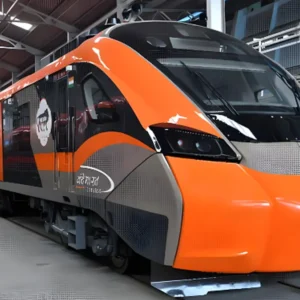
Škoda Group is preparing a full fleet upgrade for the Saltsjöbanan line in Stockholm, as outlined in a recent Škoda Group press release, because the region can no longer rely on trains that have been in service for almost half a century.
This is reported by the railway transport news portal Railway Supply.

Modernising regional transport with Škoda Group
Škoda Group won the tender to renew Saltsjöbanan and will supply new electric trains to replace ageing ASEA-built units that have carried commuters for around 50 years, a move also covered by Railway-News. The company is tailoring the design to Nordic conditions, so the fleet can cope with icy tracks, sharp temperature swings and demanding daily schedules.
Don’t miss…LiDAR Innovation Advances Rail Corridor Monitoring
The 18.5 km single-track line links central Stockholm with Saltsjöbaden on standard-gauge 1435 mm rails, running separately from Sweden’s national network, according to the Saltsjöbanan overview on Wikipedia. In practice, this isolation makes dependable rolling stock even more important, because there is no easy way to reroute services when older trains fail.
The base contract covers 16 trains, with an option for 15 more, bringing the potential fleet to 31 units and lifting the total value to more than €230 million — figures that match the terms reported by both Škoda Group and industry media. Škoda Group is also drawing on its Finnish engineering team, and that cross-border collaboration strengthens both local expertise and long-term support for the operator.
Technical solutions from Škoda Group and service improvements
Each two-car trainset is 36 metres long and runs on 750 V and 1500 V DC, with every bogie powered to improve acceleration on a relatively busy single-track corridor. Trains will carry about 250 passengers, including 94 seated, and the operator will be able to couple up to three trainsets together in the peaks.
The new air-conditioning systems use propane as a refrigerant, helping the new fleet meet environmental standards and reduce the system’s overall carbon footprint. As one planner put it, “we can see the cliff coming” when life-expired trains stay in service too long — and this order is designed to pull Saltsjöbanan back from that edge.
Škoda Group plans to start production in 2027, with first deliveries scheduled for 2029 and entry into service between late 2029 and early 2030. By that point, passengers should notice quieter, brighter trains and, just as importantly, fewer disruptions on a line that thousands rely on every working day.
News on railway transport, industry, and railway technologies from Railway Supply that you might have missed:
Find the latest news of the railway industry in Eastern Europe, the former Soviet Union and the rest of the world on our page on Facebook, Twitter, LinkedIn, read Railway Supply magazine online.Place your ads on webportal and in Railway Supply magazine. Detailed information is in Railway Supply media kit