Shinkansen extensions under scrutiny as Japan weighs next steps
04.01.2026
Shinkansen extensions under scrutiny is now shaping Japan’s discussion about what comes next for high speed rail, as the country grapples with a declining and less economically active population and escalating construction costs, as outlined by Railway Gazette International, where Mike Bent considers the challenges and options.
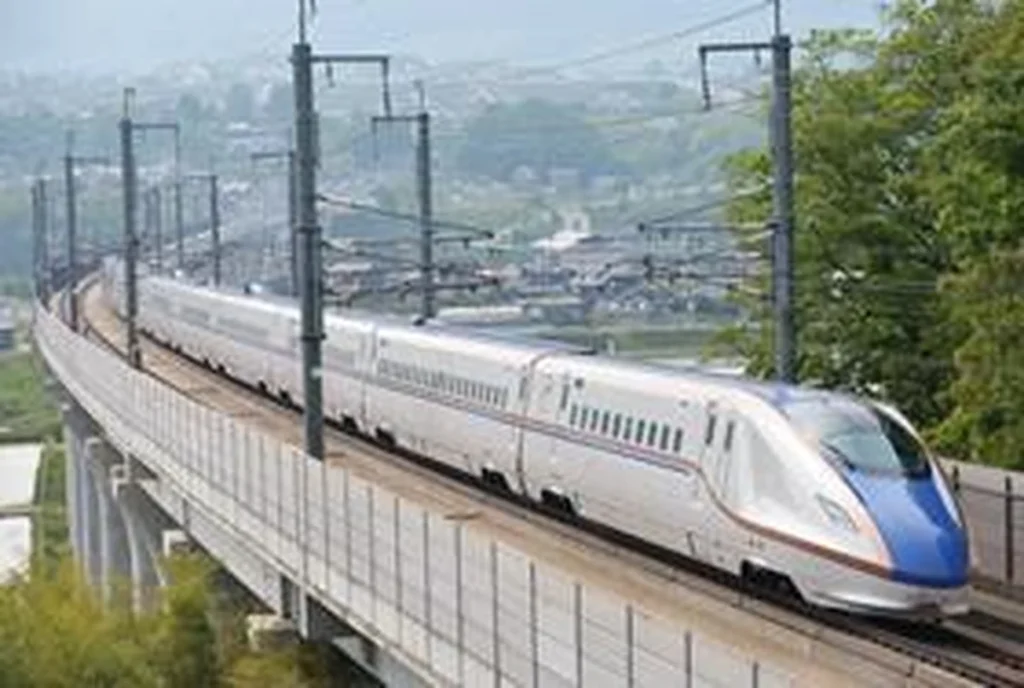
This is reported by the railway transport news portal Railway Supply.
With work to Nagasaki, Tsuruga and Sapporo completed or well advanced, the Ministry of Land, Infrastructure, Transport & Tourism (MLITT) has spent roughly the past five years setting out future rail development priorities, alongside construction work described by the Japan Railway Construction, Transport & Technology Agency (JRTT).
That work is not framed only around building more Shinkansen. MLITT is also looking at alternatives to new Shinkansen lines, including adapting conventional arterial routes for speeds above the usual maximum of 130 km/h. At the same time, it is weighing what further high speed construction could mean for the existing local rail networks that feed passengers into main corridors.
Don’t miss…Reading & Northern coal shipments pass 1M tons again
Why Shinkansen expansion is being questioned?
For around 70 years, Japan has treated the steady development of its high speed network as a centrepiece of railway investment, while also putting significant funding into conventional main lines and urban projects. Even so, the longer-term assumptions behind expansion are now being revisited.
Back in the 1970s, the then Ministry of Transport envisaged a national high speed system of around 7,000 km. Alongside the Tohoku Shinkansen running from Tokyo to Morioka and onward to Aomori, Hakodate and Sapporo, plans also included a Hokkaido link from Oshamambe to Asahikawa. On Honshu’s western side, what later became the Hokuriku Shinkansen was expected to connect Takasaki and Osaka via Toyama and Tsuruga. There was also a coastal line concept, linking Toyama and Niigata to Akita, Hirosaki and Aomori. Those prospects, however, are increasingly under scrutiny today.
Maintenance Shinkansen and national standards
The earliest corridors — the Tokaido and Sanyo Shinkansen — were promoted to relieve congestion on the busiest main line routes. Later schemes had a clearer regional dimension, aimed at rebalancing regional economic development as population and industries became more concentrated in major urban areas along the east coast, contributing to rural depopulation and a slow-down elsewhere.
In response, the government introduced National Comprehensive Development Plans from 1962 onwards. An integrated high speed rail network was seen as one way to address regional disparities. The National Shinkansen Railway Development Act, passed in May 1970, proposed four routes: the Tohoku, Hokkaido, Hokuriku and Kyushu Shinkansen. Building them was assigned to the Japan Railway Construction Public Corp, later restructured as the Japan Railway Construction, Transport & Technology Agency. These routes and later extensions are commonly referred to as the Maintenance Shinkansen — a term that can also be understood as “adjustment”, in the sense of spreading economic development more evenly.
The act laid down key standards for Shinkansen projects. Lines were to be designed for trains to run at more than 200 km/h and, regardless of gauge, they were set apart in law from conventional railways built for lower speeds. Later legislation raised the target to 260 km/h, which remains the legal requirement, although some trains now run faster.
MLITT findings on impacts and costs
In 2017, MLITT surveyed Japan’s arterial rail network to “verify the effects that Shinkansen construction will have on society and the economy”. Findings published in October 2019 said that opening a Shinkansen tended to lift land values around stations and increase the number of people visiting the served areas, though the strength of the effect varied by region.
MLITT also tested whether building single-track Shinkansen would materially reduce costs. It concluded that single track would still be priced at about 76% to 81% of a double track line on elevated structures, or around 83% for tunnels. The survey did not consider using future high speed lines for freight.
The same work also looked at what new lines can do to existing services. While business travel fell significantly, other ridership — school, commuting or leisure — stayed fairly stable. MLITT did not find a generalised correlation, because outcomes depend heavily on local travel patterns. One example cited was the Hokuriku Shinkansen extension to Kanazawa, which opened in March 2015 and increased ridership on the connecting Johana, Takayama, Nabao and Himi lines.
From that, MLITT concluded that clearer standards would be needed for maintaining local lines when considering any further high speed construction, including assessing light rail conversion or replacement bus services.
Where future rail expansion could happen?
MLITT has set out several areas where further rail expansion may be desirable, though it remains unclear whether all of them should be built to full Shinkansen standards, or whether upgraded conventional lines could offer more local benefit at a lower cost.
One proposal is improved access to Shikoku: a route from Okayana to Utazu with three possible branches serving Tokushima, Kochi and Matsuyama. It would require rebuilding the Seto Ohashi bridge, take around 13 years, and was estimated at ¥130bn at 2017 prices. Another concept focuses on the Kyushu east coast, with a Kokura to Oita link intended to relieve the heavily used Nippo Line.
MLITT also points to work on the mini-Shinkansen network. On the Yamagata mini-Shinkansen, attention centres on the steep and sinuous section through the Itaya pass between Fukushima and Yamagata, where there is demand for a base tunnel under the Ou mountain range. On the Akita mini-Shinkansen, a base tunnel under the Sengan pass between Morioka and Omagari would allow the line speed to rise from 60 to 160 km/h. In Hokkaido, the ministry also envisages rebuilding parts of the network to complement the Hokkaido Shinkansen extension to Sapporo, a project also discussed by Railway Supply.
Across these options, the same question keeps returning: as population pressures and high costs intensify, where do Shinkansen standards make sense — and where might faster conventional routes and a clearer approach to local lines deliver more at lower cost?
News on railway transport, industry, and railway technologies from Railway Supply that you might have missed:
Find the latest news of the railway industry in Eastern Europe, the former Soviet Union and the rest of the world on our page on Facebook, Twitter, LinkedIn, read Railway Supply magazine online.Place your ads on webportal and in Railway Supply magazine. Detailed information is in Railway Supply media kit