
Roman statues found during railway works near Binyamina
20.06.2026
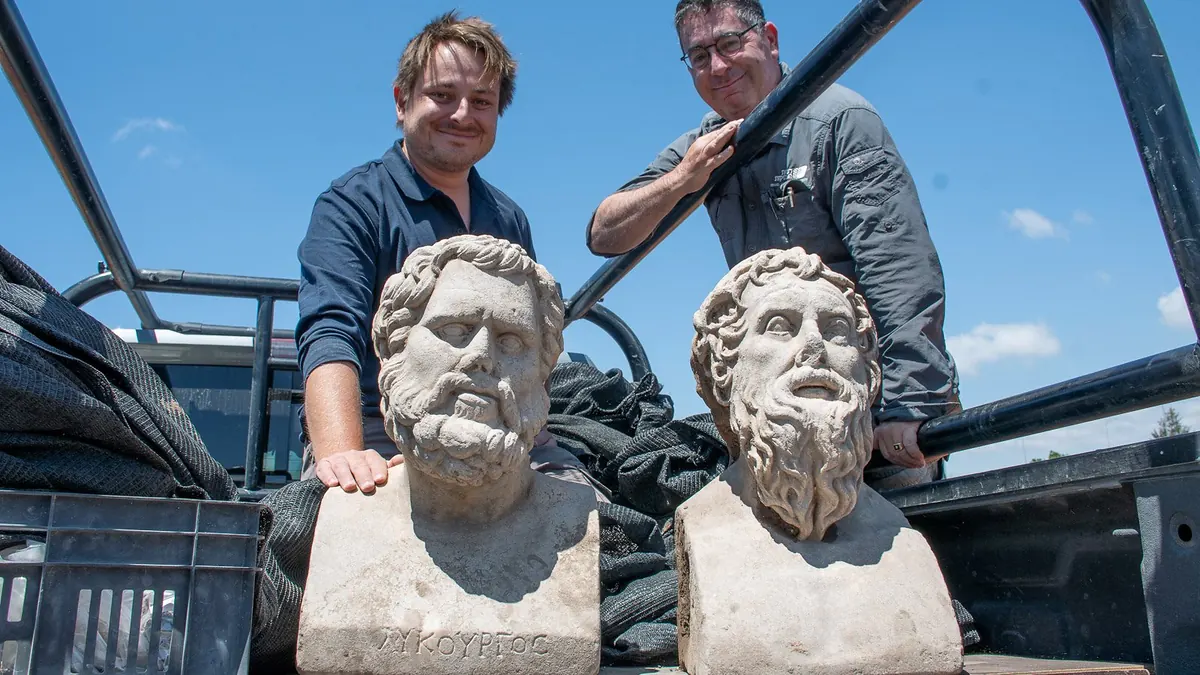
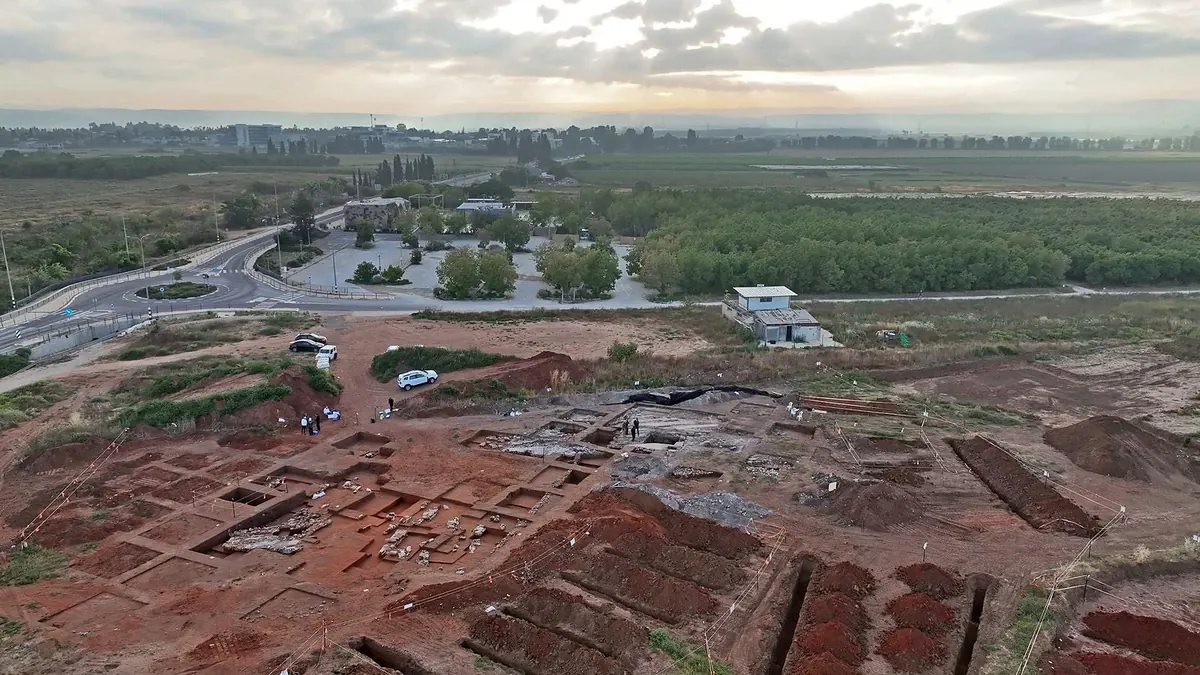
Roman statues found during railway works near Binyamina in northern Israel date back about 1,700 years and were uncovered during archaeological work before major railway infrastructure works.
The Israel Antiquities Authority said the finds were uncovered ahead of works connected with the expansion of Israel’s coastal rail line. The project forms part of a broader Ministry of Transportation and Israel Railways initiative to develop high-speed rail services capable of reaching speeds of up to 250 km/h.
The discovery links the rail expansion works with a Roman-period site connected to wine production and the Caesarea region.
Context
The railway works near Binyamina are linked to Israel’s wider coastal tracks programme. According to the Ministry of Transportation, the project involves doubling, upgrading and adapting the coastal railway infrastructure for fast trains, with planned operating speeds of up to 250 km/h. The official programme is intended to shorten rail journeys between Haifa, Tel Aviv and Be’er Sheva to about 30 minutes, which explains why preparatory works along the corridor included archaeological checks before construction could proceed.
Roman statues found during railway works near Binyamina
Archaeologists found the Roman marble statues inside a wine collection vat linked to a Roman-Byzantine winepress. The statues depict prominent figures from the Greco-Roman world, and one of them bears a Greek inscription with the name “Lycurgus”. Researchers are still examining which historical figure the inscription may refer to.
Excavation directors Eliran Oren and Avisag Reis of the Israel Antiquities Authority said the placement of the statues raised questions because they were not found where they had originally stood.
“The statues date to the Roman period, but they were not discovered in their original location,”
“They were carefully laid face down inside a wine collection pit after the winepress had gone out of use. At present, we do not know why they were hidden there, although it is possible they were deliberately concealed for protection.”
The sculptures are protomes, a form of sculpture showing the upper part of the human body. According to the authority, such objects are exceptionally rare in the region.
Greek inscription Lycurgus remains under study
Michael Sorotskin, an Israel Antiquities Authority archaeologist who was at the site, said the discovery became clear only gradually during the excavation.
“During the excavation, workers noticed something protruding from the ground and called me over,”
“There was an immediate feeling that we had found something unusual. As the excavation progressed, it became clear that it was not pottery but marble. Slowly, the two statues emerged. It was an extraordinary moment.”
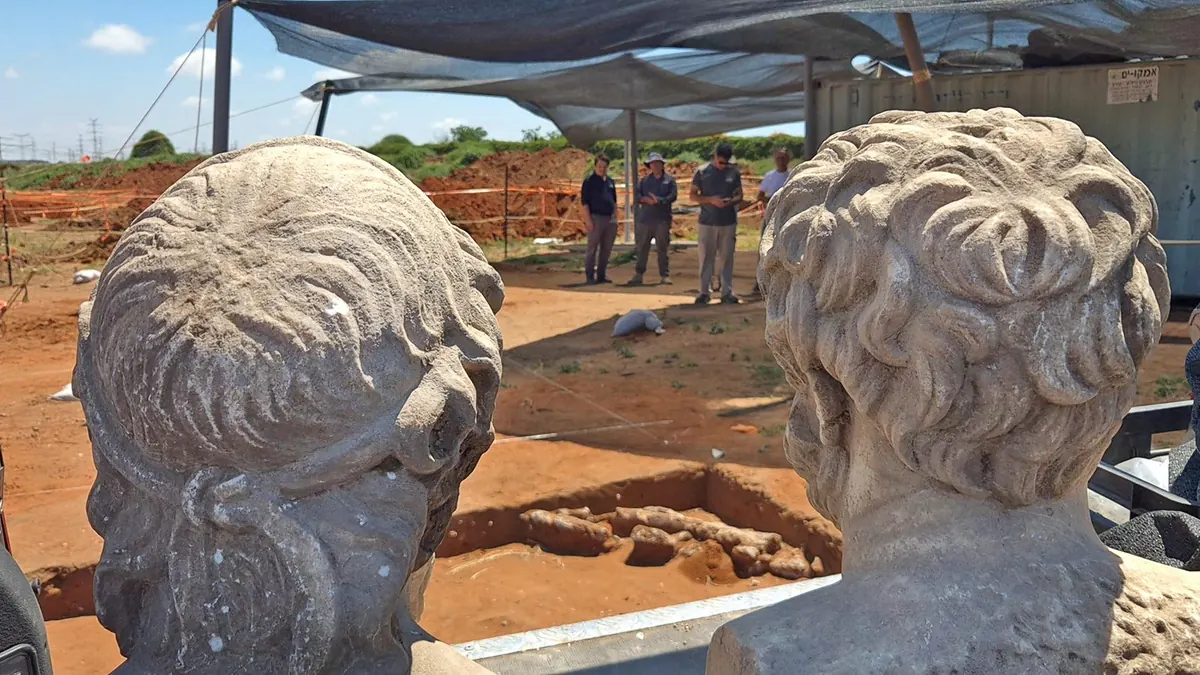
The statues may originally have decorated a luxury villa owned by a wealthy resident of Caesarea. Earlier excavations in the same area revealed remains of a Roman bathhouse, which may point to an affluent suburban estate connected with the ancient port city.
Dr Peter Gendelman, the Israel Antiquities Authority specialist for the Caesarea region, said the new sculptures belong to a limited group of comparable portrait works found in the area in recent decades.
“The last comparable discovery in Caesarea occurred during the 1990s,”
“One of the newly discovered sculptures preserves a Greek inscription bearing the name Lycurgus. Two notable historical figures carried this name: Lycurgus, the legendary lawgiver of Sparta, and Lycurgus of Athens, a prominent statesman and orator of the fourth century BC. It is too early to determine which individual is represented.”
Portrait sculptures of major figures from Greek history were used in Roman public buildings, baths and elite houses. They reflected the cultural interests and education of the people who commissioned or displayed them.
Public display planned after conservation work
The statues have been transferred to Israel Antiquities Authority laboratories for cleaning, conservation and further research. Specialists hope that closer study will help identify the figures shown in the sculptures and clarify where the works were originally displayed.
The find is due to be presented to the public for the first time at the archaeological conference at the Centre VII – House on 18 June at the Moza – Eretz Israel Museum in Tel Aviv. After the conference, the statues are expected to remain on public display for the rest of the summer.
Officials have described the find as one of the largest archaeological discoveries made in the region in recent years.
Oren and Reis said the timing of the discovery made it especially memorable.
“This is a once-in-a-lifetime discovery,”
“The most remarkable finds often appear when you least expect them—and in this case, they emerged on the final day of excavation.”