Progress Rail Strengthens Its Position in Thailand’s SRT Projects
18.11.2025
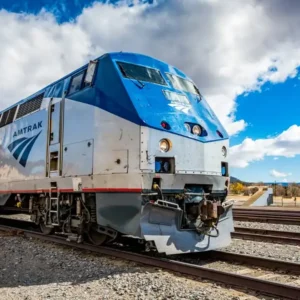
Progress Rail is deepening its role in the State Railway of Thailand’s network upgrade after winning a contract to install signalling and ETCS Level 1 on the Khon Kaen–Nong Khai corridor, a route long viewed as overdue for a full technical refresh.
This is reported by the railway transport news portal Railway Supply.

Progress Rail and the second phase of SRT’s upgrade programme
Progress Rail signed a contract with the Ch. Thawee–AS Construction joint venture to equip the Khon Kaen–Nong Khai section with modern signalling systems, and, as Railway-News notes, this work sits at the heart of SRT’s second-phase programme. Meanwhile, Thai authorities are pushing ahead with other key routes, adding double-track sections rather than relying on legacy single-track operations.
Don’t miss…TrainScanner improves the accuracy of train inspections in Italy
SRT and its partners formalised their modernization agreement back in December 2024, and the project is now finally moving from planning into execution. The contract covers a 167-kilometre corridor with eleven stations and brings microprocessor interlocking, dispatching systems and ETCS Level 1 components into one operational framework, which in practice creates a more coherent traffic management environment.
Implementation is handled by Progress Rail’s Italian division, built around ECM. The company previously delivered ETCS Level 1 onboard equipment to SRT under a 2021 contract, as detailed in a Progress Rail press release, and that experience means engineers are not starting from a blank sheet this time. To be fair, having that familiarity with both the technology and the customer usually shortens the learning curve on active lines.
Progress Rail and Thailand’s competitive signalling landscape
Specialists from Progress Rail will install both trackside and onboard ETCS Level 1 equipment, integrate it into the wider control architecture and commission microprocessor interlocking across the section. Contractors will also deploy dispatching systems that monitor infrastructure conditions and live train movements along the entire route — work that, as one planner put it, “we can see the cliff coming if we get the coordination wrong.”
Thailand’s signalling market remains crowded: Alstom, Hitachi Rail and Siemens have operated there for years, while Korea’s LS Electric has steadily strengthened its presence. The scale of digital rail initiatives — including Hitachi Rail’s ongoing projects in the country — has been covered in detail by Railway Supply, and, in real terms, the new contract helps Progress Rail stay visible within SRT’s long-term efforts. However, even though SRT has not publicly laid out its next steps, the modernization process itself shows no sign of pausing.
The deployment of ETCS Level 1 on the Khon Kaen–Nong Khai route forms a key component of the programme’s second phase rather than a standalone upgrade. The section is substantial in length, so the work extends from station equipment to trackside systems, and Progress Rail is now preparing to deliver the agreed scope under its contract with CH-AS.
News on railway transport, industry, and railway technologies from Railway Supply that you might have missed:
Find the latest news of the railway industry in Eastern Europe, the former Soviet Union and the rest of the world on our page on Facebook, Twitter, LinkedIn, read Railway Supply magazine online.Place your ads on webportal and in Railway Supply magazine. Detailed information is in Railway Supply media kit