Poland’s Intermodal Rail Growth Puts Capacity in Focus
POLAND: Record intermodal rail figures are sharpening the focus on terminal and network capacity, as projects at Małaszewicze and Sławków together target 396,411 TEU of additional annual handling capability.
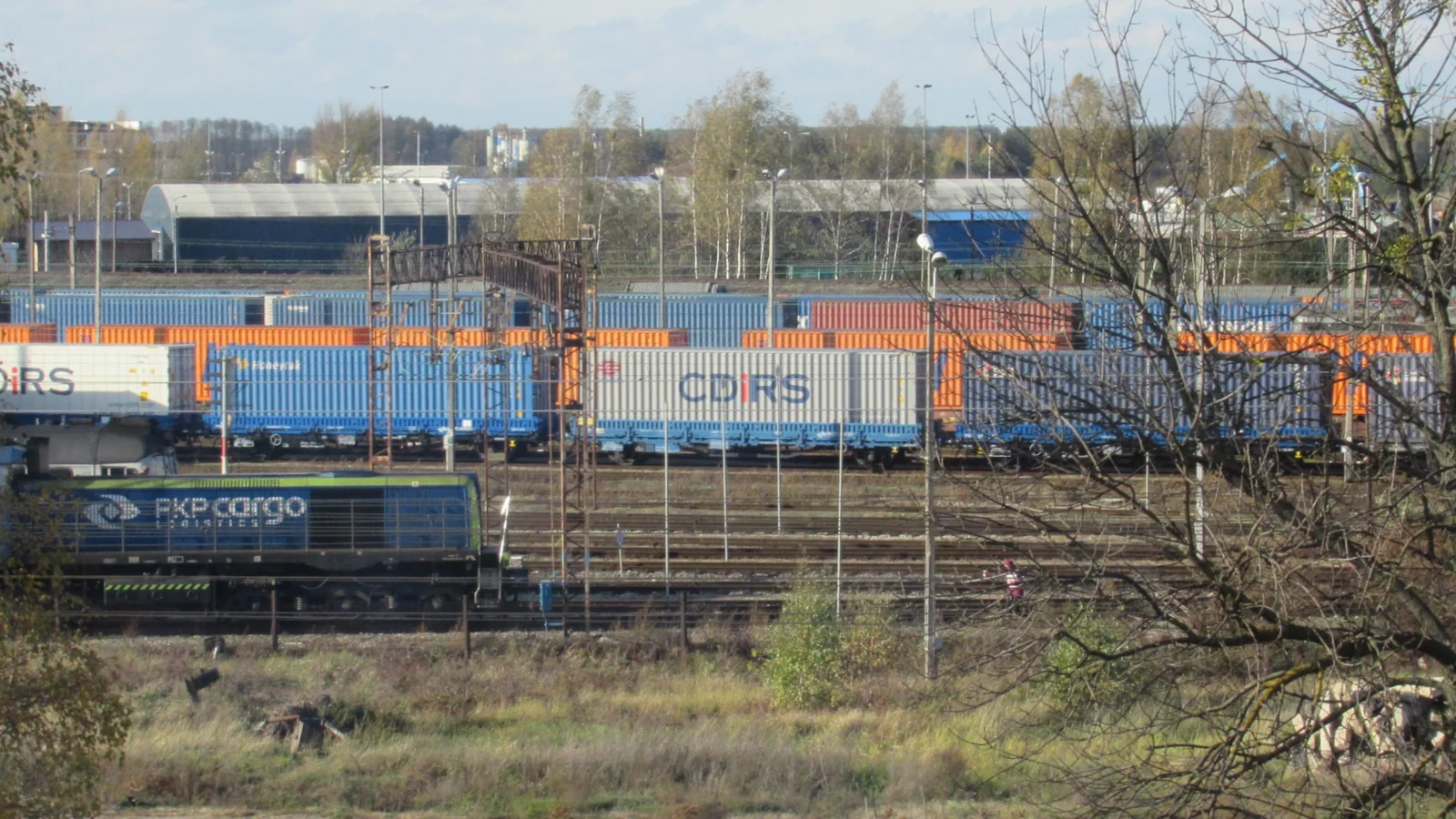
In the first quarter of 2026, nearly 790,000 TEU were transported by rail in intermodal services, while intermodal transport accounted for a record 19.2% of Poland’s total rail freight performance, according to figures cited by Rohlig SUUS Logistics. The same source argues that further growth will depend on continued investment in railway infrastructure and terminal capacity.
Poland already has more than 40 intermodal terminals, ranking seventh in Europe by total number but only eighteenth for network density. That contrast makes the practical capacity and accessibility of individual hubs increasingly important as traffic expands through ports, domestic terminals and long-distance European corridors.
New capacity planned at Małaszewicze and Sławków
At Małaszewicze, Container Terminal Mala is developing an eastern rail connection linking its intermodal terminal directly with both standard- and broad-gauge infrastructure. The project includes a southern connection to standard-gauge track 1000 at Małaszewicze station and a northern connection to broad-gauge line 450.
The project agreement was signed on 3 June 2026. Its total value is PLN 95.14 million, with completion scheduled for 31 December 2028. The project documentation sets an additional transshipment-capacity target of 197,486 TEU per year.
A separate expansion at Euroterminal Sławków is larger in value and similar in capacity effect. The TK-2 project, covered by an agreement signed on 15 June 2026, is valued at PLN 187.89 million and is scheduled to run until 30 June 2028.
Its scope includes new terminal surfaces, railway infrastructure, signalling equipment, a road system, two rubber-tyred gantry cranes, three reachstackers and two terminal tractors. The project targets an additional 198,925 TEU of annual handling capacity.
Don’t miss…Court clears mangrove felling for bullet train power line
Bottlenecks extend beyond terminal space
Poland’s infrastructure challenge is not limited to the number of terminals. A Ministry of Infrastructure analysis prepared for the national intermodal bottleneck programme identified 783 bottlenecks on the PKP Polskie Linie Kolejowe network and described technical parameters that can restrict train routing and capacity.
The programme’s project list shows the kinds of constraints involved at network level: station tracks shorter than 750 metres, speed restrictions, insufficient line capacity and outdated signalling or traffic-control equipment. These examples are network-wide and should not be read as a diagnosis of the Małaszewicze or Sławków terminals themselves.
In its 2025 progress report, the ministry said 15 investment projects linked to the bottleneck programme were completed during the year, with a combined value of PLN 708.45 million.
For Poland’s intermodal market, the capacity question therefore has two parts: terminals need enough handling space and equipment, while the rail network connecting those hubs must also provide suitable train paths, track lengths and operating parameters. The projects now advancing at Małaszewicze and Sławków add measurable terminal capacity, but the source’s wider warning remains that infrastructure investment must keep pace with the market’s growth.
News on railway transport, industry, and railway technologies from Railway Supply that you might have missed: