
OCTA Coastal Rail Resiliency Study Maps 30-Year Options
USA: Orange County Transportation Authority (OCTA) is seeking public feedback on its Coastal Rail Resiliency Study, a draft 30-year framework for protecting seven miles of LOSSAN coastal track in Southern California.
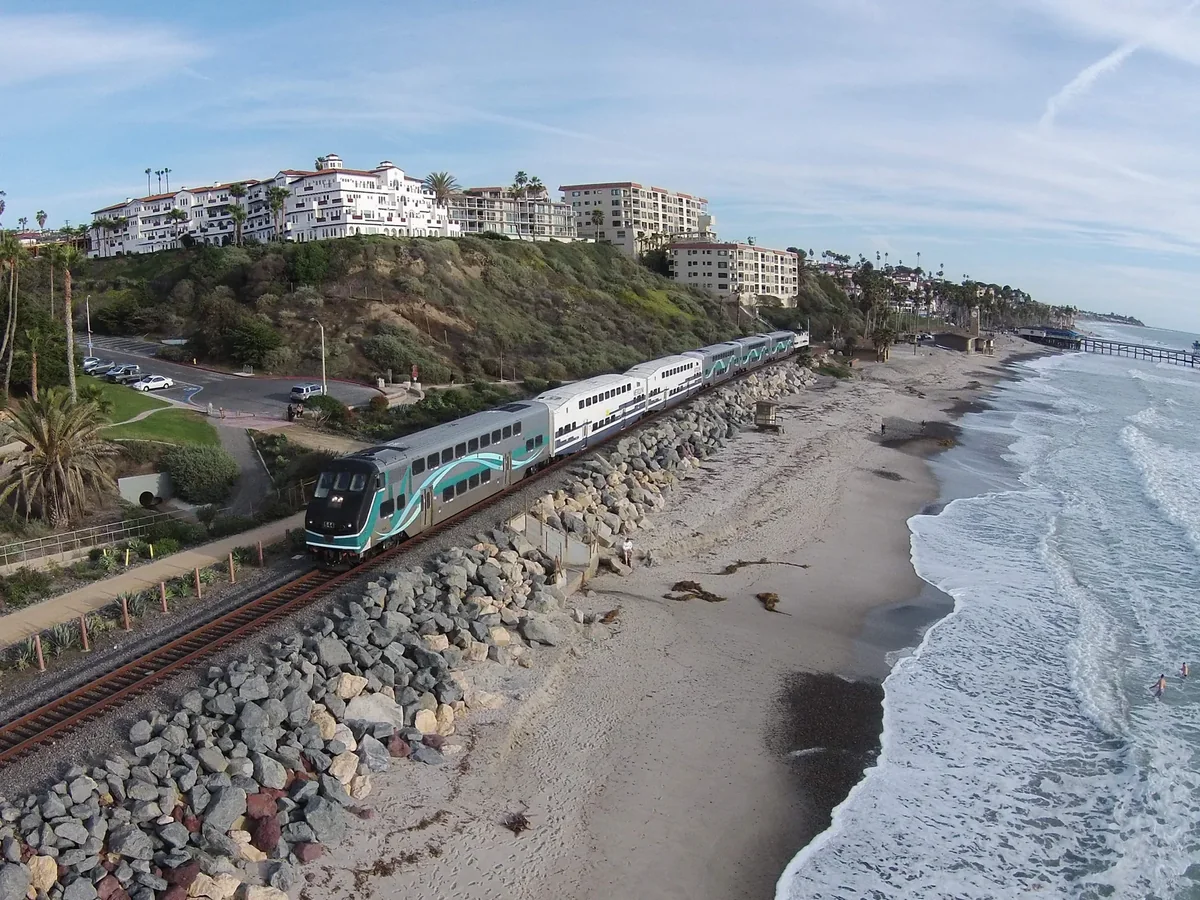
The study covers the coastline between Dana Point and San Clemente to the San Diego County line, where the railway carries Metrolink, Amtrak’s Pacific Surfliner, freight operations and military transportation. Repeated coastal erosion, bluff movement, high tides, storms and ocean swells have disrupted service and forced emergency stabilization work.
From emergency response to a 30-year framework
OCTA’s study is designed to evaluate how the existing railway can be protected in place for up to 30 years while reducing passenger and freight disruption. The authority’s published process moves from vulnerability assessment and evaluation criteria through concept development to draft and final feasibility reports.
The draft does not select one construction solution. Instead, it identifies measures that could be used selectively according to site conditions, including rail-foundation improvements, alternative railroad materials, catchment walls, bluff-stabilization measures and beachside protection approaches.
That distinction is central to the current stage: the CRRS is a planning and feasibility exercise, not an approved construction programme. It is intended to move Orange County from repeated emergency responses toward a more coordinated approach to maintaining the coastal line.
Don’t miss…Kavach 4.0 Rollout Reaches 2,633 Route Km in India
Public input comes before Board consideration
OCTA will hold an in-person meeting in San Clemente on August 10 and a virtual meeting on August 11. Residents, businesses and other stakeholders can ask questions and comment before the study is completed.
OCTA’s public-involvement materials describe feedback as a core part of shaping the study, and earlier project communications said comments would help refine alternatives and determine which concepts advance into the final feasibility study. The authority’s milestone schedule lists a final study report in summer 2026 followed by presentation to the OCTA Board and publication in fall 2026.
Inland relocation remains a separate longer-term track
The Coastal Rail Resiliency Study is focused on protecting the existing alignment for the next three decades. A separate state-led effort is examining longer-term solutions beyond that horizon, including a potential inland rail alignment between San Juan Capistrano and San Onofre State Beach.
For now, the immediate decision point is narrower: OCTA is gathering feedback on how the existing coastal corridor should be protected before the draft study advances to its final report and Board stage.
News on railway transport, industry, and railway technologies from Railway Supply that you might have missed:


